

Audio By Carbonatix
A Virologist at the Kumasi Centre for Collaborative Research in Tropical Medicine (KCCR), Dr. Michael Owusu, has advised that proactive measures be taken to study the possible zoonotic origins of the Marburg virus and sensitise the general public on these threats.
According to him, he is certain Ghana’s outbreak of the Marburg virus was transmitted from an animal to the first victim rather than it being imported into the country, and thus it was important the Ghana Health Service and other stakeholders take a keen interest in investigating the zoonotic origins.
Speaking on JoyNews’ PM Express, he explained that this would not be the first time a disease similar to the Marburg has been transmitted from animal to man in Ghana.
“I believe strongly that this may be of possible zoonotic origin and not likely from an imported case. If you remember somewhere in 2011, Ashanti Region had two cases of Lassa fever that these people died…and further investigations showed these viruses were found in rodents which were in those communities. That was the first red light that people saw,” he said.
He further revealed that extensive studies conducted on bats in the country in 2010 had revealed that most of them were either carriers of viruses or had recovered from viruses.
“And then people have done studies, somewhere in 2010, where they have screened about 262 bats in Accra and then in Kumasi and have found antibodies to Ebola and antibodies to Marburg. It raises this back to even the very first case of Monkey pox in the US was traced to over 800 animals – squirrels – that were sent from Ghana and processed in the US through which we had some of the cases that we are recording.
“We have also done a number of studies; we have screened bats like rousettus bats, eidolon bats, hipposideros bats, many, many bats living in different places. If you don’t find the RNA in the stool of these bats you may find that they have antibodies to some of these [viruses],” he said.
According to the Virologist, this was indicative of the fact that these viruses “are sitting in this wildlife only waiting for an opportunity to get into the human population which is why we always will have to be very careful.”
He explained that even though the current contact tracing effort was commendable and very necessary to prevent further spread of the virus, focusing on just that without investigating and creating awareness about the zoonotic origins of these viruses would only create a spillover effect.
This he explained that “you may finish dealing with the human-to-human phase but you’re only waiting for another time for the animal source to be reintroduced into the population and this is going to be a long winding, years upon years.”
“If you know that within this community it is a rousettus bat sitting somewhere and carrying this virus then you know how to target your intervention. You can educate the people well to avoid some particular species of animals and you can classify this within your region and it helps you,” he advised.
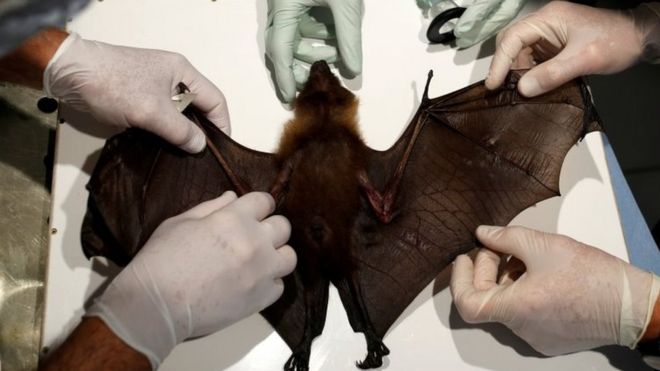
Marburg is transmitted to people from fruit bats and spreads among humans through direct contact with the bodily fluids of infected people, surfaces and materials, the WHO says.
No treatment yet exists for Marburg, but doctors say drinking water and treating some of the symptoms improve survival rates.
Latest Stories
-
Friends of Bridget Bonnie Marks her 35th birthday with donation to Kasseh Model Health Centre
7 minutes -
Landfilling waste management creates no value, it’s an economic waste
34 minutes -
Photos: Speaker Bagbin Commissions MPs constituency office under parliamentary decentralisation programme
50 minutes -
Black Stars technical advisor Winfried Schäfer sacked as GFA shakes up backroom staff
54 minutes -
Wenchi water project almost complete, critical to gov’t agenda – GWL MD
1 hour -
Anti-LGBTQ+ bill not part of government’s legislative agenda – Inusah Fuseini
1 hour -
Anti-LGBTQ Bill: Forget the rumour mongers, I’m a man of action, and will pass the bill – Speaker
2 hours -
Women and children among those killed in Sudanese army shelling of wedding celebration
2 hours -
President Mahama is not sincere with Ghanaians on LGBTQ bill matter – Hassan Tampuli
2 hours -
Gov’t to establish Prison Industrial Hub to equip inmates with income-generating skills – Prison Service boss
3 hours -
Alhassan Tampuli donates cement, roofing sheets to support storm victims in Gushegu
3 hours -
Alhassan Tampuli appeals for urgent support for storm victims in Gushegu
3 hours -
The hypocrisy must stop; pass Anti-LGBTQ+ Bill now – Alhassan Tampuli to Mahama
3 hours -
Imprisonment should be rehabilitative, not punitive – Ghana Prisons boss at UNGA
3 hours -
Ga Adangbe traditional priests petition Mahama over McDan aviation licence revocation
3 hours