

Audio By Carbonatix
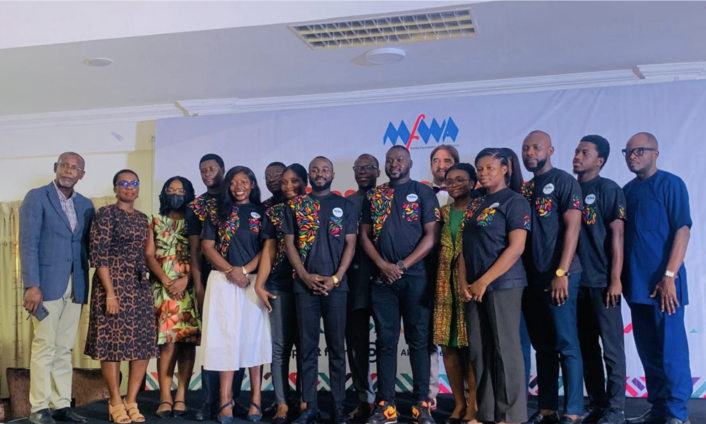
The Media Foundation for West Africa (MFWA) has trained 30 young men and women as part of its Next Generation Investigative Journalism (NGIJ) programme.
The fellows, drawn from diverse fields, including journalism, were charged to produce stories that advanced human rights, accountability and participatory public discourse.
Addressing the fellows and other journalists, Mr. Sulemana Braimah, Executive Director, MFWA charged the fellows to impact society through credible journalism.
He noted that that MFWA established the NGIJ to specifically produce a crop of journalists which would advance the cause of investigative journalism, human rights, good story writing and fact checking.
He noted that journalism practice in Ghana had not been able to demand accountability from duty bearers hence the establishment of the NGIJ.
He admitted that journalists in the country had contributed immensely to the safeguarding of Ghana’s peace, protecting its enviable status as the the beacon of democracy in Africa.
He cited the coverage of the December 7 polls as one of the ways the media safeguarded Ghana’s peace. However, Mr. Braimah noted that a thriving democracy went beyond election reportage.
He said democracy would thrive with a credible media that went beyond election reportage but ensured that the electorate benefited from democracy.
He noted that the Ghanaian media were unable to go past reportage to the responsibility of demanding accountability hence the established the NGIJ to fill that gap.
He said the NGIJ aimed to produce journalists who would undertake enterprising journalism, noting that fellows from earlier cohorts were already doing great and charged the new ones to give off their best.
Madam Ewurama Kodjo, Programmes Manager, DW Akadamie advised the fellows to safeguard Ghana’s democratic values by undertaking credible journalism.
Madam Angela Azumah Alu, Fiscal Policy Adviser, OXFAM Ghana, told the fellows to “Put everything you have learnt into practice and be a light in our world. While exposing wrongdoing and demanding accountability, don’t forget to highlight the positive stories.”
Background
The GNIJ was commemorated in 2021 to promote qualitative journalism, mentor and train fellows to produce compelling stories to promote excellence in journalism, demand accountability and transparency in Ghana’s governance systems.
The programme is targeted at fresh graduates from journalism school, early career journalists and professionals who genuinely have a passion for journalism and who want to contribute to the process of demanding accountability.
They are trained in story writing, fact checking, mobile journalism and investigative journalism.
Latest Stories
-
Total expenditure as of July 2026 amounted to GH¢147.07bn, 16% below target – BoG
3 hours -
Total revenue & grants stood at GH¢144.5bn in July 2026, slightly below target – BoG
3 hours -
Ghana Sports Fund urges sports federations to submit credible proposals and measurable targets
3 hours -
Sally Rooney books withdrawn in UK over Palestine Action support
3 hours -
Musk says US government may be behind slowdown of Ukraine drone speeds
3 hours -
Picking Chief Justices nearing retirement could give Mahama immense power – Bentil
4 hours -
Netflix to shed 1,000 jobs in steepest cuts since 2022
4 hours -
Burnham had two hospitality dinners with Man City chairman, deleted records show
4 hours -
Semenyo ‘froze’ after alleged racist abuse, court told
4 hours -
‘Shameless’ – Mourinho critical of Vinicius Jr ban timing
4 hours -
Loyalty can outweigh competence in Chief Justice selection – Bentil
5 hours -
Man City suffer as PSG masterclass sets up Champions League win
5 hours -
Customer Service Africa CEO urges business leaders to observe staff and customer interactions
5 hours -
On night of mayhem for Liverpool, Barcola arrives in style
5 hours -
Muzic Mensah finds healing and renewed love in new single ‘WayƐ Late’
5 hours