

Audio By Carbonatix
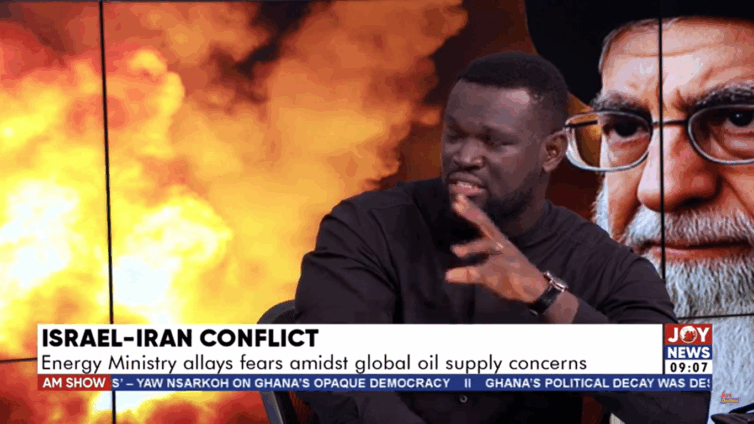
African and International Relations Analyst, Nana Yaw Mireku, has expressed confidence that Ghana’s diplomatic relations with countries in the Middle East will remain intact despite ongoing regional tensions.
Speaking on the JoyNews AM Show on Tuesday, June 24, Mireku dismissed fears that Ghana’s diplomatic arrangements in the Middle East could be significantly affected.
“I don’t think it’s going to affect our diplomatic arrangements,” he stated. “In my opinion, I don’t think so because it was a response to what was happening in Tehran.”
Mireku drew comparisons with previous flashpoints in the region, citing the example of Qatar.
During heightened tensions, Qatar was forced to close its airspace as a precautionary measure, disrupting flights and movement temporarily.
However, once the hostilities subsided, the country swiftly returned to operational normalcy.
“If we take Qatar, within a moment that Iran was seeking to strike Qatar, Qatar closed up its airspace which directed all airplanes coming to Qatar. But right after the hostilities and everything was normalised, the country has come back to normalcy,” he explained.
According to Mireku, the temporary suspension or downgrading of diplomatic activities in times of crisis is not uncommon, especially in volatile regions.
However, he emphasised that these pauses are typically short-lived and dependent on the pace of de-escalation.
“What it means is that, once there is cessation of hostilities in Iran and Tel Aviv and things begin to take their rightful shape, most of these embassies will begin to work,” Mireku said.
He added “And what it means is that the diplomatic connections Ghana has in the Middle East will begin to function normally, but it will take a number of days for us to see how events turn out.”
Ghana, like many nations with embassies and missions in the Middle East, maintains a delicate balance in the region—focused on cooperation in areas such as energy, trade, labour, and security.
While some embassies may limit activities for safety reasons during conflict, Mireku stressed that this should not be interpreted as a breakdown in relations.
Mr Mireku asserted that the current hostilities in the region do not pose a long-term threat to Ghana’s foreign policy posture.
“So, I don’t think it’s going to affect our diplomatic arrangements,” he concluded.
Latest Stories
-
‘We have been used and dumped’ – NDC’s James Agbey warns over grassroots neglect
7 minutes -
Ghana defender Marvin Senaya begins training ahead of comeback
10 minutes -
Joyce Bawah Mogtari urges women leaders to build strong support networks
27 minutes -
Bawumia engages GUTA over import duties, VAT and rising business costs
27 minutes -
Fuel prices begin to fall as Star Oil cuts petrol to GH¢16.45
29 minutes -
GoldBod supplies banks with US$282m in weekly forex sales
30 minutes -
Joyce Bawah Mogtari says Obaasima Conference should help women connect and learn
31 minutes -
Ghana’s Crude Oil Production Rebounds by 30% After Five Years of Decline
51 minutes -
Nzema East launches Responsible Cooperative Mining Programme to tackle environmental destruction
60 minutes -
Ghana included in WHO lead-testing programme as questions remain over local exposure risks
1 hour -
2026 Amputee World Cup: We will win the trophy – Samson Deen
1 hour -
Controller and Accountant-General pays promotion arrears to 56,003 GES teachers ahead of deadline
1 hour -
2026 Amputee World Cup: We want to make the continent proud – Black Challenge coach
1 hour -
International Day of the Girl: Central Region Education Directorate calls for action to tackle child marriage, teenage pregnancy
1 hour -
The Eyes of Ghana: iShowSpeed joins Obamas as producers of Chris Hesse documentary
2 hours