

Audio By Carbonatix
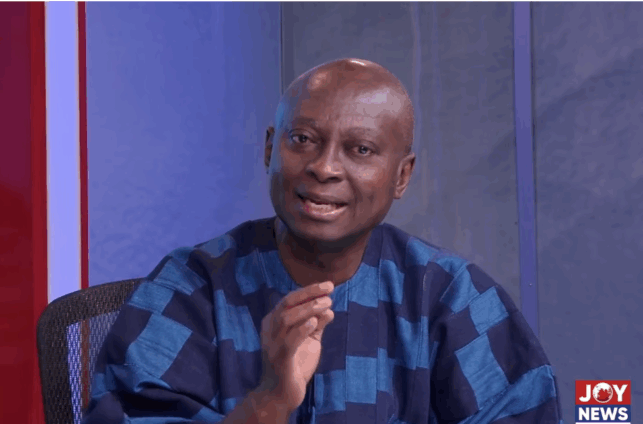
Mr Samuel Atta Akyea, the lawyer for former Presidential Staffer and New Patriotic Party (NPP) communications team member Dennis Miracles Aboagye, has criticised the Economic and Organised Crime Office (EOCO) over what he described as "cruel and oppressive" bail conditions imposed on his client following his arrest and interrogation.
His comments came shortly after EOCO granted Mr Aboagye bail in the sum of GH¢50 million with three sureties, two of whom must justify the bond with landed property, on Monday night.
His bail follows hours of engagement between his lawyers and officials of EOCO after he was taken into custody on Sunday, July 12, 2026.
He was arrested as part of investigations into alleged financial and procurement-related irregularities at the Inter-Ministerial Coordinating Committee on Decentralisation (IMCCoD), where he previously served as the executive secretary.
READ ALSO : Dennis Miracles Aboagye granted GH¢50m bail by EOCO
EOCO has said Mr Aboagye, together with former IMCCoD accountant Gerald Appiah and other unnamed persons, is being investigated over the alleged misappropriation, misapplication, diversion and theft of public funds amounting to about GH¢55 million.
According to the anti-graft agency, the investigation followed a petition submitted by the current executive secretary of IMCCoD requesting further enquiries into a forensic audit covering the period between August 1, 2022, and February 2, 2025.
Addressing journalists at the EOCO office in Accra, Mr Atta Akyea questioned both the severity of the bail conditions and the prolonged detention of his client, arguing that the terms effectively denied him the opportunity to regain his freedom.
"Look, you interrogate a man, and you are running for over four hours. Marking time, marking time until we got our turn. In the final analysis, the bail conditions are cruel and oppressive," he bemoaned.
The former Member of Parliament for Abuakwa South further contended that the constitutional rights of his client had been compromised.
"Look at this very hour. They are about to exceed the 48 hours as enshrined in the constitution. Where is this gentleman going to get, I mean, three sureties, 50 million as a bail sum?"
He argued that the requirement for two sureties to justify the bond with landed property valued at the bail amount made compliance practically impossible within the time available.
"...and then the properties should be worth 50 million, and two should post those properties. How are we going to do it? So you can see clearly that the bail terms are cruel, and it is a way to punish him some more."
Mr Atta Akyea insisted that the conditions amounted to punishment before any determination of guilt had been made.
"It's not possible for us to post these securities at this critical hour. And I can say that the rule of law is sitting outside now. This is very unfortunate."
The lawyer also questioned the necessity of arresting Mr Aboagye at the airport, maintaining that his client had consistently cooperated with investigators and had never attempted to evade the investigative process.
"How is he going to be released? How is he going to post the bail bonds? How is it going to do it? 50 million Ghana cedis, three sureties, two to be justified. It means two of them should post properties."
According to Mr Atta Akyea, EOCO had previously invited Mr Aboagye to assist with investigations, and he had honoured those invitations without hesitation.
He argued that there was no basis to suggest that Mr Aboagye posed a flight risk, particularly as he voluntarily returned to Ghana through the country's main international airport.
"So I believe that democracy and the rule of law have been reversed backwards. That a man who is not running away and is decent enough to go to the Kotoka International Airport... is arrested and detained all this while."
Mr Atta Akyea further criticised the manner in which his client was treated, saying the circumstances created the impression that he had been handled as though he were a dangerous criminal.
"I don't believe that is how we should conduct affairs. It is not proper. As if he were a common criminal, and I don't see common criminals coming through the Kotoka Airport."
Latest Stories
-
JoyNews’ Esther Esi Nkrumah selected for UK Media Excellence for Emerging Technology Fellowship
2 minutes -
Five NDC youth organisers in Western Region pay courtesy call on Armah-Kofi Buah
14 minutes -
NACOC demands tighter port controls to prevent Tema Harbour drug trafficking
17 minutes -
Ghana’s startup ecosystem must build sustainability into innovation – Ghana Hubs Network
28 minutes -
Friday’s beachfront demolition was carried out at Labadi Beach Hotel’s request, not for flood mitigation – Stan Dogbe
30 minutes -
LA 2028: Mukarama returns to Black Queens squad for Olympic Games qualifiers
31 minutes -
Fusaini Yakubu Abanga leads NPP National Youth Organiser race with 45% in Global InfoAnalytics poll
47 minutes -
Suame Methodist JHS marks 120 years with a call for STEM innovation
55 minutes -
Global fashion coalition launches in the heart of Kantamanto Market
60 minutes -
‘No concrete commitments from government’ – Brong Ahafo teacher unions maintain strike
1 hour -
Finance Minister demands greater returns from NLA after GH¢10 million dividend presentation
1 hour -
National Customers’ Choice Awards set to celebrate Ghana’s best customer-centred brands
1 hour -
ICEE Conference: Ghana must get governance right to solve transport problems – Ing. Ludwig Hesse
1 hour -
Luv Fm journalists Clinton Yeboah, Nana Boakye Dankwah Yiadom selected for UK MEET emerging technology fellowship
1 hour -
VRA warns payment delays, inter-utility debt threaten liquidity despite GH¢8.9bn revenue in 2025
1 hour