

Audio By Carbonatix
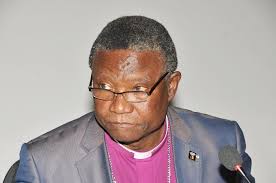
The Chairman of the National Peace Council (NPC), Most Reverend Professor Emmanuel Asante has said mistrust among political actors in state institutions is contributing to electoral violence in the country.
He said there was a trust deficit in Ghana's electoral processes, especially on the part of political parties and this was giving room for holding on to political vigilantism to protect their interests.
Most Rev. Asante observed that the situation where the Electoral Commission (EC) and the Police were always perceived to be in bed with the ruling party while working against the interest of the opposition was not helpful.
Most Rev. Asante, who was addressing an advocacy workshop on Vigilantism and Related Offences Act at Akyawkrom in the Ejisu Municipality, underlined the need for ruling parties to ensure the independence of state institutions to avert needless suspicions when in opposition.
The workshop which was organized by the Ashanti Regional Peace Council with funding from the Danish International Development Agency (DANIDA) was to sensitize participants on the Act which has outlawed political vigilantism.
It was attended by representatives from political parties, clergy, Muslim leaders, EC, Police, National Commission for Civic Education (NCCE) and the media drawn from the Ejisu Municipality, Juaben and Effiduase Asokore Districts.
Most Rev. Asante said it was time for political parties to work together for sustainable peace in the country, adding that the very people whose mandate they sought would suffer the consequences of electoral violence.
As key stakeholders competing to lead the development of the country, politicians owe Ghanaians the duty to prioritize national interest ahead of that of their parties, he said.
"Political parties should begin to engage each other beyond elections at the local and national levels for the collective development of Ghana", he counselled politicians.
He said the quest for peace should be paramount for all Ghanaians and urged the participants to influence their respective organizations in the fight against political violence.
Rev. Anthony Naah, a Member of the Ashanti Regional Peace Council, in a welcome address, said the Region remained vulnerable to intermittent communal violence, chieftaincy disputes and electoral violence.
He said such disturbances often escalated during elections and called for collective efforts from stakeholders to protect the peace in the region and Ghana as a whole.
Latest Stories
-
30 NDC aspirants file nominations in Upper West as regional election approaches
2 minutes -
UPSA launches laptop assembly plant, requiring new students to assemble their own devices
8 minutes -
UCC sociologist calls for action on gender inequality to end child marriage
9 minutes -
LSN questions Ghana’s proposed five-year presidential term and DCE election reforms
10 minutes -
AFCON 2027Q: Bjorkegren to lead Black Stars for Somalia doubleheader with Tanko and Attram as assistants
12 minutes -
AMA completes road repairs on Kwame Nkrumah Avenue
18 minutes -
Law Students’ Network warns executive dominance could undermine constitutional review
20 minutes -
Mahama to meet relevant stakeholders over concerns about the new Customs Act
28 minutes -
CHASS demands a 20% increase in SHS funding and payment of outstanding debts
30 minutes -
Investigation launched after male body found in County Cork
32 minutes -
We have been scammed by NDC, government is only doing PR – Abanga Fuseini
32 minutes -
Tamale Teaching Hospital records 44 new breast cancer cases in six months
34 minutes -
GES declares October 30 CPD day for private school teachers; learners to observe holiday
34 minutes -
South Korea to support Ghana’s forts and castles restoration with $4.5m over five years
36 minutes -
School headscarf ban sparks rare protests in Azerbaijan and row with Turkey
44 minutes