

Audio By Carbonatix
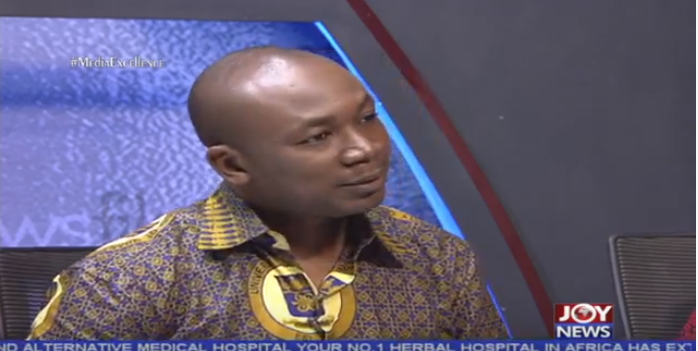
Economist and Professor of Finance at the University of Ghana, Godfred Bokpin, says the high cost of living in the country is having an adverse effect on the average Ghanaian.
According to him, the rate at which inflation is rising and the taxes imposed on the populace is quite worrying.
Speaking on Newsfile on Saturday, Prof Bokpin explained that the increase in taxes and cost of living makes living worse for people on fixed pensions.
“When I went to my village, I saw this man walking by the road, and he actually was stopping my car. When I stopped, this was my teacher in JHS 1. This man told me he had gone on pension and when he mentioned the amount to me, I almost wept.”
Prof Bokpin added that “the little I could do immediately was to give the malt I was going to take to him and asked him to join me in my car. This is somebody who has laboured for over 30 years.”
He bemoaned the fact that teachers who had worked all their lives go home with nothing.
His comment followed recent rise in inflation and the effect on the ordinary Ghanaian. Ghana’s inflation jumped to 27.6% from the 23.6% recorded in April 2022, according to recent figures from the Ghana Statistical Service (GSS).
The GSS blamed this on the increase in transport fares and food prices.
According to the Government Statistician, Professor Kobina Annim, the rate of inflations for transport (39.0%), household equipment and maintenance (33.8%), housing, water, gas, and electricity (32.3%), and food and non-alcoholic beverages (30.1.6%) were higher than the national average (27.6%).
In May, 2022, 12 of the 13 divisions recorded inflation rates higher than the rolling average from June, 2021 to May, 2022.
Prod Bokpin noted that the average Ghanaian spends so much on cunsumables, making it practically difficult to save, “when you do the effective tax burden on the average Ghanaian, assuming you spend 60% of your disposable income on consumption, you look at the layers of taxes, VAT 12.5 %, GETFund, NHIL, Covid Levy and others and you put everything together you are hitting in excess of 60%, when you look at all these things there is no breathing space for the average Ghanaian.”
Prof Bokpin added that “you can understand why our savings rate in this country is very low while our investment requirement is high. This would then tend to liberalise the environment and make it conducive to foreign investors to fill the gap.”
Latest Stories
-
Lawrence Kobena Nsarko Otoo, Esq
4 minutes -
Bel-Aqua intensifies mental well-being campaign ahead of 15th anniversary
6 minutes -
From banking to party finances: Alfred Kwadwo Thompson elected NPP Treasurer
11 minutes -
George Christian Papa Mends
16 minutes -
Ali Suraj elected NPP NASARA Coordinator
27 minutes -
Mustapha Hamid misses out on NPP Vice Chairmanship by 31 votes despite early poll lead
36 minutes -
Kojo Bamba, Henry Nana Boakye and Nana Akomea elected NPP Vice Chairmen
1 hour -
From Delta Force to NPP First Vice Chairman – Kojo Bamba’s political journey
1 hour -
Police restore calm at Larteh following Odwira festival disturbance
2 hours -
‘All the camps will dissolve’ – Bawumia demands one NPP for 2028
2 hours -
There is no time to waste – Bawumia orders NPP to begin 2028 work
2 hours -
Sarkodie visits MobileMoney Fintech LTD
3 hours -
John Boadu unveils new NPP strategy to win back youth and modernise party
3 hours -
Hawa Koomson elected NPP National Women’s Organiser
3 hours -
John Boadu begins NPP rebuild from grassroots ahead of 2028 election
3 hours