

Audio By Carbonatix
Nigeria and Saudi Arabian oil company Aramco are struggling to reach an agreement on a record $5 billion oil-backed loan after a recent decline in crude prices sparked concern among banks that were expected to back the deal, four sources told Reuters.
The facility would be Nigeria's largest oil-backed loan to date and Saudi Arabia's first participation of this scale in the country, although the decline in oil price could shrink the size of the deal, the sources said.
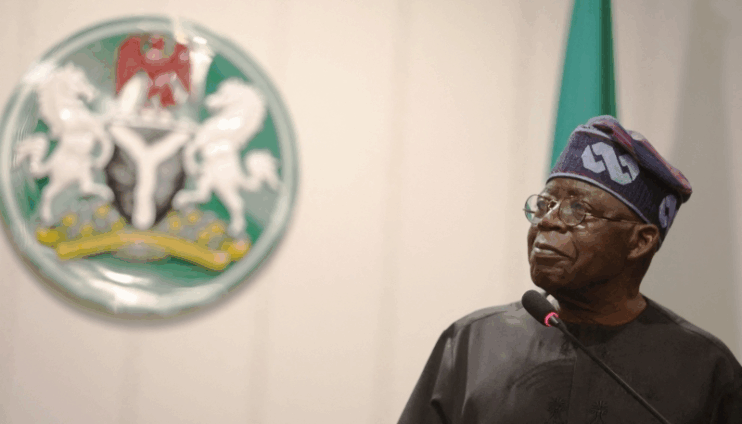
Nigeria's President Bola Tinubu, two of the sources said, first broached the loan in November when he met with Saudi Crown Prince Mohammed bin Salman in Riyadh at the Saudi-African Summit. Details and progress on the loan talks have not been previously reported.
The slow progress in discussions reflects the strain of the recent oil price drop, caused largely by a shift in OPEC+ policy to regain market share rather than curtail supply.
Brent has fallen about 20% to around $65 per barrel from above $82 in January. A lower oil price means Nigeria could need more barrels to back the loan, but years of under-investment are complicating its ability to meet production goals.
Tinubu sought approval for $21.5 billion in foreign borrowing last month to bolster the budget, and the $5 billion oil-backed facility under discussion with Aramco would be part of that, sources said.
The banks involved in the talks that are expected to co-fund part of the loan with creditor Aramco have expressed concerns about oil delivery, which has slowed discussions, sources said.
Gulf banks and at least one African lender are involved, they added. Reuters could not establish the banks' identities.
"It's hard to find anyone to underwrite it," one source said, citing concerns over the availability of the cargoes.
Saudi Aramco declined to comment. Nigeria's state-owned oil company NNPC did not comment, and neither did the finance or petroleum ministries.
SCARCE OIL
Nigeria has years of experience taking out - and repaying - oil-backed loans - which the government uses for budget support, shoring up foreign reserves or to revamp state-owned refineries.
At $5 billion, the Aramco loan would be backed by at least 100,000 barrels per day of oil, the sources said.
However, it would almost double the roughly $7 billion of oil-backed loans taken in the last five years.
Nigeria is using at least 300,000 bpd to repay NNPC's other oil-backed loans, though one facility is expected to be paid off this month.
The amount of oil going towards repaying existing oil-backed loans is fixed, but when the crude price falls, it takes longer to repay them.
Additionally, lower prices mean the NNPC has to funnel more crude oil to joint-venture partners, from international majors like Shell to local producers like Oando or Seplat, for its portion of operation costs.
"You have to either find more oil, or find a way to renegotiate those deals," another source said.
Nigerian trading firm Oando is expected to manage the offtake of the physical cargoes, the sources said.
Oanda did not comment.
NNPC is trying to boost output, while Tinubu issued an executive order aimed at cutting production costs, which would free more money from each barrel.
Africa's largest oil exporter assumed a price of $75 per barrel in its budget, with production of 2 million bpd. But in April, it pumped just under 1.5 million bpd, according to the May OPEC market report.
Latest Stories
-
2026 Women’s Super Cup: FC Savannah beat Epiphany Warriors to win trophy for first time
57 minutes -
AFCON 2027Q: ‘The last time Ghana won was eight games ago’ – Carlos Queiroz
1 hour -
AFCON 2027Q: Gambia defeat doesn’t make me a loser – Carlos Queiroz
1 hour -
2027 AFCONQ: Late goals seal 2-0 for Côte d’Ivoire against Somalia
2 hours -
AFCON 2027Q: My resignation won’t solve Ghana football issues – Queiroz
2 hours -
Morocco call off Ghana friendly after Black Stars’ AFCON setback
2 hours -
‘We have to say sorry’ – Queiroz apologises after Ghana’s humiliating defeat to Gambia
2 hours -
New Yorker identified as Yaw Boahene, 57, killed after bag was caught in subway train doors
2 hours -
Former American Idol contestant and pastor found guilty of murdering wife
2 hours -
Trump rules out joint US-China venture to develop AI
2 hours -
‘Beating Ghana did not surprise me’ – Gambia boss
2 hours -
OpenAI agents get rebrand – as ‘dots’ – while safety worries delay new model
3 hours -
US ban on Canadian alcohol and dairy takes effect as trade war drags on
3 hours -
Baffour Awuah’s EOCO case reopens Equity Savings & Loans file as SIC recovery battle emerges
3 hours -
Ghana ranked 5th source of cocaine seized at Antwerp, Belgium in 2025
3 hours