

Audio By Carbonatix
One million: That’s how many more midwives the world needs by 2035 to save over 4 million lives every year.
Midwives are essential health workers, and they offer a solution to one of the most urgent challenges in global health: preventing women and newborns from dying needlessly from complications of pregnancy and childbirth.
With a midwife by her side, a woman giving birth has a far better chance of a safe delivery and of her baby surviving it. Especially in places affected by fragility and crisis, where women and newborns are most at risk, midwives are often the first and only providers of maternal healthcare. Half of the current gap in this crucial workforce is in Africa, where maternal death rates are among the highest in the world.
Educating, deploying and retaining 1 million more midwives globally would transform health systems and improve millions of lives. Midwives are at the heart of safer, more equitable healthcare that upholds women’s rights. They have the comprehensive skills and training to provide up to 90% of essential maternal, newborn, sexual and reproductive health and adolescent health services, and many other forms of care that help ensure women’s overall wellbeing.
Midwives can provide family planning, skilled birth attendance and critical care during pregnancy and after childbirth. They can also provide nutrition counselling, cancer screenings, and meet other diverse healthcare needs.
These gains ripple outward. Every $1 invested in midwifery yields up to $16 in social and economic gains, a smart and cost-effective strategy to expand healthcare and improve development outcomes. Midwifery is the backbone of healthy and resilient societies where women and communities can thrive.
Through the Midwifery Accelerator coalition, UNFPA is supporting multiple countries in developing evidence-based investment cases to promote midwifery models of care tailored to local contexts.
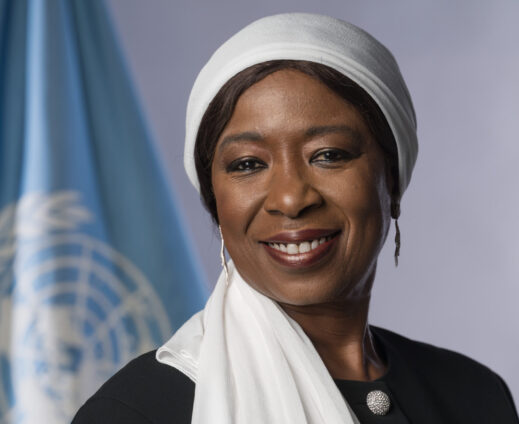
In her statement to mark International Day of the Midwife 2026, UNFPA Executive Director, Ms Diene Keita, emphasised the need for the expansion of the midwifery workforce.
“Midwives play an invaluable role in health systems. Strengthening investment in this mostly female workforce – through fair compensation and equitable career development opportunities – can help realise their full potential and enhance the quality of care that they can provide,” She stated.
A midwife costs less to train than a physician, yet her reach is wider, her presence more constant, and her impact immediate. She goes where specialists rarely arrive, anchoring care in communities that would otherwise be left behind.
At UNFPA Ghana, this reality has guided a deliberate partnership approach to strengthen midwifery as a frontline solution. Through the Midwifery-Led Innovation Hackathon, midwives have been challenged to step beyond routine practice into problem-solving, designing locally grounded responses to persistent service delivery gaps. This has been complemented by targeted investments in midwifery training equipment worth GH¢2 million, distributed to two selected midwifery training institutions, the Midwifery and Nursing Training College at the Korle Bu and the Kwame Nkrumah University of Science and Technology School of Nursing and Midwifery.
The donation, a joint initiative under the Midwifery Education and Practice Centres of Excellence Programme (MEPCEP), was developed over the year 2023–2024 following a nationwide assessment led by the MoH, supported by UNFPA.
UNFPA Ghana also continues to sustain collaboration with the Ghana Registered Midwives Association and the National Association of Registered Midwives, Ghana, to recognise and scale best practices. Each intervention reinforces a single idea: that midwives are not only caregivers, but innovators and system shapers.
UNFPA Ghana Country Representative Dr Wilfred Ochan re-echoed the strong partnership built through these investments.
“What UNFPA Ghana and its partners are doing is strengthening the pillars, ensuring that midwives are better trained, better equipped, and better supported to practice to their full scope. These investments are yielding measurable returns: fewer emergencies, reduced neonatal complications, and more women surviving childbirth to participate fully in family and national life. “He said.
This International Day of the Midwife, we celebrate midwives as the backbone of health systems and call on all relevant stakeholders for urgent investment in their education, leadership, and protection - essential actions to expand the midwifery workforce by 1 million. We urge for greater use of innovative technologies and diagnostic tools that can strengthen their skills and decision-making so they can deliver safer, more effective care.
Empowered midwives offer care that saves and improves lives. Let’s champion and support midwives for every woman who wants one, and for a healthier world for all.
Latest Stories
-
I want my brand to be bigger than just music – Yaw Wazinga
45 seconds -
Houthi missile attack on Yemeni presidential palace kills two, minister says
1 minute -
I hoped to win an award; I worked hard – 2026 Best Graduating Law Student
11 minutes -
Fraudsters increasingly target bank customers instead of banking systems – Fraud detection expert
12 minutes -
JoyNews tracks 44 cases of teachers accused of sexually abusing students since 2015; heads of schools behind 4 in 10 since 2025
15 minutes -
Unchecked imports and the Middle East crisis threaten Ghana’s fragile food inflation anchor
33 minutes -
Ecobank Junior Saver Big Pitch to reward 10 winners with GH¢2,000 each
37 minutes -
AMA demolishes unauthorised pigsty obstructing Agbogbloshie waste evacuation exercise
38 minutes -
I was filled with disbelief – Akosua Achia Sarpong Esq. shares her first reaction
38 minutes -
Snake Village: A look at Volta Region’s hidden snake village and its tourism potential (Video)
46 minutes -
Election Watch Ghana calls for constitutional reforms to strengthen Electoral Commission independence
48 minutes -
NACOC, Postal and Courier Services Regulatory Commission intensify efforts to curb drug trafficking
50 minutes -
Ga Mantse chairs committee to drive Accra Green and Clean City Initiative
51 minutes -
Drivers threaten to remove traders from lorry stations over TrafficTech concerns
54 minutes -
AI could create 10 to 20 times more jobs despite current recruitment slowdown – Hubtel CEO
57 minutes