

Audio By Carbonatix
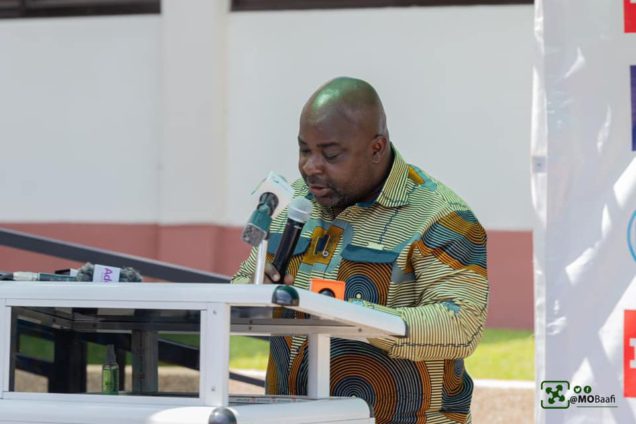
The Deputy Trade and Industry Minister, Micheal Okyere Baafi, has revealed that government’s flagship programme, One District, One Factory (1D1F), has so far created over 150,000 jobs across the country.
The initiative, a key component of the Industrial Transformation Agenda of the Akufo-Addo-led government was first introduced by the Ministry of Trade, Industry and Presidential Special Initiatives during the Kufuor administration, as part of an integrated programme for Accelerated Growth and Industrial Development.
Originally designated as the Rural Enterprises Development Programme and later rebranded as the District Industrialisation Programme (DIP), it was designed as a comprehensive programme for rural industrialisation and involved the setting up at least one medium to large scale factory in each of the 216 administrative districts of Ghana.
The programme seeks to address the challenge of severe poverty and underdevelopment among rural communities by establishing an institutional framework that will attract private sector investments in rural development activities.
The initiative aims to achieve this through a massive private sector-led nationwide industrialisation drive, which will equip and empower communities to utilise their local resources to manufacture products in high demand both locally and internationally.
This will allow the country to reap the rewards of industrialisation, increase agricultural and manufacturing output, reduce reliance on imports and increase food availability.
Providing updates on the operationalisation of the 1D1F policy, Mr Okyere Baafi said indirect and direct jobs over 150,000 have been created since the programme was initiated.
"There has been a lot of achievements in this area. In the area of job creation, one cannot look down on it because a lot of Ghanaians have been employed under this policy.
This is a private sector initiative that government only facilitates, so we don't initiate them but rather facilitate. Through the arrangement, 153,782 people have benefited from this 1D1F through employment," he said.
Giving a breakdown of the jobs, he noted that "the direct employment has so far created 23,505 jobs, with indirect jobs being 130,277."
Explaining further, he said the policy "is very phenomenal, and everybody can attest to the fact that the 1D1F has brought some change, some difference in the industrial sector of the economy because it is also creating a lot of improvements in the local economies of the urban and peri-urban areas where these initiatives have caused accelerated growth and transformation to lots of lives."
Latest Stories
-
Several injured as Saudi capital airport reportedly hit again
1 minute -
Christa Pike discharged from hospital and returned to prison, her lawyers say
3 minutes -
Ghana’s BRICS move requires clear strategy to manage risks – Godfred Bokpin
2 hours -
Pay teachers realistic income – Duncan Amoah to gov’t
2 hours -
Bechem to become chicken capital of Ghana – Mahama projects
2 hours -
Gov’t targets recruitment of 16,500 health professionals in 2026
2 hours -
Two-week strike will not derail academic calendar – GNAT President
3 hours -
Headmaster detained after BBC investigation into alleged sexual abuse of students
3 hours -
GNAT pushes for clear implementation procedures of teachers’ conditions of service
3 hours -
Recurrent strikes threaten quality of education and academic calendars – Prof Bokpin
3 hours -
‘Cockroach’ group leaders among hundreds detained in Delhi protest
3 hours -
Don’t let speed of information become your judgement – CJ tells new lawyers
4 hours -
World Cup visa scandal: People have leveraged public office to facilitate fraud – Senyo Hosi
4 hours -
Glut! Farmers count losses as prices crash, customers happy
5 hours -
GSA postpones auction of unserviceable vehicles
5 hours