

Audio By Carbonatix
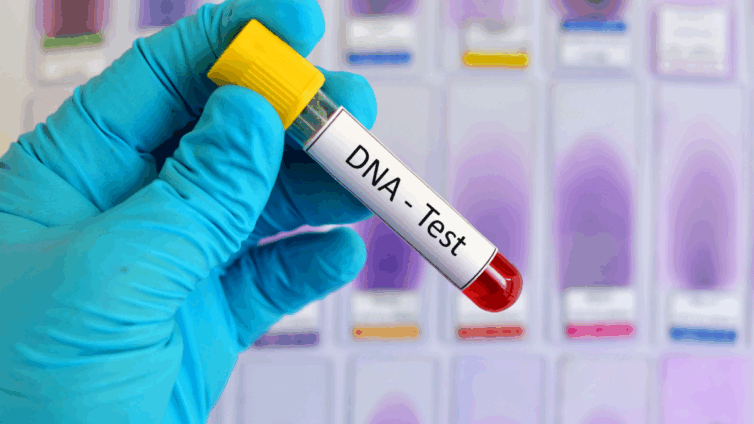
A new report by Smart DNA Nigeria has revealed that one in every four paternity tests conducted in the country still returns a negative result, underscoring a persistent paternity crisis and deepening trust issues within Nigerian families.
In its 2025 Annual DNA Testing Report released this week, the Lagos-based genetic testing company disclosed that 25 per cent of paternity tests conducted between July 2024 and June 2025 showed that the presumed fathers were not biologically related to the children in question. Though slightly lower than 2024’s 27 per cent, the figure highlights what the firm calls a “worrying and consistent trend”.
“These findings are not just about science; they tell us something profound about trust, relationships, and the legal and economic realities of Nigerian families today,” said Operations Manager at Smart DNA, Elizabeth Digia.
“Our role is to provide certainty through accurate testing while encouraging sensitive handling of the life-changing information our clients receive.”
The report noted that firstborn children, especially sons, were significantly more likely to have negative paternity test results, with firstborn boys recording a staggering 64 per cent exclusion rate, far higher than later-born siblings.
It also revealed that immigration-related DNA testing surged to 13.1 per cent of all tests, a direct result of Nigeria’s escalating emigration wave, popularly dubbed the “Japa” phenomenon. This marks a sharp increase from previous years as more families seek documentation for foreign relocation.
“Many of our clients are dual-citizenship families processing DNA documentation for children, often as part of long-term emigration plans,” the report noted.
Another key finding was that 88.2 per cent of all paternity tests were initiated by men, with only 11.8 per cent coming from women. Older men, particularly those aged 41 and above, accounted for nearly half (45.5 per cent) of all tests, suggesting financial stability plays a major role in initiating paternity verification.
Children between ages 0 and 5 made up the majority of those tested, at 58.6 per cent, up from 54 per cent in the previous year.
According to analysts, this shows a growing trend of parents seeking early clarity to avoid future complications.
While Lagos State still accounted for the bulk of DNA testing (69 per cent), the report shows a shift in demand from the Mainland to the Island. Lekki (20.3 per cent), Yaba (15.8 per cent), Ajah and Ikorodu (10.5 per cent each), and Surulere and Ikeja (9 per cent each) ranked as top testing hubs.
Ethnic distribution of clients showed a continued dominance by Yoruba families (53 per cent), followed by Igbo (31.3 per cent).
Hausa participation remained minimal at 1.2 per cent, suggesting significant cultural differences in attitudes toward paternity testing.
A vast majority—83.7 per cent—of DNA tests were done for “peace of mind” rather than legal requirements, with court-mandated tests accounting for just 1.4 per cent. The gender of tested children also revealed cultural leanings: 53.8 per cent were male, pointing to continued emphasis on verifying male lineage for reasons possibly linked to inheritance and family name preservation.
The report calls for urgent legal reform, noting Nigeria lacks specific laws addressing paternity fraud, unlike countries such as South Africa. It also recommends that public health policies integrate DNA testing into family planning and premarital counselling frameworks.
“We’re seeing more people come forward with doubts they’ve harboured for years,” Digia said. “Some of these cases involve emotional trauma and even financial exploitation. A policy framework is overdue.”
Smart DNA emphasised that its report is based on anonymised data from real cases and does not represent the general population. “Our figures reflect those who already had reason to question paternity, and as such, the results should not be extrapolated to all Nigerian families,” the firm explained.
Latest Stories
-
Tyson Fury dominates Makhmudov, calls out Joshua next
3 minutes -
I have supported highway authority financially to fix roads in my constituency – A Plus
1 hour -
US, Iran fail to reach peace agreement after marathon talks in Pakistan
2 hours -
ECG kicks off Phase Two of transformer upgrades at Lashibi; brief outages expected
2 hours -
Port crises loom as 11,000 drivers threaten four-day strike
3 hours -
A source of excellence across generations – Vice President Opoku-Agyemang lauds Mfantsipim
4 hours -
(Photos) Mfantsipim School launches historic 150th anniversary
4 hours -
Knights and Ladies of Marshall group backs Catholic Bishops’ stance on anti-LGBTQ+
5 hours -
Bright Simons writes: All the Filla in the Ibrahim Mahama/E&P – Gold Fields Saga
6 hours -
Monetise Idiocy In Ghana
6 hours -
The Ghanaian prophet and the mysterious death of his scottish wife Charmain Speirs
6 hours -
Nearly 400 sentenced in Nigeria for links to militant Islamists
7 hours -
Ghana’s recovery supported by gold strength despite global oil price pressures – Standard Bank Research
7 hours -
Methodist Church hails Mfantsipim@150; calls for “fresh consecration” to excellence
7 hours -
‘Excellence is our inheritance’ – Nana Sam Brew-Butler hails Mfantsipim’s 150-year reign in leadership
7 hours