

Audio By Carbonatix
The frantic hunt for oxygen is an ugly one at the epicentre of the world's coronavirus pandemic.
There's shouting. There's pleading. There's crying. And there's death.
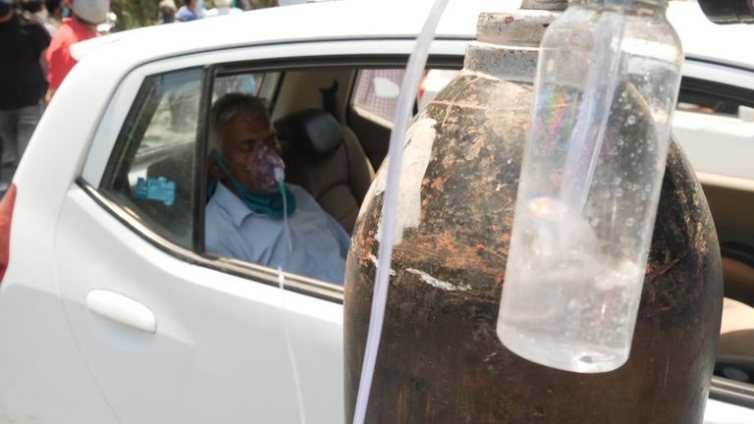
Dozens of vehicles were crammed into a narrow road outside a Sikh temple in the east of the Indian capital, New Delhi.
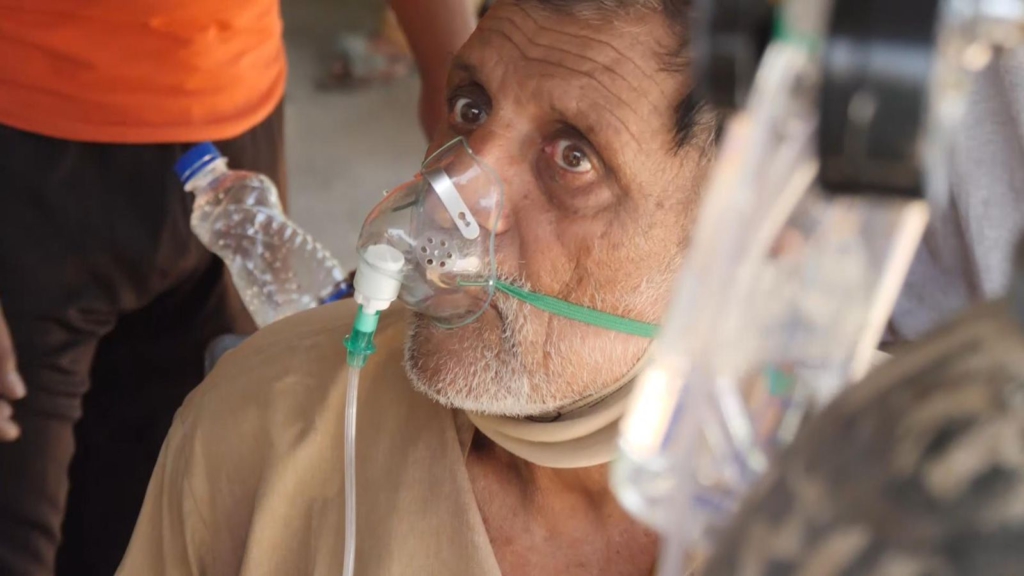
They were all full of sick or dying people desperate to get hold of oxygen.
Almost certainly, most of them should be in hospital receiving specialist treatment from trained professionals.
Instead, as India registered a new global record for the most number of infections in a day on Sunday - for the fourth day in a row - they were reduced to sucking air from bottles of oxygen on the street provided free by a Sikh charity.
Many arrived at the temple folded into a car seat or curled up at the rear of a rickshaw.
Some were already unconscious, while others were bent over, working hard to draw breath.
Many of the parked vehicles had tubes hanging out of the windows, attached to huge tanks which are now people's lifeline.
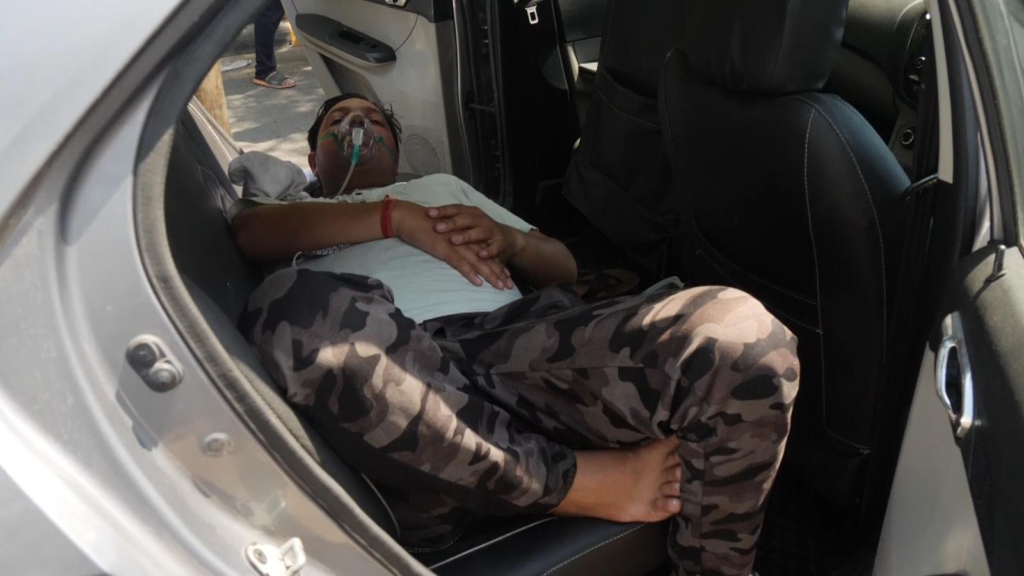
This wasn't the site of a hospital. It wasn't an official government-organised oxygen provider. This was a voluntary outfit run by the Sikh Khalsa Help International charity.
While hospitals in the capital raised the alarm over oxygen running out for the seventh day running, people were racing to volunteers who had managed to source small amounts of oxygen.
"I don't know what the government is doing," said founder Gurpreet Singh. "If we can do this, why can't they?"
It is a fair enough question many people across India are asking about these entrepreneurial outfits which are managing to do whatever they can to help their fellow Indians.
For citizens who are feeling for the most part abandoned during this overwhelming second Covid-19 wave, any help is being hungrily grasped with some gratitude.
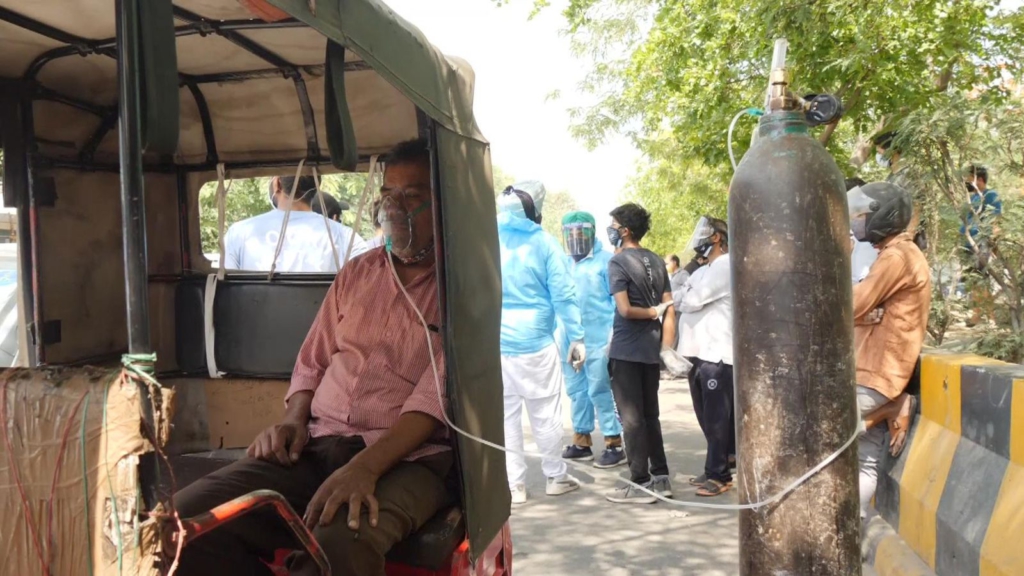
Siddiqui Ahmad had brought his 32-year-old son to beg for air. "He's been turned away from everywhere," his mother sobbed to us. "No one would help."
Indians across the country have been reduced to bartering, begging for or borrowing air.
The couple's son, Abu Sadat, is looking very weak and motionless in the back of the tut tut they have arrived in. Siddiqui is pleading with the over-pressed volunteers to tend to him - and quickly.
They jump into action and drag an oxygen tank to him and hook him up. His parents breathe gulps of relief as their son finally has the best chance of survival in more than eight days - but it is short-lived.
Within minutes there's a panic as he seems to lapse into unconsciousness. His younger brother Faraz is busy pumping his chest to try to jerk him back into life. Abu Sadat is looking very dazed, very weak but he is alive and with the oxygen mask firmly fixed on his face.
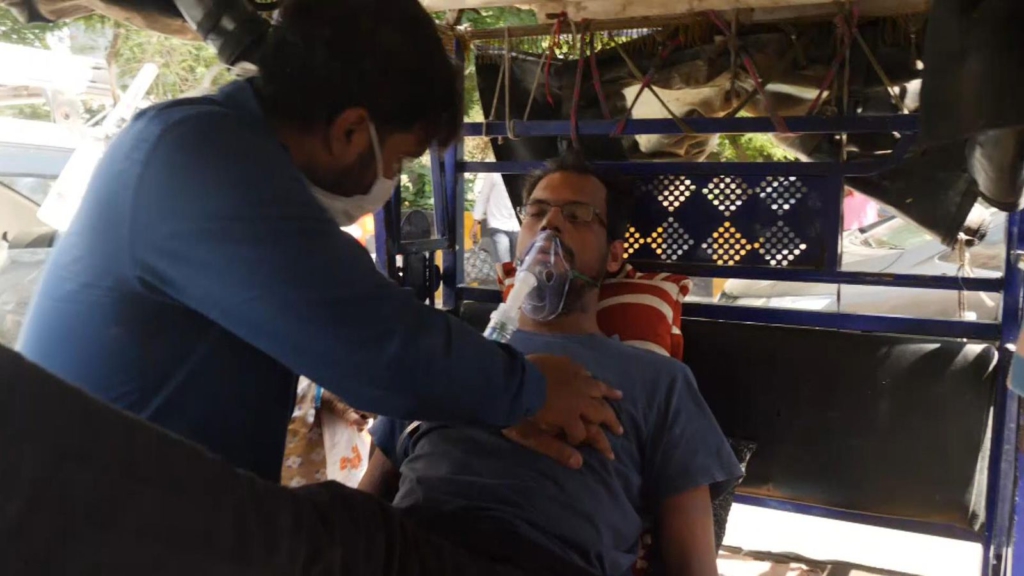
His brother keeps on slapping his cheeks, trying to make him more alert. They - like all the families here - don't want to lose any more loved ones to this deadly disease. They're fighting but there's a growing feeling they are being left to fight this virus without the tools to do it.
Britain has announced it is sending more than 600 pieces of life-saving medical equipment which will arrive on Tuesday.
The EU and America have both said they are ready to help - but the people on the ground have yet to see any substantial help from their own government or other countries.
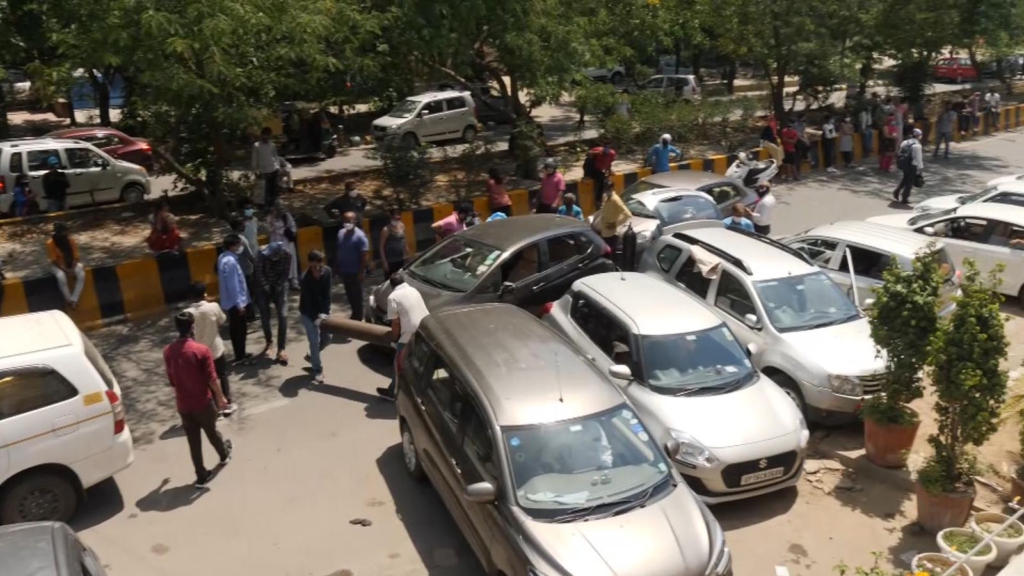
We watched as a young man burst into tears before he'd managed to get any help for what looked like his older brother in the back of his car.
"He's expired," said the driver in the front, looking visibly shocked. "He's no longer here."
It would be shocking enough just on its own - but this is a scene being played out multiple times across this huge and massively populous country.
Tragedy upon tragedy - and showing no sign of abating.
Latest Stories
-
Kwaku Azar writes: A-G vs OSP
31 minutes -
Mfantsipim–Adisadel rivalry built excellence, not division – Sam Jonah
56 minutes -
Vice President launches Mfantsipim’s 150 years of shaping Ghana’s greatest mind
1 hour -
I assure Otumfuo, Mahama will join him to commission KNUST Teaching Hospital by end of this year – Haruna Iddrisu
2 hours -
Barcelona dominate derby to extend La Liga lead
2 hours -
Gov’t to roll out free special education for persons with disabilities from July 1 – Education Minister
2 hours -
Importers and Exporters Association declares full support for Publican AI port system
3 hours -
“We used it to test our officiating officials’ readiness” – Bawah Fuseini after CAA Athletics event
3 hours -
Volleyball emerges as Ghana’s fastest rising sport
3 hours -
National Sports Fund needs strong leadership from the top – Administrator David Wuaku
3 hours -
JoySports Exclusive: Steve McLaren in talks with GFA after expressing interest in Black Stars job
3 hours -
Fire guts auto parts warehouse at Bubuashie, one fire officer injured
3 hours -
I owe my victory to coach Ofori Asare – Allotey after winning WBA Africa Gold Super Flyweight belt
3 hours -
Church of Pentecost supports over 2,000 BECE candidates in Obuasi with career guidance seminar
5 hours -
Brandon Asante and Coventry all but promoted to Premier League despite Sheffield Wednesday draw
5 hours