

Audio By Carbonatix
An initiative to connect 300 million Africans to electricity in the next six years has won new pledges worth more than $8 billion from lenders including the Islamic Development Bank and the Asia Infrastructure Investment Bank.
The Mission 300 initiative, launched by the World Bank and the African Development Bank in April, is projected to cost $90 billion. Its implementation faces challenges because the economies of countries in the region are severely constrained, mainly due to sluggish revenue and high debt service costs.
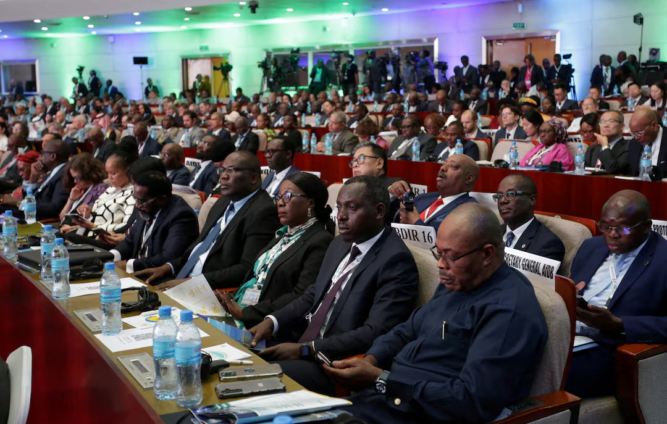
"Our national balance sheets are insufficient... to achieve Mission 300's objectives," Zambian President Hakainde Hichilema told an Africa energy summit in Tanzania.
Funding for the project is expected to come from multilateral development banks, development agencies, private businesses and philanthropic organisations such as the Rockefeller Foundation, opens new tab, which is part of the initiative.
Muhammad al Jasser, chairman of the IsDb, said in a statement released during the summit that ended on Tuesday that the Jeddah-headquartered bank was committing $2.65 billion in project financing and another $2 billion to insure power projects in Africa.
Beijing-based AIIB is set to provide $1-1.5 billion in financing.
"Six hundred million people in Africa without access to electricity is intolerable," said AIIB President Jin Liqun.
Others funding the project include the French Development Agency (AFD), which committed to providing 1 billion euros ($1.04 billion), and the OPEC Fund for International Development, which made an initial commitment of $1 billion, the AfDB said in a closing statement.
The additional finance builds on commitments of up to $48 billion from the World Bank and the AfDB, officials at the summit said. The two organisations' contributions could be increased during implementation, they said.
Provision of 300 million people with access to electricity, half of those currently without power on the continent, is a crucial building block for boosting Africa's development by creating new jobs, said World Bank President Ajay Banga.
Half of the targeted new connections will get electricity from existing national grids, officials said at the summit, while the other half will be from renewable energy sources, including wind and solar mini-grids.
Apart from lighting up homes and businesses, Mission 300 is expected to boost the provision of clean cooking energy to homes, cutting reliance on wood and charcoal which are harmful, said Tanzania's president, Samia Suluhu Hassan.
Latest Stories
-
Ghana housing finance conference adopts communiqué to improve affordable housing access
2 hours -
Special Initiatives Minister urges Wa Technical Institute to enrol more girls as EU-backed solar training lab opens
3 hours -
In the matter of my first year at the Bar
3 hours -
ActionAid Ghana calls for an end to child marriage, greater investment in girls’ rights
3 hours -
Newsfile to tackle World Cup visa scandal, beach demolitions, education strikes, BRICS bid
3 hours -
UK-Ghana Trade & Investment Summit: Trade Resource Centre to help businesses maximise UK-Ghana trade opportunities
3 hours -
Embassy of Denmark celebrates World Maritime Day
4 hours -
Linking LEAP to productive inclusion could cut extreme poverty by 2030 – UNICEF
5 hours -
Trade Ministry backs use of creative arts to rehabilitate prison inmates
5 hours -
Negotiations with government to continue despite strike suspension – GNAT
5 hours -
‘Ghana cannot afford to waste public resources; every cedi has a job’ – Ato Forson
5 hours -
Ghana expects economic boost as World Assemblies of God Congress brings 10,000 delegates to Accra
5 hours -
Joy in Nayilifong as Farouk Aliu Mahama donates 100kVA transformer to improve power supply
5 hours -
Chief Justice urges employers to tackle mental health stigma in workplaces
6 hours -
Analysis: Ghana’s yellow fever numbers reveal a gap between vaccination and protection
7 hours