

Audio By Carbonatix
Ghana is targeting universal access to electricity by 2030, with the country’s electricity access rate now approaching 90 percent, Energy and Green Transition Minister John Abdulai Jinapor has announced.
The Minister said the government had recently connected an additional 200 communities to the national grid as part of efforts to close the remaining gap and extend electricity to communities still without access.
“Ghana currently has about 90% access to electricity. We just connected 200 more communities, and we are working to close the remaining gap by 2030,” Mr Jinapor said.
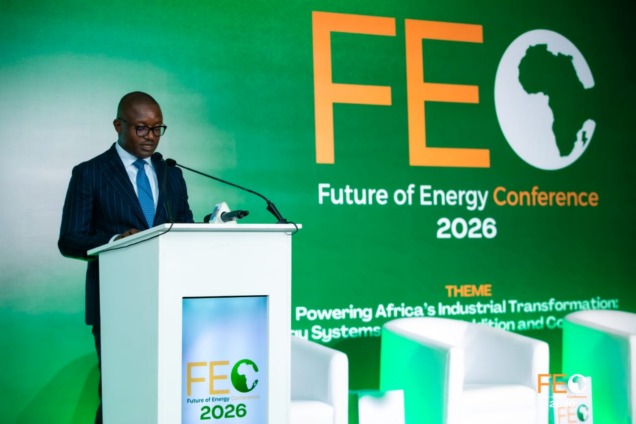
He was speaking at the Future of Energy Conference, where he outlined Ghana’s electricity ambitions and the need to ensure that increased access translates into reliable and affordable power.
“Our vision is that by 2030, we should achieve universal access to electricity here in Ghana,” he stated.
Mr Jinapor, however, stressed that Ghana’s electricity target should not be measured only by the number of people connected to the national grid.
He said the quality, reliability and cost of electricity would be equally important as the country seeks to expand industrial activity and create jobs.
“What kind of electricity are we providing and at what cost? With what reliability, and can it power competitive African industries?” he asked.
According to the Minister, Ghana’s industrialisation agenda will require a power supply capable of supporting businesses and industries consistently and at competitive prices.
The government is therefore seeking to address the remaining access gap while also strengthening the wider power sector.
Mr Jinapor also pointed to emerging sources of electricity demand, including the growing adoption of electric vehicles.
He said Ghana would have to strengthen its electricity infrastructure to accommodate changing consumption patterns without placing additional pressure on supply to households and businesses.
This will require investment not only in generation but also in transmission and distribution infrastructure, alongside renewable energy and energy storage systems.
The Minister's comments come as Ghana continues efforts to expand electricity access while dealing with the broader challenge of ensuring a stable power supply to support economic activity.
With about four years remaining to the 2030 target, the government faces the dual task of connecting the communities that remain without electricity and ensuring that the power supplied is reliable and affordable enough to support Ghana’s industrialisation ambitions.
Latest Stories
-
Mr President, Ghana was mentioned at the UN; why aren’t we talking about it?
2 hours -
Accra to convene Africa’s regulators and markets on tokenisation at AVAS 2026
2 hours -
The Paradox of Plenty — When every smartphone becomes a newsroom
2 hours -
GTA sensitises taxi drivers in ‘Know Ghana’ tourism campaign
3 hours -
Archbishop Agyinasare calls for responsible speech amid growing social media abuse
4 hours -
‘It will be inexcusable for gov’t not to honour payment of teachers’ arrears by 30th October’ – Haruna Iddrisu
4 hours -
Forbes’ World’s Best Employers 2026: No Ghanaian firm ranked among 900 companies
4 hours -
Electronic processing of teachers’ data: ‘The decision is the Controller’s’ – GES boss
4 hours -
Teachers’ Strike: Haruna Iddrisu questions paper-based processing of promoted teachers’ data
4 hours -
Savannah Region: Kunfusi bridge collapses again, leaving nearly 4,000 residents cut off
4 hours -
Teachers’ strike: GES targets Monday deadline to submit promotion data to Controller
4 hours -
Inflation to average 11.3% in 2027 – Fitch Solutions
5 hours -
‘I didn’t campaign for NDC to come and do this nonsense’ – Kpebu on EOCO’s conduct
5 hours -
Fitch Solutions maintains policy rate forecast of 14% by December 2026
5 hours -
Diaspora Nasara Caucus congratulates Mohammed Ali Suraj, new NPP executives
6 hours