

Audio By Carbonatix
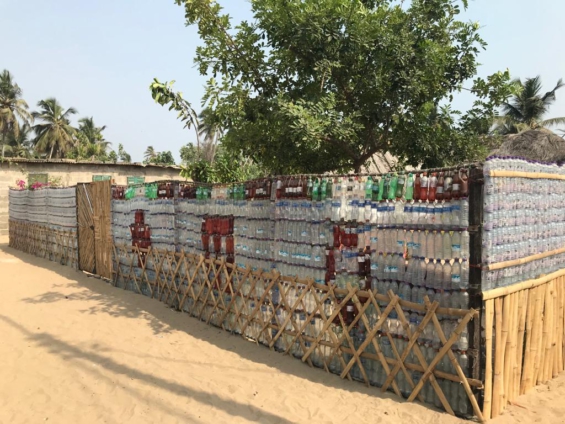
Amidst the clustered settlement along the Volta River in Kewunor, a coastal village in the Ada East district of the Greater Accra region, sits a well-crafted fence protecting a thatched house.
The rectangular fence is carefully constructed and designed with plastic bottles which littered the beaches at the Volta River estuary.
Pointing to a section of the wall interwoven by different branded plastic bottles as he welcomed a team of budding Climate Change journalists into his new home, Jonas Zomelo, the developer, explained the increasing plastic pollution in the community informed his innovation.
“When I started, the community folks were wondering what I was doing. But now some of them want me to build one for them,” he explained.
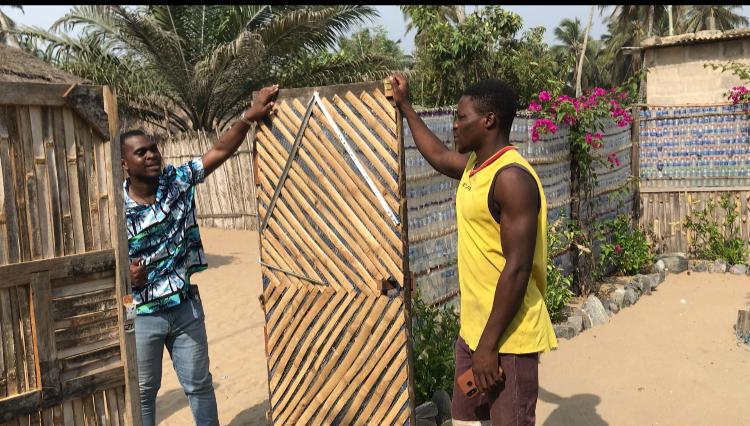
A carpenter is conventionally known to be adept at using wood for his designs and construction, but Jonas is the living irony to the woodcraft specialty.
Realizing the detrimental effects of plastic waste on the environment, he added the skill to reuse plastic waste for a variety of artworks and buildings.
Currently, he is experimenting the different interlock designs to build a resilient wall from the thousands of plastic wastes heaped behind the thatched house within the fence.
“So I saw a lot of waste in the environment and I decided to use technology to help reduce it. I went on YouTube to learn how to connect the bottles,” Jonas innocently explained how he learned the skill.
His source of the waste material has been loads of plastics left behind at the beaches by revelers who visit the coastal villages to catch glimpses of the beautiful scenery at the estuary while they enjoy the cool breeze.
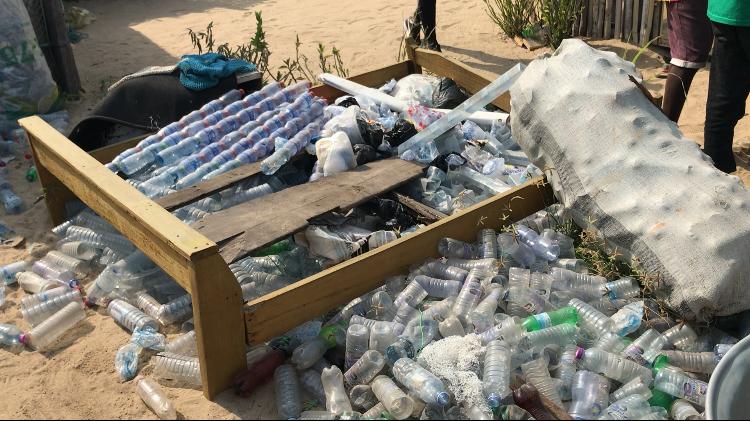
He sometimes sources from the waste materials discarded behind the homes of some residents living at the immediate shore of the Volta River.
To complete an entire edge of the rectangular plastic fence, it would take Jonas close to 24 hours of interlocking the bottles and erecting them on the sandy soil.
Jonas, a passionate young environmentalist, is poised to hand on the gained skills to others in the community to realise his dream of building a tourist attraction with plastics.
“My efforts are little. I can’t do it alone” he said with conviction that the collective efforts of reusing plastic wastes in the community would contribute to saving his ‘drowning’ village.
Drowning Kewunor and Azizanya villages
The change in weather patterns and temperature increase are a few of the ramifications of Climate change inland dwellers experience.
But for residents along the coast, they must couple the sweltering weather conditions with rising sea levels.
Kewunor and Azizanya are two communities locked between the Gulf of Guinea and the Volta River.
But the increasing tidal wave is gradually eroding portions of the peninsula communities with rampant cases of flooding.
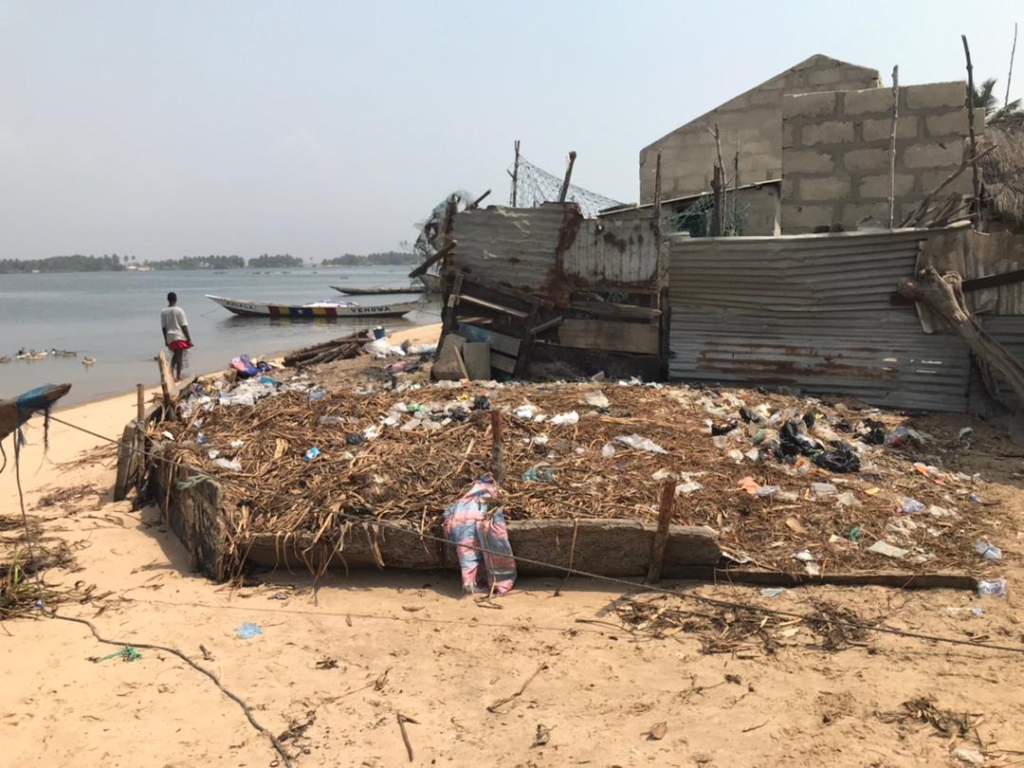
Like most communities along Ghana’s coast, the two villages at the estuary, housing over thousand dwellers, have no well-established waste management system.
Fisherfolk are forced to discard their domestic waste in the open, mostly behind their homes until they bulge into a pile of garbage mixed with the sand.
This is not a deliberate decision by the indigenes to dirty the community, but rather an interim solution to control flooding in the area.
“When the River flows closer to the community, it is redirected by the refuse collected behind their homes. So if it is further extended, it prevents the water from entering their homes,” Wonder Sokpoli, a resident, told fellows of the MFWA Climate Change journalism team who visited the community.
However, this local solution could contribute to exacerbating the woes of the residents in the community.
They hope the local government authority would furnish them with a proper waste disposal mechanism.
The writer is a fellow of the Climate Change Journalism Fellowship (CCJF) Programme by the Media Foundation for West Africa (MFWA), a non-for-profit media development and freedom of expression organization based in Ghana but working across West Africa. The Fellowship trains journalists to promote climate change awareness and responses through increased and quality media reporting and public education. To learn more about the fellowship, click here or visit the www.mfwa.org (climate change journalism fellowship)
Latest Stories
-
TTAG raises alarm over proposed recruitment of 7,000 teachers, demands national posting roadmap
32 minutes -
Civilians feared killed after reports of air strike on Nigerian market
41 minutes -
Bishop Simon Kofi Appiah installed as new Jasikan Diocese Bishop
42 minutes -
Trump’s Strait of Hormuz blockade threat raises risks and leaves predicaments unchanged
45 minutes -
US Court backs extradiction of former MASLOC CEO Sedina Tamakloe-Attionu’s to Ghana
1 hour -
Seven arrested as NAIMOS dismantles illegal mining camp, seizes firearms at Boin River
1 hour -
Fire erupts at Madina Ritz Junction, destroys multiple wooden structures and containers
1 hour -
Daniel-Kofi Kyereh returns from long-term injury, registers assist for Freiburg U23
2 hours -
Knifeman calling himself ‘Lucifer’ slashes three at NYC’s Grand Central
2 hours -
Brands are built from within to without
2 hours -
Matriculants urged to pursue excellence as gov’t reaffirms support for Maritime education
2 hours -
See the areas that will be affected by ECG’s planned maintenance on Monday, April 13, 2026
2 hours -
GPL 2025/26: Salim Adams double fires Medeama back to summit after Kotoko rout
2 hours -
Two robbery suspects convicted following violent gold dealer attack in Obuasi
2 hours -
Supreme Court @150: Fanfare meets reflection as nationwide activities roll out
2 hours