

Audio By Carbonatix
Grace Ano Abbey, a Principal Executive Officer at the Department of Children in the Ministry of Gender, Children, and Social Protection, has identified poverty and irresponsible parenting as significant obstacles to the academic performance of girls in schools.
Abbey emphasized that the inability of some parents to monitor and support their children, combined with economic challenges, negatively impacts the educational journey of many girls.
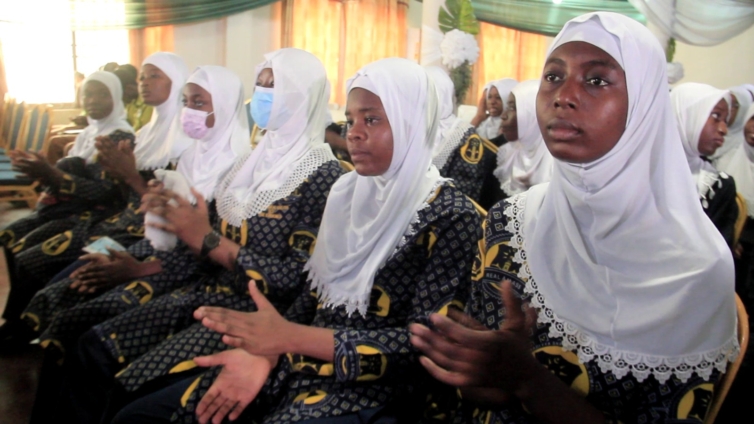
Speaking at the 14th Annual Conference of the Federation of Muslim Women's Association in Kumasi, Abbey highlighted the struggle faced by numerous girls in affording basic learning materials, which, in turn, has a substantial effect on their academic work.

The Ministry official underscored the importance of addressing these challenges to ensure that all girls have equal opportunities for academic success.
"The major challenges we have when it comes to girls is poverty, the basic things they need to go to school, they don't get it, some parents cannot afford those basic things," she said.
Abbey emphasized that some parents neglect their duty to supervise or monitor their children's education, showing indifference to whether their children attend school or not.
Abbey urged parents to actively support their daughters by providing essential items such as sanitary pads and learning materials. She stressed that these contributions are crucial for improving the academic performance of girls.

Additionally, Grace advised young girls to prioritize their education over excessive use of social media, highlighting the potential hindrance it poses to academic progress. Encouraging a focus on learning, Abbey emphasized the role of responsible parenting in creating an environment conducive to educational success for girls.
"Social media is always available, but they should focus on their studies so that they can excel and pursue careers as doctors and lawyers. Then, they can use social media more effectively," she added.
Hajia Hajara Mohammed Rufai, a Commission Member of the National Commission for Civil Education, underscored the adverse impact of insufficient educational facilities in the inner cities of Zongo communities on the academic development of children.
According to her, the absence of proper educational institutions poses a significant obstacle to the learning opportunities available to children in these areas.
Hajara Mohammed Rufai also pointed out additional challenges, including the lack of motivation and mentorship, which seriously deter children, especially girls, in Zongo areas from attending school. These issues, she emphasized, contribute to hindering the academic progress of children and underscored the need for concerted efforts to address these barriers to education in Zongo communities.
Latest Stories
-
Conflicts among care providers linked to maternal, neonatal deaths – Expert
60 minutes -
GIS marks 10th TIME conference, champions improved teaching practices
1 hour -
BRICS Or Balance? What Ghana’s bid really means
2 hours -
GPRTU wants full TRAFFITECH-GH implementation to start in 2027
2 hours -
Mahama announces plans to import electric wheelchairs for PWDs
2 hours -
KGL U17 Colts 2026: Western beat Prempeh Elite Academy to set up final final with Greater Accra Region
2 hours -
Late Solanke strike salvages 10-man Spurs draw at Man United
2 hours -
Gender Ministry to monitor welfare of Nana Akua Addo’s children amid domestic violence case
3 hours -
Benedict Okyere Yeboah: Ghana’s football problem goes beyond sacking a coach
3 hours -
GPL 2026/27: Darkwah Wiafe’s winner sees All Blacks beat Kotoko
3 hours -
ITF World Tour : Patel Wins Boys’ Singles Final at J100 Accra
3 hours -
Ghana must pursue BRICS partnership if it brings economic benefits – Kpebu
3 hours -
Success and Wright Claims J100 Accra Girls’ Doubles Championship
3 hours -
ITF J100: America’s Wright wins J100 Accra Girls’ Singles Title
3 hours -
Expedition hopes to find aviator Amelia Earhart’s plane on remote island
3 hours