

Audio By Carbonatix
The Public Procurement Authority (PPA) says a new legislative amendment before Parliament is expected to clarify long-standing ambiguities in Ghana’s procurement law, particularly around single-source and sole sourcing arrangements.
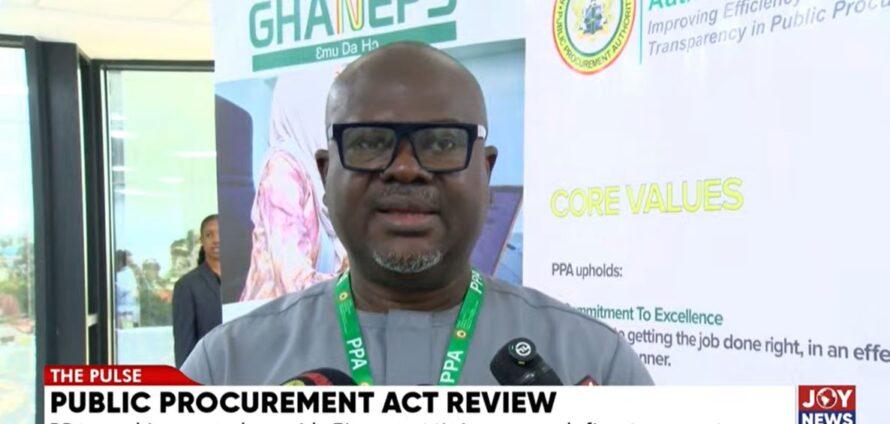
The Board Chair of the PPA, Basil Ahiable, explains that after 23 years of implementing the Public Procurement Act, 2003 (Act 663), practical challenges and interpretation gaps have emerged, especially in the application of key provisions.
He noted that Section 14 of the Act mandates the PPA to approve single-source procurement based on specific conditions, but unclear definitions have created loopholes in practice.
“Twenty-three years down the line, there will naturally be loopholes and issues with interpretation. That is what the board has recommended addressing,” he said.
Mr. Ahiable disclosed that, working with the Minister of Finance, a bill has now been forwarded to Parliament to redefine critical terms within the law, including the concept of “agency” under Section 41B.
He explained that the lack of a precise definition has contributed to inconsistent application of the law, particularly in situations involving procurement urgency and budget constraints.
He also highlighted challenges faced by institutions operating under strict budget cycles, where delays in fund releases often push agencies toward expedited procurement processes.
“There are instances where institutions receive budget releases late and are unable to complete procurement before the end of the year. The law requires unspent allocations to be forfeited, and that creates pressure in interpretation,” he said.
According to him, these practical realities have made it difficult even for the governing board to consistently interpret certain provisions of the law.
Mr. Ahiable expressed confidence that the proposed amendments will eliminate ambiguity, provide a clear definition of urgency and agency, and guide procurement decisions more effectively.
He added that once passed, the reforms will strengthen compliance, improve oversight, and ensure that procurement practices better reflect the intentions of the law.
“The goal is to remove uncertainty. Once that is done, we will be better guided to operate within a clear legal framework that meets the aspirations of the people of Ghana,” he stated.
Latest Stories
-
Mahama urges African governments to treat healthcare as an investment, not budget cost
51 seconds -
Bawumia congratulates John Boadu and new NPP executives, pledges support ahead of 2028
2 minutes -
‘No talent should be left out’ – Bawumia pledges inclusive NPP campaign for 2028
8 minutes -
Prof. Mike Oquaye recounts how he blocked Special Prosecutor’s attempt to arrest Bawku Central MP
24 minutes -
Make health sovereignty a priority for Africa – Mahama
35 minutes -
Dorimon Naa, Wa West DCE lead massive clean-up exercise; threaten sanctions against recalcitrant residents
53 minutes -
Photos From Adom FM Y2K Jam
55 minutes -
Praye Tiatia steals the show at Adom FM Y2K Jam [Watch]
1 hour -
Boakye Agyarko congratulates John Boadu, pledges support for NPP leadership
1 hour -
Antwi HiMight thrills fans with Antwi ne Antwi hits at Adom FM’s Y2K Jam [Video]
1 hour -
Amb. Edward Boateng congratulates Boadu, Kodua on election wins
2 hours -
John Boadu pledges to rebuild NPP from grassroots and restore ‘winning machinery’
2 hours -
Ashaiman Assembly deploys monitoring system to curb dumping in storm drain
2 hours -
John Boadu must rebuild, unite NPP for 2028 – Edward Boateng
2 hours -
Executive intimidation of opposition undermines separation of powers – Prof Oquaye
2 hours