

Audio By Carbonatix
Herbal Medicine Practitioner, Dr. Ebenezer Agyemang, is alarmed at the heavy metal concentrates found in herbs sourced from mining areas.
Already, some herbs and plants used as medicine are going extinct due to deforestation, mainly caused by illegal miners.
Founder of Ebenage Herbal Production, Dr. Agyemang observed growth in the herbal industry may slow down if the phenomenon persists.
“These are contaminants that are so toxic to the vital organs. The plants may be effective for consumption and medicinal purposes but due to the accumulation of these heavy metals like cyanide and mercury they will not be safe for consumption”, he said.

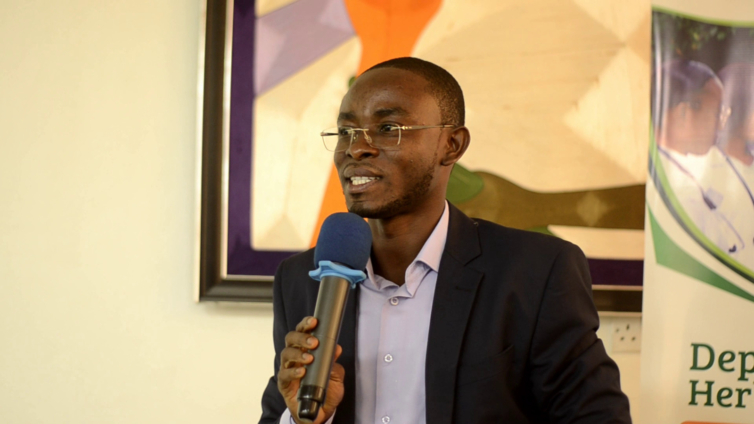
Dr. Agyemang addressing students of Herbal Medicine Department of the Kwame Nkrumah University of Science and Technology further revealed, “The rate of contamination is on the rise, if we don’t do anything about it now, we may be importing organic medicines free from contamination or we may be buying them at higher price”.
The World Health Organization (WHO) estimates that about eighty percent of people in the developing world depend on traditional medicine to meet their primary healthcare needs, further projecting the global market for herbal products will be worth US$5 trillion by the year 2050.
In Ghana, it is estimated 951 tons of crude herbal medicines were sold at Ghana’s herbal markets in 2010, with a total value of around US$7.8 million.
From the statistics, the relevance of herbal medicine remains enormous but the surge in illegal mining has caused deforestation leading to decreasing raw materials for industry players.
As the country continues to lose forest cover to illegal mining, herbal medicine practitioners are being encouraged to consider the cultivation of medicinal plants.
Dr. Agyemang wants the government to step up fights to halt illegal mining.
“We need to get measures in place now else the future will not be bright for the nation”, he emphasized.
Meanwhile, the forum which was to launch a research support fund dubbed “Hepa Plus Research Awards” also highlighted the potential for students to gain employment after their study.
Head of Department at the Herbal Medicine Department of KNUST, Prof. Isaac Kingsley Amponsah explains, "we have people who do not know how to write plant names, left alone to pronounce them but they are making it big in this field."
Latest Stories
-
SSNIT intensifies informal sector enrolment drive with Techiman float
30 minutes -
Ghana seeks long-term mining investments that benefit local communities – Armah-Kofi Buah
37 minutes -
GHATOF demands compensation for 85 businesses affected by La Pleasure Beach demolition
42 minutes -
Bono Regional Minister calls for investor education to drive economic growth
46 minutes -
Ghana’s Ambassador to China, Kojo Bonsu, presents credentials to Nepalese President
49 minutes -
Fairtrade Africa’s Cocoa Hubs Project strengthens rural service centres in cocoa-growing communities
55 minutes -
MPs are not development officers – Edem Kpotosu
55 minutes -
SEC cautions investors against fraudulent investment schemes
56 minutes -
Land Ministry urges rCOMSDEP operators to reserve earnings for land reclamation
59 minutes -
Commercial drivers give authorities one week to clear traders from lorry terminals, bus stops
1 hour -
Trump calls off livestream of Fort Hood attacker’s execution by firing squad
1 hour -
Nana B denies claims that Kojo Bamba was his driver and bodyguard
2 hours -
Engage Now Africa to construct a 10-unit classroom block for struggling Navrongo Vocational Training Centre
2 hours -
One digital financial breach could expose linked accounts to fraud – Financial Crimes Manager
2 hours -
Ghana Russia Centre signs ICT cooperation agreement with Moscow University
2 hours