

Audio By Carbonatix
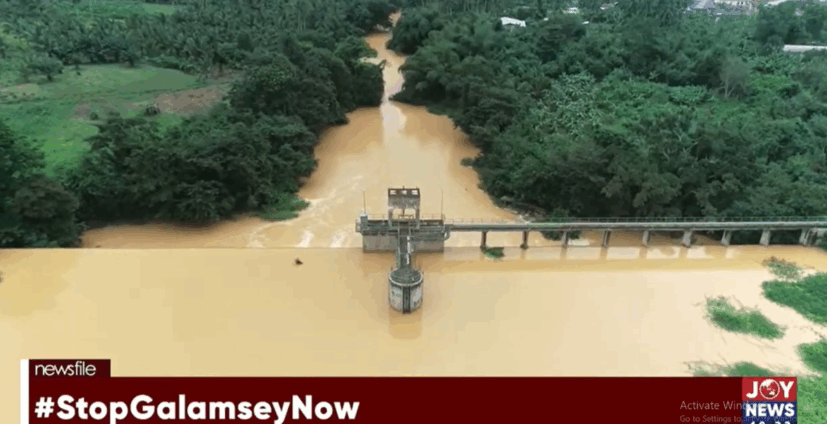
Research Scientist at CSIR and Adjunct Lecturer at the University of Mines and Technology (UMaT), Albert Kobina Mensah, has raised alarm over the growing presence of toxic heavy metals in Ghana’s soil, water, and food as a result of galamsey activities.
Speaking on JoyNews’ Newsfile on Saturday, September 27, Mr Mensah said his research has confirmed dangerous levels of metals such as arsenic, cadmium, mercury, and lead in areas affected by illegal mining.
These, he warned, are entering crops, water sources, and even medicinal plants, posing serious health risks.
According to him, while some metals like copper, zinc, iron, and manganese are essential in small amounts, others, such as arsenic, lead, and mercury, are not needed by humans or plants.
“Even a minute fraction of these non-essential metals becomes concerning,” he said.
Citing a study he carried out in Amansie West in the Ashanti Region, he revealed shocking findings.
“The total element content of metals in the soils there was about 1.73 times higher than the world average. Cadmium alone was 180 times higher, mercury was 1.74 times higher, and lead was 1.16 times higher,” Mr Mensah stated.
Mr Mensah further demonstrated how food crops absorb these metals. In one experiment using contaminated soil to grow lettuce, he found that “The mercury in the lettuce was more than 3,600 times higher than the reference limit. Lead was more than 83 times higher, and chromium over 27 times higher.”
He also discovered similar dangers in medicinal plants such as achampre (used widely for herbal treatments).
“Arsenic concentration in the shoots was about 1,200 milligrams per kilogram, while copper accumulation in the same plant was 750 milligrams per kilogram. These are very high,” he warned.
The scientist explained that rice, a staple food in Ghana, is especially vulnerable. “You may be eating rice, but unfortunately, you may be eating arsenic as well. Because rice is grown in waterlogged fields, it easily takes up arsenic,” he said.
He added that children and pregnant women are most at risk.
“Lead in young children, adults and pregnant women can lodge in the blood, brain, liver, and kidney, leading to serious consequences such as neurological disorders, deformities in unborn babies, kidney damage, and cognitive malfunctions,” he cautioned.
“We have to be very serious about this. If we continue like this, we risk chronic diseases, deformities in babies, and generations growing up with neurological problems. Galamsey is not just destroying land and rivers; it is poisoning the food we eat and the water we drink.”
Latest Stories
-
One digital financial breach could expose linked accounts to fraud – Financial Crimes Manager
45 seconds -
Ghana Russia Centre signs ICT cooperation agreement with Moscow University
5 minutes -
The powerhouses of the village: Honouring Ghana’s rural women on International Rural Women’s Day
5 minutes -
Vincent Assafuah petitions CHRAJ to investigate alleged irregularities in 2026 World Cup visa arrangements
6 minutes -
12-year-old boy found dead in muddy pit at Opeikuma
8 minutes -
GHS begins Yellow Fever vaccination campaign in three Upper West districts
9 minutes -
Organised Labour pushes for higher 2027 base pay despite slowing inflation
11 minutes -
Parliament’s Human Rights Committee demands swift justice in Obuasi SHTS sexual abuse case
21 minutes -
From Campaign Propaganda to Gov’t Accountability: When the message-makers demand a seat at the table
39 minutes -
Ashanti Region Security Coordinator warns sand winners to stay off Accra–Kumasi Expressway site
43 minutes -
PZ Cussons Ghana promotes hand washing among schoolchildren through Camel campaign
1 hour -
30 NDC aspirants file nominations in Upper West as regional election approaches
1 hour -
UPSA launches laptop assembly plant, requiring new students to assemble their own devices
1 hour -
UCC sociologist calls for action on gender inequality to end child marriage
1 hour -
LSN questions Ghana’s proposed five-year presidential term and DCE election reforms
1 hour