

Audio By Carbonatix
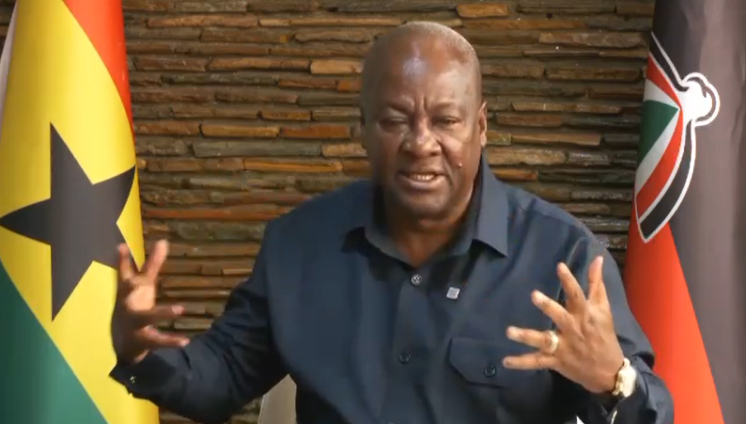
President-elect, John Mahama, has pledged to revamp the cocoa sector and reorganise the state-run regulator, aiming to stimulate growth and improve efficiency in the world's second-largest cocoa producer.
In an interview with Reuters on Friday, he criticised the cocoa industry structure where the cocoa marketing board (COCOBOD) competes with farmers for profits.
"Can we have a state enterprise that is the regulator and quality controller, and that creates an opportunity where the farmer is getting his money directly?" Mahama said.
"We will see how to restructure it (COCOBOD)."
The COCOBOD controls all aspects of cocoa production in Ghana – from seedlings to jute bag supplies for packing beans for exports. Previous attempts to break it up have failed.
Mahama said his government would work out the modalities of a restructuring, hinting at private sector involvement in some areas handled by COCOBOD.
A former president, Mahama secured a decisive victory in the Dec. 7 election, driven by voter dissatisfaction with the rising cost of living, instability and falling production in the country's key cocoa and gold sectors.
As leader of the National Democratic Congress party, which also secured a wide majority in the parliamentary election, Mahama will take office on Jan. 7, as the economy recovers from its worst crisis in a generation.
Mahama said one of his priorities would be to revamp cocoa and crude oil output to help lift growth and increase non-tax revenue.
Ghana's cocoa production hit its lowest level in decades last season, dragged down by climate change, tree disease and wildcat gold mining.
COCOBOD's spending has also come under scrutiny after it emerged that its administrative costs more than tripled between 2018 and 2023.
Mahama blamed what he described as COCOBOD's wasteful spending for depleting cocoa production funds and depriving farmers of optimal prices, leading many to turn to illegal mining or seek alternative livelihoods.
His proposed reforms aim to increase efficiency across the cocoa sector's value chain, with the farmer as the primary beneficiary, not the bureaucracy.
The International Monetary Fund (IMF), which is administering a three-year, $3 billion rescue package with Ghana, has prompted COCOBOD to propose a turnaround plan to cut costs and increase farmers' share of cocoa revenues.
"We're willing to work with anybody if it'll make the cocoa sector more efficient and bring back our cocoa production to what it was before," Mahama said.
Latest Stories
-
President Mahama ends Resetting Ghana tour of Ahafo Region
10 minutes -
African negotiators seek delivery of climate commitments at COP31
11 minutes -
BoG develops AI rules for financial sector
13 minutes -
‘Big Push’: Government assures contractors of prompt payments
17 minutes -
Court fines miner for breaking into gold buying shop
27 minutes -
Tarkwa court jails labourer for three years over GH¢123,000 theft
1 hour -
GAEC must retain nuclear scientists for Ghana’s nuclear ambitions – Minister
2 hours -
Man reportedly mistaken for game and shot by hunter dead in forest
2 hours -
19-year-old mason jailed 15 years for defiling seven-year-old pupil
2 hours -
Ghana’s banking sector assets rise 20.47% to GH¢500.2bn – BoG Governor
2 hours -
22 injured as Sprinter bus overturns at Sege after tyre burst
2 hours -
UN housing expert urges Ghana to strengthen Rent Control Department amid housing affordability concerns
2 hours -
Delta-BCI partnership reaches 166,000 people with breast cancer education
2 hours -
Power restoration fault suspected in Kumasi Central Market fire
8 hours -
The 7-foot giant of Ngleshie Amanfro: Seven-foot Ghanaian Ephraim Saawa dreams of joining the national basketball team
8 hours