

Audio By Carbonatix
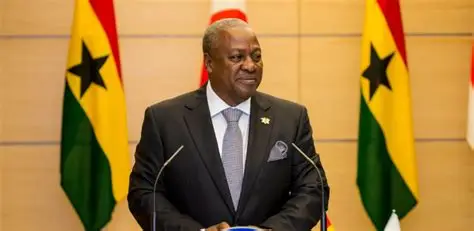
President John Mahama has called for African nations to confront the legacy of slavery and colonialism more honestly, urging that future generations be taught the full history of the transatlantic slave trade rather than a sanitised version of events.
Speaking at a high-level dialogue on reparations at the University of the West Indies in Jamaica as part of his state visit, the president said Africa must free itself from the psychological effects of slavery and colonialism by telling its own history truthfully.
"Emancipate our minds from mental slavery. The twin effects of slavery and colonialism are still enduring, and that is part of the challenge our nations face. We are now independent. We should be able to tell our children the truth."
President Mahama said his own education placed greater emphasis on the abolition movement than on the scale and brutality of the transatlantic slave trade.
"When I was growing up in primary school, abolitionists were portrayed as the most important thing that happened in the slave trade. We were taught about the slave trade, but the gravity of what happened in the slave trade was never really spelled out."
He argued that history books celebrated abolitionists while giving insufficient attention to the suffering of enslaved Africans.
"It was the bravery of the abolitionists and how they were the knights in shining armour who came and stopped it and saved Africans. And so all these people who were involved in the abolition movement were lionised in our history books."
The president said growing international recognition of the transatlantic slave trade as one of history's gravest crimes is helping to deepen public understanding of its lasting consequences.
"Now we can begin to tell our children the truth. And I think that since the resolution was passed at the United Nations General Assembly declaring the slave trade the gravest crime against humanity, it has piqued interest in trying to understand and know what exactly happened."
He said the renewed global interest in the history of slavery is creating greater awareness of its impact and why it remains relevant today.
" I believe that awareness is being created. People are aware of what happened, and it helps for you to know where we have come from, because that informs where we are going."
President Mahama said a truthful understanding of the past is essential to helping African nations chart their future and strengthen the case for historical justice and reparations.
Latest Stories
-
Yaw Ampofo Ankrah hasn’t taken or received any money to facilitate visas – Lawyer insists
17 minutes -
World Cup visa scandal: Senyo Hosi urges focus on constitutional accountability
18 minutes -
La Beach demolition: Senyo Hosi condemns lack of consultation
29 minutes -
Russian glide bomb attack on Zaporizhzhia kills at least 15 people
44 minutes -
Jinapor warns underperforming energy sector CEOs of consequences, says no protection for failure
45 minutes -
Fire destroys head of tipper truck on Lower Volta Bridge
50 minutes -
Palmer signs new Chelsea contract until 2034
51 minutes -
World Cup visa scandal: Mahama will act on corruption allegations – Abass Nurudeen
53 minutes -
Abass Nurudeen accuses Minority of ‘scandal scavenging’ over World Cup visa controversy
55 minutes -
US Embassy recognised NSA, GFA and GTA as separate entities for visa applications – Sports Minister’s aide
1 hour -
Only 30% of Ghanaian teachers satisfied with their jobs – CAPCOE data reveals
1 hour -
Communities affected by construction of Akosombo Dam urge government to speed up compensation process
2 hours -
World Cup visa scandal: Sports Ministry not shielding anyone – Sports Minister’s special aide
2 hours -
World Cup visa scandal: Over 30 people misrepresented as GTA board members to US Embassy – Vincent Assafuah alleges
2 hours -
Fire destroys wooden structure near Yesu Mo Villa at Bush Road
2 hours