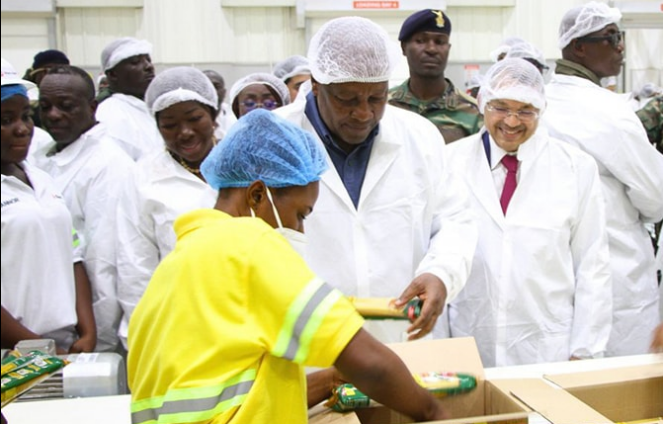
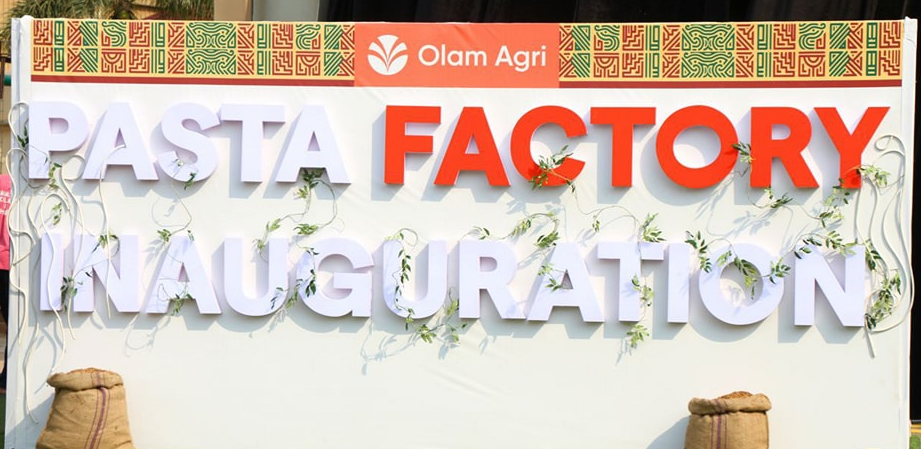
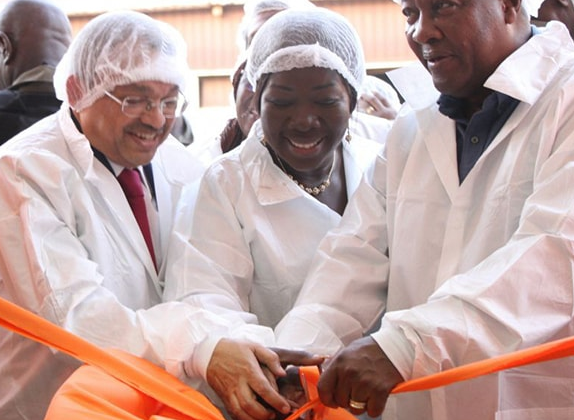
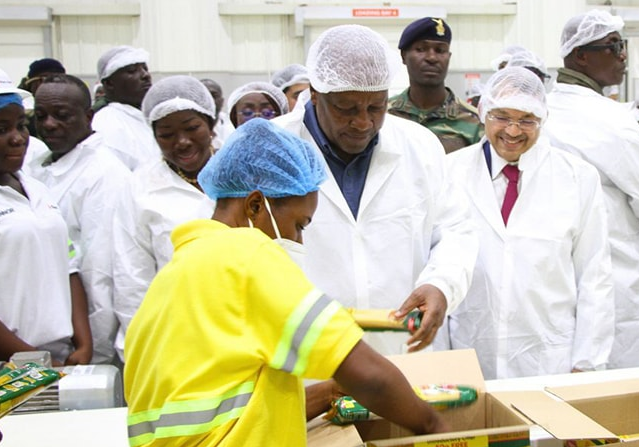
President John Dramani Mahama has officially commissioned a new pasta manufacturing facility by Olam Agri at Kpone, marking a milestone in Ghana’s efforts to boost domestic food production, strengthen agro-processing, and create employment opportunities for the nation’s youth.
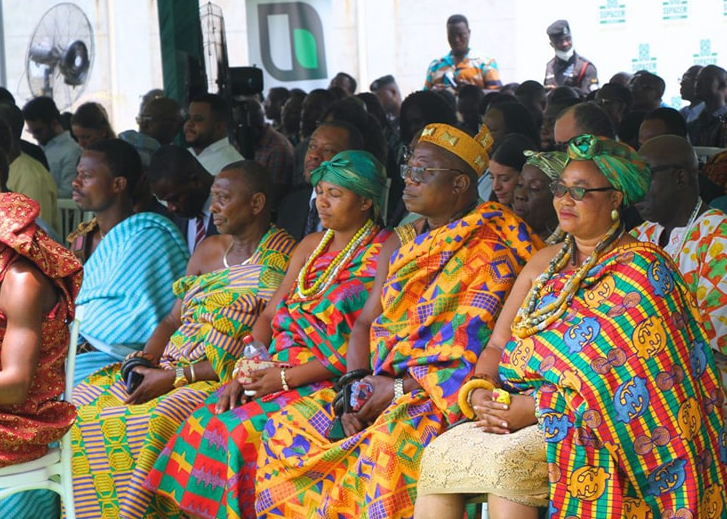
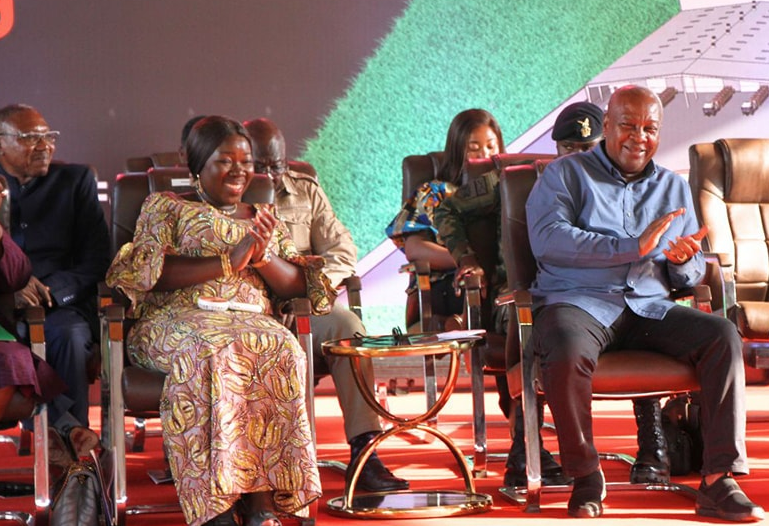
The inauguration ceremony, held on Thursday, 5 March 2026, convened government officials, industry leaders, development partners, and traditional authorities to witness the commissioning of the facility, a project expected to bolster Ghana’s food processing capacity and enhance supply chains across the agricultural sector.
Among those present were Minister for Trade and Industry Elizabeth Ofosu-Adjare, Deputy Minister for Agriculture John Dumelo, Minister for Labour, Jobs and Employment Rashid Pelpuo, Majority Leader Mahama Ayariga, Olam Agri Country Head Baibhav Biswas, Olam Group CEO and Olam Agri COO N. Muthukumar, and Olam Group Co-Founder and Group CEO Sunny Verghese, among others.
Harnessing Ghana’s Potential
Addressing attendees at the inauguration ceremony, President Mahama highlighted Ghana’s enduring capacity to produce its own food.
“For many years Ghana has had the raw materials, the markets, and the human capacity to produce much of what we consume,” he stated, highlighting the nation’s untapped potential.
He emphasised the need to add value locally rather than relying on imports:
“Yet too often value is added to these raw materials elsewhere while we import the finished product at a significantly higher cost.”
On the significance of the new facility, the President said, “Facilities like this one we are commissioning today mark a conscious shift moving from reliance to production and from missed opportunities to targeted industrial growth.”
He further linked food production to citizens’ everyday lives and household budgets:
“When we discuss food production we refer to issues that directly impact our citizens' daily lives. The prices families pay at the markets and the shops, the pressure on household incomes, and the strain on our foreign exchange reserves.”
Reducing Import Dependence
President Mahama drew attention to the economic cost of over-reliance on imported processed foods:
“For decades Ghana has depended heavily on imported processed food products, even when local production was capable of meeting demand. The results of this are clear.”
He added: "Increasing import costs, pressure on our local currency the city, and limited chances for domestic manufacturing to expand and create the jobs that our young people need.”
The President also highlighted the daily challenges faced by ordinary Ghanaians:
“Many Ghanaians experience this daily on the shop shelves, in the prices we pay, and in the limited availability of locally processed alternatives. When production occurs elsewhere the economic cost is ultimately borne by us here at home.”
Olam Agri: A Long-Term Partner
President Mahama praised Olam Agri for its commitment to Ghana’s economy over 32 years:
“Olam Agri has been operating in Ghana for 32 years. During this time the company has broadened its activities from simple commodity trading to agro-processing and food manufacturing.”
He noted the company’s impact on households:
“Today Olam's operations in Ghana include cocoa, cashew, grains, wheat milling, biscuits manufacturing, tomato processing, and other food products that are familiar to many Ghanaian households. These are investments that people encounter in their everyday lives.”
On employment, he said, “The company currently employs over 4,500 Ghanaians in its operations, both directly and indirectly, and is a clear reflection of its long-term commitment to and partnership with the Ghanaian economy.”
Strengthening Local Food Production
On the benefits of the new pasta factory, the President explained:
“It introduces modern processing capacity into Ghana's food industry. It creates jobs along the supply chain, from factory work to logistics and distribution, and decreases our dependence on imported pasta products.”
He emphasised the importance of retaining value locally:
“Most importantly, it guarantees that greater value stays within the Ghanaian economy. Put simply, this factory will enable more of what we consume to be produced locally.”
Scientific Breakthrough Supports Wheat Production
He also highlighted a recent breakthrough by the Crops Research Institute under the Council for Scientific and Industrial Research (CSIR), explaining that scientists had developed a wheat variety capable of growing successfully in Ghana—a development that could be integrated into the value chain of the new pasta facility with the support of Olam Agri.
He explained the discovery:
“They have made a breakthrough with wheat production. They have identified a variety that can grow very comfortably in Ghana. Wheat is normally thought to be a temperate crop.”
On the results of the tests, he added:
“They've made a breakthrough, they've identified a variety, they've developed a variety that can be grown here locally. And in the tests that they did with the wheat, the first test, they were able to harvest between 5 and 6 tons per hectare of wheat.”
President Mahama encouraged collaboration to integrate local wheat production into the factory’s supply chain:
“And so I mentioned to our co-founder that we should let Olam get in touch with them as soon as possible, so that we can see how to support them to integrate wheat production into this value chain of the pasta processing plant.”
Economic Impact and Policy Alignment
The President emphasised that facilities of this nature strengthen the broader economy:
“Facilities of this nature generate benefits that go beyond the factory itself. They strengthen connections across the economy, linking farmers, transporters, technicians and small businesses. They generate consistent demand for raw material and services. They help stabilize supply and prices and support the development of technical skills within our manufacturing sector.”
He highlighted government policy support:
“Under the Agriculture for Economic Transformation agenda, the government is working to modernize agriculture, expand agro-processing capacity and ensure that economic growth results in jobs, incomes, particularly for our young men and women.”
24-Hour Economy and Incentives
President Mahama confirmed that the factory will operate under Ghana’s 24-hour economy initiative:
“This factory is going to operate a shift system and it qualifies under our 24-hour economy initiative. And I'm happy to inform the co-founder that we have passed the 24-hour economy authority bill and the 24-hour economy initiative is becoming operational. I believe that Olam will be among the first industries to register.”
On incentives, he said: “If you want to expand your factory or you want to bring in new factory equipment to establish a new factory, you'll be allowed to bring it in duty-free.”
Protecting Local Industry
President Mahama underscored the need to protect local industries from cheap imports:
“Now that we have our own pasta factory here, we must make sure that cheap, imported, smuggled pasta is not brought in through our eastern border.”
He cited government actions to curb smuggling:
“Recently we banned the import of vegetable cooking oil after the incident with 18 trucks that were found smuggling vegetable cooking oil. We've added rice to the list. We've added tomato puree. We've added it to the list. We've added mackerel to the list. I'm going to tell the Minister of Finance to add pasta to the list.”
Looking Ahead
On the broader significance of the factory, the President said:
“This facility will not solve every challenge within our food sector. However it represents an important and practical step forward. It demonstrates what can be achieved when private investment aligns with national development priorities.”
He encouraged further investment:
“Looking ahead, projects like this should build confidence among our local entrepreneurs, among farmers, and among investors considering Ghana as a place to produce and expand. Experience shows that countries make sustained progress when production becomes a regular part of economic life rather than the exception.”
Commendation
President John Dramani Mahama praised the leadership and workforce of Olam Agri for their commitment to Ghana’s food industry:
“I wish to commend the management and staff of Olam Agri-Ghana for this significant investment, especially the co-founder and group chairman. I also recognise the Ghanaian workers of Olam Agri, whose dedication will guarantee the ongoing success of this facility.
He further expressed his appreciation to the traditional authorities and local communities for their support, emphasising the importance of their continued partnership for the factory’s long-term success:”
Olam Agri, part of the wider Olam Group, has operated in Ghana for over three decades, expanding from commodity trading into agro-processing and food manufacturing, and currently employs more than 4,500 Ghanaians both directly and indirectly.
DISCLAIMER: The Views, Comments, Opinions, Contributions and Statements made by Readers and Contributors on this platform do not necessarily represent the views or policy of Multimedia Group Limited.
DISCLAIMER: The Views, Comments, Opinions, Contributions and Statements made by Readers and Contributors on this platform do not necessarily represent the views or policy of Multimedia Group Limited.