

Audio By Carbonatix
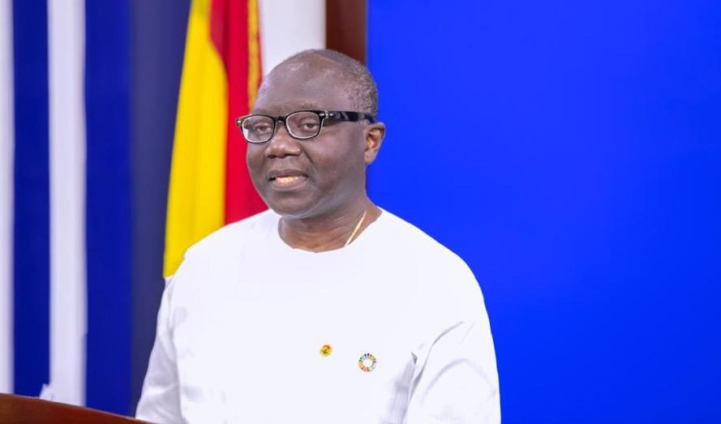
The Ministry of Finance, the United Nations Development Programme (UNDP), the German Government, and the Insurance Development Forum (IDF), have announced the launch of a tripartite project to develop a sovereign risk transfer scheme for urban floods in Ghana, alongside long-term investments in the country’s capacity to leverage and integrate insurance and risk financing into their development strategies.
The announcement was made during the IDF Summit in Zurich, Switzerland.
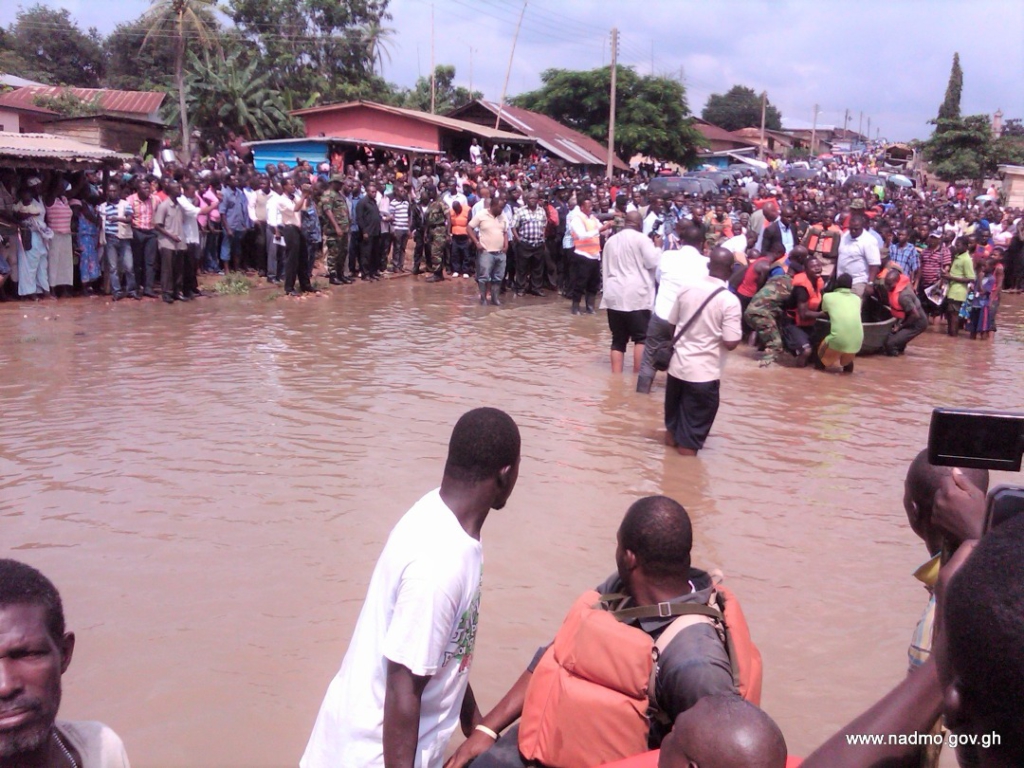
The risk transfer project is led by IDF members Allianz and Swiss Re, and closely supported by UNDP. Further partners in the project are flood risk consultants HKV, microsatellite operator ICEYE, and media monitor Flood Tags. It aims to enhance the response of the Ghanaian National Disaster Management Organisation (NADMO) and local authorities after severe flooding, especially for poor and vulnerable people.
This will improve resilience and support the rapid re-establishment of economic activity of low-income communities in urban areas, starting with the Greater Accra Metropolitan Area (GAMA). While developing an insurance scheme for major floods, the project also aims to enhance the disaster response capacity of Ghanaian institutions through increased access to data, detailed risk insights, and activation of contingency protocols.
Ababacar Diaw, CEO, Allianz Ghana, said: “the collaborative development of this parametric insurance solution through a public-private partnership plays into the UN Sustainable Development Goals and is an important contribution to increasing the climate resilience of urban poor and vulnerable people in Accra. Parametric insurance solutions are especially useful in regions where insurance infrastructure, such as good data, is less available.”
The UNDP-led work with the Government of Ghana aims to enhance the country’s long-term financial resilience, through strengthening capacity to financially manage risk, the integration of insurance and risk financing into national development strategy and delivery, and the development of insurance markets and inclusive insurance solutions for at-risk populations.
According to the UNDP Resident Representative in Ghana, Angela Lusigi Ghana is one of the countries most prone to floods in West Africa, and the impact of climate change is exacerbating the risk of flooding in urban areas. While the entire population of Greater Accra may indirectly benefit from the risk transfer product, the core beneficiaries are the poor and vulnerable residents in the GAMA region.
“At UNDP Ghana, we are committed to supporting integrated development solutions that build resilience across society to protect Ghana’s development progress. This project to develop an innovative insurance solution for managing flood risks and to provide rapid pay-outs as a safety net for poor and vulnerable urban communities is welcome. It will serve as a boost to government and private sector efforts to provide wider access to insurance and risk finance. By blending the financial-solution expertise developed by the government, with the long-term development and governance support offered by UNDP in partnership with the private sector, we will be able to advance Ghana’s ambitious development agenda”, she pointed out.
The InsuResilience Solutions Fund (ISF), funded by the KfW Development Bank on behalf of the German Federal Ministry for Economic Cooperation and Development (BMZ) and managed by Frankfurt School of Finance & Management, will co-fund the risk transfer project alongside the IDF insurance industry members.
This risk transfer project launch follows projects launched in 2020, 2021 and 2022 with Peru; Medellín, Colombia and Mexico, respectively, but is the first launched in Africa under the Tripartite Agreement announced in 2019 between the UNDP, the German Government, and the IDF.
The Tripartite Programme aims to provide technical assistance and sovereign and sub-sovereign risk financing solutions to countries vulnerable to the impacts of climate change, for their public assets, as well as for sectors, such as agriculture, education, health and transport, among others, to protect their most vulnerable populations.
Latest Stories
-
Landfilling waste management creates no value, it’s an economic waste
17 minutes -
Photos: Speaker Bagbin Commissions MPs constituency office under parliamentary decentralisation programme
33 minutes -
Black Stars technical advisor Winfried Schäfer sacked as GFA shakes up backroom staff
37 minutes -
Wenchi water project almost complete, critical to gov’t agenda – GWL MD
53 minutes -
Anti-LGBTQ+ bill not part of government’s legislative agenda – Inusah Fuseini
55 minutes -
Anti-LGBTQ Bill: Forget the rumour mongers, I’m a man of action, and will pass the bill – Speaker
2 hours -
Women and children among those killed in Sudanese army shelling of wedding celebration
2 hours -
President Mahama is not sincere with Ghanaians on LGBTQ bill matter – Hassan Tampuli
2 hours -
Gov’t to establish Prison Industrial Hub to equip inmates with income-generating skills – Prison Service boss
2 hours -
Alhassan Tampuli donates cement, roofing sheets to support storm victims in Gushegu
2 hours -
Alhassan Tampuli appeals for urgent support for storm victims in Gushegu
2 hours -
The hypocrisy must stop; pass Anti-LGBTQ+ Bill now – Alhassan Tampuli to Mahama
2 hours -
Imprisonment should be rehabilitative, not punitive – Ghana Prisons boss at UNGA
3 hours -
Ga Adangbe traditional priests petition Mahama over McDan aviation licence revocation
3 hours -
Anti-LGBTQ Bill: NDC’s arrogance is worrying – Hassan Tampuli
3 hours