

Audio By Carbonatix
Ghana’s rice sufficiency is receiving a boost as three new varieties by the Crops Research Institute of the Council for Scientific and Industrial Research (CSIR) triumphed on the test field.
The varieties, CRI-Enepa, CRI-Kantinka and CRI-Amakwatia were able to resist the rice blast disease.
Stakeholders in the agriculture sector have been meeting annually to identify key issues in agriculture and present findings to the government for intervention.
In 2019, it came up, rice farmers at Atwima Nwabiagya North, one of the largest producers of rice, have been facing problems with the blast disease and Rice Yellow Mottled virus (RYMV).
“Farmers are not getting good seeds, some go to the milling centre for their seeds and others too use seeds for several seasons,” said District Director of Agriculture, Maxwell Adu Poku.
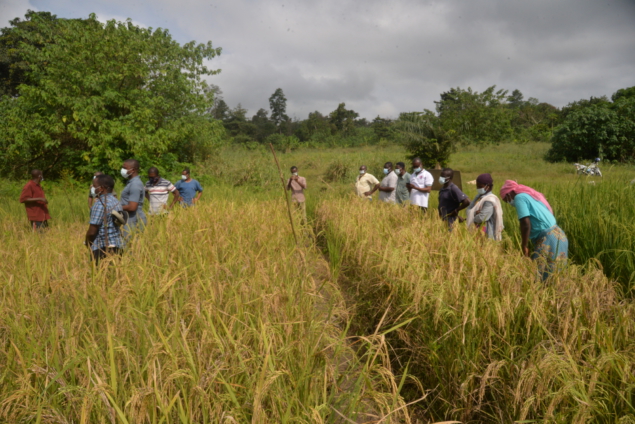
The government through the Modernizing Agriculture in Ghana (MAG) project, with support from the Canadian government, aided CSIR-CRI to set up a rice disease verification trial at Abira meant to help farmers manage the diseases.
The project involved three interventions: The introduction of newly released varieties to farmers, proper land preparation and application of pesticides.
“We’ve raised bans and during the land preparation stage we did paddling and leveling to manage water and weeds in the field and we gave them some fungicides and insecticides to manage the disease.
"The three interventions put together have resulted in the varieties showing up some tolerance to the disease,” said Godfried Ohene-Mensah, a principal technologist with the Crops Research Institute.
For the demonstration farm, the farmers were supplied two seeds in addition to the three supplied by CRI.
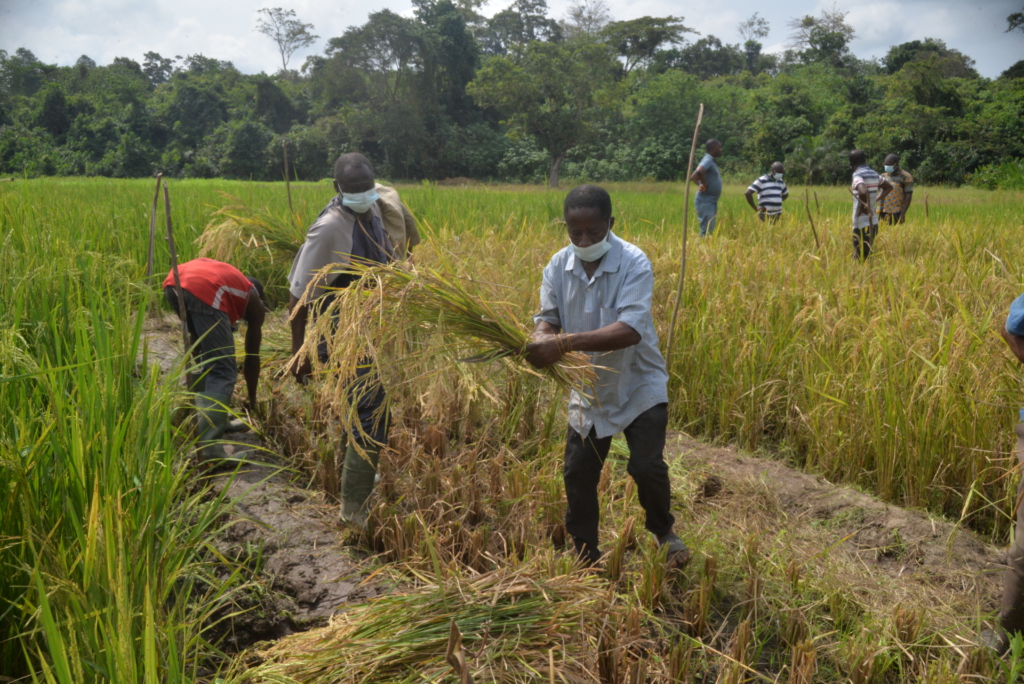
CRI-Enepa came tops followed by CRI-Katinka and finally CRI-Amankwatia.
“It is amazing that the three varieties could withstand the disease,” Nuhu Mumuni a farmer was impressed.
The Ashanti Regional Coordinator for Research-Extension-Linkage Committee (RELC), Dr. Ernest Baafi is however calling on the government to provide the farmers with equipment to ease their burden.
“The government can help the farmers by providing power tillers and mechanical threshers to ease their labour challenges and increase agricultural productivity,” he said.
The intervention will soon be rolled out in other districts.
Dr. Baafi called for support for the Crops Research Institute to make enough seeds available for farmers.
Latest Stories
-
The 7-foot giant of Ngleshie Amanfro: Seven-foot Ghanaian Ephraim Saawa dreams of joining the national basketball team
34 minutes -
Government promises support for Kumasi Central Market fire victims
41 minutes -
Vibes The Movie: Big Ghun’s Ghanaian film earns five nominations at 2026 REFFA
1 hour -
MamaCare CEO warns unresolved conflicts among health workers could undermine maternal and neonatal care
2 hours -
Health professionals urged to translate medical knowledge into practice to save mothers
2 hours -
Conflicts among care providers linked to maternal, neonatal deaths – Expert
3 hours -
GIS marks 10th TIME conference, champions improved teaching practices
3 hours -
BRICS Or Balance? What Ghana’s bid really means
4 hours -
GPRTU wants full TRAFFITECH-GH implementation to start in 2027
4 hours -
Mahama announces plans to import electric wheelchairs for PWDs
4 hours -
KGL U17 Colts 2026: Western beat Prempeh Elite Academy to set up final final with Greater Accra Region
5 hours -
Late Solanke strike salvages 10-man Spurs draw at Man United
5 hours -
Gender Ministry to monitor welfare of Nana Akua Addo’s children amid domestic violence case
5 hours -
Benedict Okyere Yeboah: Ghana’s football problem goes beyond sacking a coach
5 hours -
GPL 2026/27: Darkwah Wiafe’s winner sees All Blacks beat Kotoko
5 hours