

Audio By Carbonatix
Some heads of Senior High Schools in the Upper East and Upper West Region have called for deliberate programmes to promote inter-religious co-existence among students.
They believe this will help reduce the violence in Ghanaian second-cycle institutions.
The headteachers made the call after a three-day training programme in Bolgatanga, dubbed "Cross-Cultural Religious Literacy Training for Second-Cycle Schools in Ghana", initiated by the Sanneh Institute to promote religious tolerance and inclusivity in Ghanaian Senior High Schools.
The Sanneh Institute is a Christian-initiated, multi-faith scholarly community dedicated to equipping and resourcing religious leaders and scholars.
The institute's mission is to build bridges of mutual understanding between Christians and Muslims in West Africa and beyond. To achieve this, they focus on advanced Islam and Christianity studies and promote scholarship as a tribute to God.
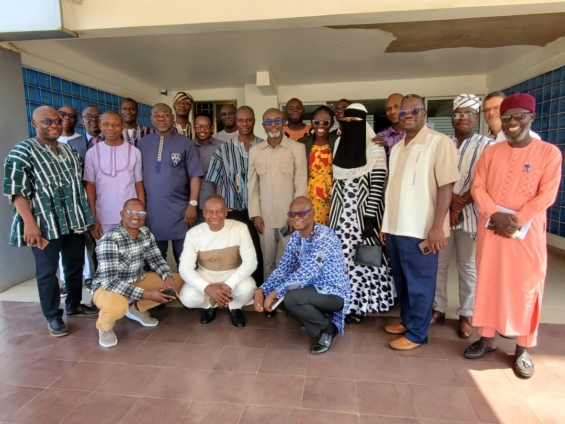
The Cross-Cultural Religious Literacy Training for Second-Cycle Schools in Ghana brought together Headteachers, Senior Housemasters, Chaplains, and other stakeholders from various mission and non-mission schools in the Upper East and Upper West Regions to create an enabling environment for constructive engagement between different religious communities. Under the two-year project funded by Templeton Religion Trust (TRT), the training will be replicated in nine regions across the country.

According to the Executive Director of the Sanneh Institute, Rev. Prof. John Azumah, the project seeks to move Ghana's religious tolerance beyond mere calls for peaceful coexistence to robust engagement and mutual understanding.
“It has become very obvious that religion plays a very important role in society and on school campuses, and therefore, if steps are not taken to engage students to talk to one another, the tensions are going to mount, and someday, we will have a major crisis on the school campuses as a result of religious competition and discrimination”, Rev. Prof Azumah said.
“Apart from these tensions, the teachers themselves need to be equipped and helped to know how to handle these issues when they come. And that is the main purpose of this training”, he added.
Rev. Prof. Azumah revealed that the programme will culminate in the issuance of a communique to influence government policy on promoting religious tolerance in schools.
Participants of the programme commended the organisers and pledged to initiate some activities in their schools to promote religious coexistence.
The Headmaster of Bawku Senior School in the Upper East Region, Rev. Bukari Abugbilla, said, “Most of the time, what brings problems in the various schools is misconceptions about other religions, and we have gone through all these things at this workshop, and I believe that knowing the misconceptions Christians have towards Muslims and vice versa – we discovered that all these are misconceptions and not facts, and so this will guide me to be able to bring every Muslim, every Christian from other denominations together for us to coexist peacefully in Bawku Senior High School”.
The Assistant headmaster of Wa Islamic Senior High School in the Upper West Region, Abdulai Jalilu, said, “Upon my return (to school), I'm going to impress upon the management of my institution to set aside a particular day where we can congregate for well-meaning leaders in society from both the Christian and Islamic religions to talk to our students about religious tolerance”.
The workshop was a step towards addressing the long-standing issue of contestations and tensions regarding religious practices and policies in Ghanaian schools, where students have, in some instances, complained of religious marginalisation and discrimination. It is expected that interventions such as the Cross-Cultural Religious Literacy program will engender constructive engagement and management of religious matters in high schools.
Latest Stories
-
Hotline Documentary: ‘Silent Football’ to air on JoyPrime and JoyNews today
18 minutes -
NDPC examines how evidence shapes Ghana’s development planning and policy decisions
18 minutes -
Education Ministry calls urgent talks to break GAUA strike deadlock
21 minutes -
NCCE engages women in North East Gonja on rule of law, anti-corruption
30 minutes -
NDPC reviews 2004 planning guidelines to reflect changes in decentralised system
36 minutes -
Trade Ministry commends Prisons Service for using art to drive inmate rehabilitation
42 minutes -
Books, brushes and second chances: Dr Abena Asomaning launches three titles to support prison outreach
49 minutes -
Treasury bill auction oversubscribed by 53.5% as yields fall across maturities
51 minutes -
NPP warns aspirants premature campaigning could jeopardise eligibility for primaries
57 minutes -
Ghana courts investors in Bangkok after exit from $3bn IMF bailout
1 hour -
8 arrested over alleged internet fraud initiation assault in Bono Region
1 hour -
SSNIT says Labadi Beach Redevelopment will create local economic opportunities
1 hour -
BoG proposes 30-day liquidity buffer requirement for banks
1 hour -
BoG plans reviews of banks’ cybersecurity compliance
1 hour -
GRA cautions taxpayers against attacking tax officials
1 hour