

Audio By Carbonatix
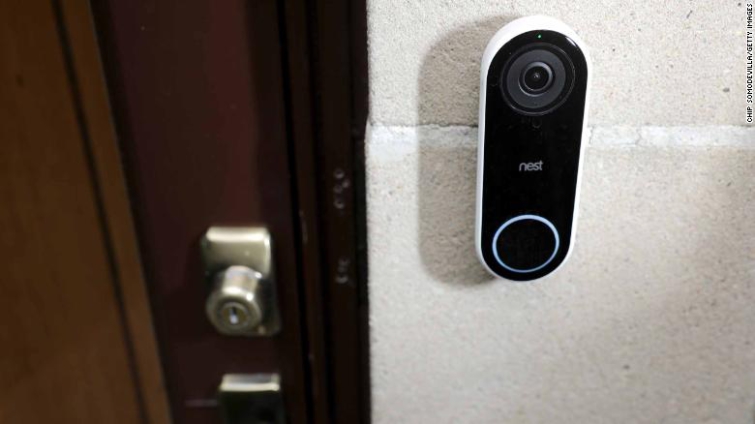
Some popular home security cameras could allow would-be burglars to work out when you've left the building, according to a study published Monday.
Researchers found they could tell if someone was in, and even what they were doing in the home, just by looking at data uploaded by the camera and without monitoring the video footage itself.
The international study was carried out by researchers from Queen Mary University of London (QMUL) and the Chinese Academy of Science, using data provided by a large Chinese manufacturer of Internet Protocol (IP) security cameras.
Cameras like these allow users to monitor their homes remotely via a video feed on the internet, but the researchers say the traffic generated by the devices can reveal privacy-compromising information.
Study author Gareth Tyson from QMUL told CNN that data uploads of the unencrypted data increase when a camera is recording something moving, so an attacker could tell if the camera was uploading footage of someone in motion, and even different types of motion like running or sitting.
The risk is that "someone who is specifically targeting an individual household rocks up outside with a device to try and start passively monitoring traffic," he said.
Tyson told CNN that an attacker would require a decent level of technical knowledge to monitor the data themselves, but there is a chance that someone could develop a program that does so and sell it online.
Noting that he hasn't seen any direct evidence of this kind of attack taking place, he said one potential use would be if someone wanted to burgle your house.
"They monitor the camera traffic over an extended period of time, and by looking at the patterns that are generated by those cameras over maybe a week, they then start predicting the following week when you're most likely to be in the house," he said.
In order to reduce the privacy risk, companies could randomly inject data into their systems to make it harder for attackers to spot a pattern, he said.
Tyson said the team are trying to extend their research to work out how to maintain camera performance while reducing privacy risks.
At present, cameras are "fairly stupid items" in order to keep manufacturing costs down, said Tyson, uploading data whenever motion is detected.
"What we want to do is have a more intelligent system that allows the camera to understand what that motion is, assess the level of risk, and only upload it and alert the user in a case where the camera feels that it's worthy doing," he said.
For example, someone who owns a cat probably doesn't want to be alerted every time the camera detects the animal walking around, but they would certainly want to know if a human intruder were spotted.
Tyson said this is the first study to investigate the risks posed by video streaming traffic generated by the cameras.
The global market for the devices is expected to be worth $1.3 billion by 2023, according to the press release. Popular brands include Xiaomi and Nest, which is owned by Google.
While the study authors did not analyze data from those brands, they did find that their cameras present the same privacy risk. CNN has reached out to Nest and Xiaomi for comment on the research.
The study was published at the IEEE International Conference on Computer Communications, which brings together researchers in networking and related fields.
Latest Stories
-
Newsfile to discuss EOCO arrest of Manhyia South MP, drug trafficking, teachers’ strike and Ghana’s sports crisis
3 minutes -
Chief of Staff urges effective implementation of laws to strengthen public confidence
22 minutes -
La Dadekotopon NDC, MP demand answers over demolition of La Pleasure Beach
27 minutes -
GPL 2026/27: Hearts of Oak seek immediate response against Dreams
27 minutes -
Mahama arrives in Egypt for AU summit and inaugural Alamein Africa Forum
1 hour -
How the NPP and NDC undermine the GFA, then demand accountability
2 hours -
Godfred Dame questions 2-night EOCO detention of Baffour Awuah over GH¢2.2m legal fees
2 hours -
GH¢1.64bn NHIS claims paid in 2026 as Private Health Facilities welcome improved reimbursements
2 hours -
Blue Medics champions healthy ageing at Akuapem North older persons commemoration
2 hours -
NPP elects national executives today in Kumasi ahead of election 2028
2 hours -
Godfred Dame accuses EOCO, CID, AG of using state power to punish political opponents
2 hours -
Walter Mosley visits W.E.B. Du Bois Centre in Accra: A New York Secretary’s homecoming story on where Du Bois spent his final years.
4 hours -
MTN set to deploy 5G services after winning spectrum licenses worth US$202m
6 hours -
NPP national elections: 3,000–4,000 police to handle security, traffic in Kumasi – Karbo
8 hours -
Atta Akyea fumes as Manhyia MP is to spend another night in EOCO custody
9 hours