

Audio By Carbonatix
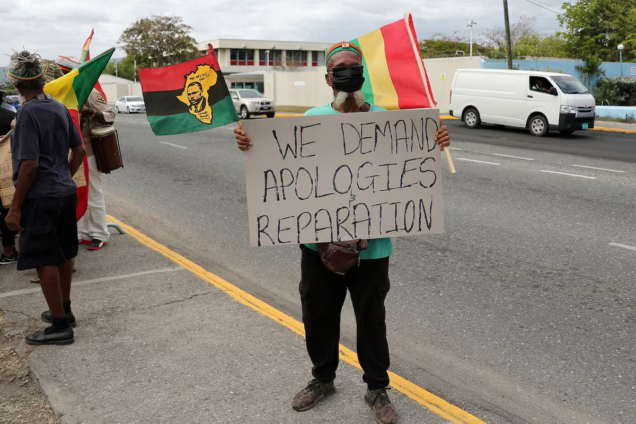
Yaw Nsarkoh has thrown cold water on growing optimism around reparations, challenging advocates to clearly explain how Africa intends to secure what some describe as “cool cash.”
Speaking on Joy News’ PM Express on Tuesday, the business executive and former Unilever Executive Vice President questioned the practicality of expectations surrounding financial reparations.
“Well, they should show us the route to that cool cash,” he said, warning that without clarity, the campaign risks becoming detached from reality.
“If we are not careful, this becomes an escapist route.”
Mr Nsarkoh acknowledged the moral basis of the argument for reparations, but he insisted that moral clarity alone is not enough.
“But then you must also place what we are trying to do in the real world.”
He raised fundamental questions about beneficiaries and feasibility.
“To whom, as the return from reparations go, why shouldn’t it be given to the people in the diaspora, who, in a sense, were the most dislocated?”
He also questioned whether the targeted economies, saying, “Are the economies that we are demanding this from, even in a position to pay those sorts of monies that we are talking about?”
For him, the campaign lacks precision.
“So what exactly the reparations campaign wants needs to be articulated much better.”
He argued that engagement could go beyond cash transfers.
“There are different ways in which you can structure things so that you benefit from knowledge systems and so on.”
However, he dismissed the idea of a financial windfall.
“But to merely, as one person said to me, sit down and think that there’s a box of money that is going to be handed over you so you build handed over to you, so that you build railways and so on, is, in my view, in 2026 exceedingly utopian.”
While noting the support the agenda enjoys across parts of Africa, he cautioned against reducing the debate to price tags.
“If it becomes this neoliberal discussion about, how have you been putting the price tag?”
He questioned the logic of attaching monetary value to historical trauma.
“You went through the humiliation of disruption, and your people were captured in tens of thousands. Who is going to sit down and say that, if you give me $50 million for that, that then solves the issue?”
Mr Nsarkoh said the conversation must broaden and mature.
“So they are very complex dimensions, and the reparation discussion itself must open up, become much more democratic, be willing to be challenged and contested.”
He also called for a reframing of the narrative around slavery and responsibility.
“We have now allowed, because the media has not properly harnessed the resources of true historians, to tell the story.”
“We have allowed the discussion around this thing to be about guilt tripping people in the diaspora, saying, you sold us.”
“This is a minority of people who were involved in indigenous slavery and who did this.”
He argued that reparations could instead drive cultural renewal and solidarity.
“There are many elements of the discussion on repatriations that can lead to cultural identity, more solidarity amongst people of Africa and people of African descent, tracing exactly what happened, what binds us.”
Ultimately, he said Africans must define their own path.
“And then the people of Africa must themselves articulate this is what we think is the way forward.”
Latest Stories
-
Church of Pentecost supports over 2,000 BECE candidates in Obuasi with career guidance seminar
32 minutes -
Brandon Asante and Coventry all but promoted to Premier League despite Sheffield Wednesday draw
53 minutes -
GPL 2025/26: Late Kwartemaa strike downs Hearts in Tema
60 minutes -
Ghana Faces Sierra Leone Moment as Prosecutorial Powers come under strain
1 hour -
Don’t consume fish or seafood from Tema Shipyard until further notice – FDA warns
1 hour -
Why volunteering might be Africa’s most underrated career accelerator
1 hour -
ActionAid Ghana raises concern over gender gaps in Feed Ghana Programme
1 hour -
Windstorm wreaks havoc in Gushegu, displacing nearly 2,000 residents and damaging schools
1 hour -
Friends of Bridget Bonnie Marks her 35th birthday with donation to Kasseh Model Health Centre
2 hours -
From Ekumfi Kokodo to the Pulpit Stage: Essi Donkor’s gospel journey takes shape
2 hours -
Landfilling waste management creates no value, it’s an economic waste
3 hours -
Photos: Speaker Bagbin Commissions MPs constituency office under parliamentary decentralisation programme
3 hours -
Black Stars technical advisor Winfried Schäfer sacked as GFA shakes up backroom staff
3 hours -
Wenchi water project almost complete, critical to gov’t agenda – GWL MD
3 hours -
Anti-LGBTQ+ bill not part of government’s legislative agenda – Inusah Fuseini
3 hours