

Audio By Carbonatix
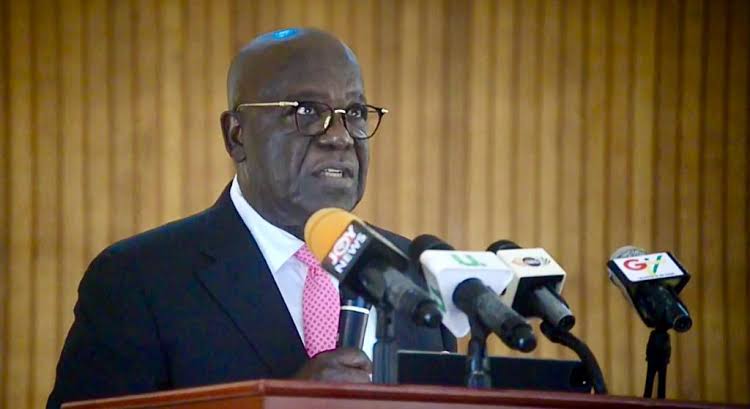
The Chancellor of the University of Cape Coast (UCC), Sir Samuel Esson Jonah, has called for a more contextual assessment of Kwame Nkrumah’s constitutional legacy, particularly the controversial Preventive Detention Act.
Speaking at the opening of the 15th Kwame Nkrumah Memorial Lectures, Sir Jonah acknowledged that the law remains one of the strongest points of criticism against Ghana’s first President, but said its historical circumstances should also be considered.
“The Act was passed in 1958 by a state barely a year old, which had already lived through political bombings and a violent secessionist agitation in Ashanti, and which within months would uncover a plot against the government inside its own army.”
He recalled several attempts on Nkrumah’s life, including the 1962 Kulungugu grenade attack, which killed a schoolgirl standing beside the then-President.
He also cited the 1964 shooting at Flagstaff House by a constable serving as part of Nkrumah’s guard.
Sir Jonah drew parallels with measures adopted by other countries during periods of perceived national security threats.
He cited Britain’s internment of citizens under Regulation 18B during World War II, the suspension of habeas corpus under US President Abraham Lincoln during the American Civil War, and the Patriot Act enacted in the United States after the September 11, 2001 attacks.
“None of this makes preventive detention a good thing. It makes it a human thing – a thing to be weighed in context, not condemned in caricature,” he stated.
Sir Jonah said this historical context should inform how Nkrumah’s constitutional record is assessed, while acknowledging the problematic nature of preventive detention.
He argued that Nkrumah’s wider contribution to Ghana’s constitutional development should also be considered, including the establishment of the country’s first republican constitution in 1960.
Sir Jonah further pointed to Ghana’s subsequent constitutional history, noting that the country has now lived under a written constitution for 34 years.
His remarks form part of a broader reflection on Nkrumah’s political and intellectual legacy at the 15th Kwame Nkrumah Memorial Lectures, where questions surrounding his governance, constitutionalism and vision for Ghana and Africa are being revisited.
Latest Stories
-
Chrysler Building to get its crown restored after being sold
3 minutes -
Infantino re-election boost as Concacaf chief will not stand
12 minutes -
Everton’s Sherif fined for breaching betting rules
21 minutes -
Suspended fine for Xhaka over Covid-19 certificate
27 minutes -
Businessman dragged to court over GH¢480,000 fraud
36 minutes -
Pregnant woman and husband found dead in a room at Anloga-Kportorgboe
48 minutes -
Man, 87, jailed 20 years for defiling nine-year-old girl at Ofankor
58 minutes -
Maresca says ‘feeling is fantastic’ among Man City squad
1 hour -
Sam George warns FBI Director against taking sole credit for Ghana cybercrime operation
1 hour -
Foreign capital no passport to Ghana’s informal retail market – GIPA CEO
1 hour -
E&P model should be seen as a blueprint for building local mining giants – GIPA Boss
1 hour -
Govt’s decision to reduce nurse training long overdue – GRNMA
2 hours -
Ghana needs emergency health fund to respond swiftly to outbreaks – SEND Ghana
2 hours -
Gov’t must prioritise local vaccine manufacturing for future outbreaks – SEND Ghana
2 hours -
Salomey Awiti Baffoe reunites with family and colleagues after release
2 hours