

Audio By Carbonatix
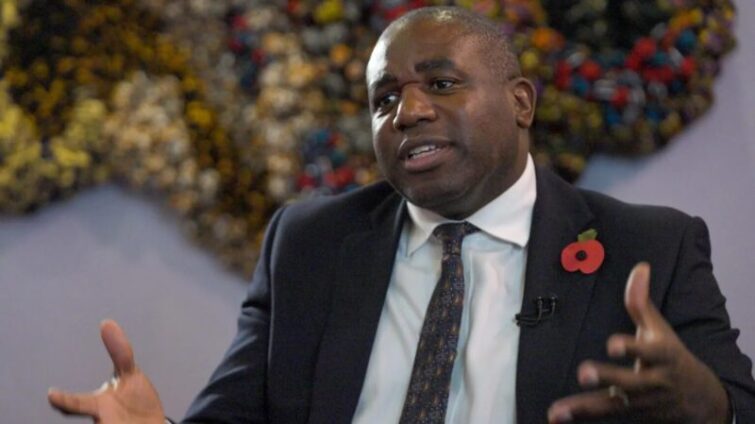
UK Foreign Secretary David Lammy has said the concept of reparations for former colonial nations affected by slavery "is not about the transfer of cash".
In his first comments since 56 Commonwealth leaders in October signed a joint letter saying "the time has come" for a conversation about reparations, Lammy told the BBC that was not "the debate people are wanting to have".
"I’m keen to emphasise that there's a sort of simplistic press debate in part of the media that thinks this is about the transfer of cash," he said.
Speaking in Nigeria, Lammy said instead the UK wanted to look to developing relations with the continent based on the sharing of skills and science.
“It's not about the transfer of cash, particularly at a time of a cost of living crisis around much of the globe, and certainly in the UK," Lammy said.
"That is not the debate I think that people want to have. They're wanting to think about the future."
Speaking in Lagos, a Nigerian port city once central to the transatlantic slave trade, during his first visit to Africa as foreign secretary, Lammy said it was right the UK had previously apologised for its role in slavery.
He said: "When we look back on that period, there were many horrors. It was horrific and horrendous in many, many ways. And there are scars that were left, and let's be clear - I am the descendant of enslaved people, so I recognise that.
"When we were last in government, we said sorry, and we commemorated the abolition of the slave trade."
Lammy acknowledged that Caribbean nations had made a 10-point plan for reparatory justice.
But he said he believed developing nations would benefit as part of that through things such as the transfer of technical skills and science expertise from the UK.
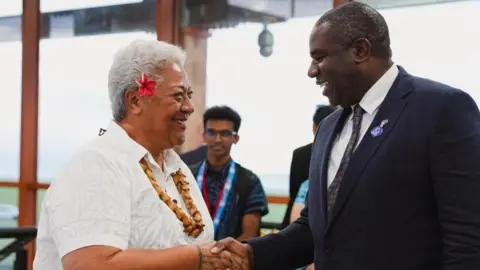
The foreign secretary's remarks on reparations follow the issue's discussion last month at CHOGM in Samoa.
The UK has faced growing calls from Commonwealth leaders to pay reparations for the country's role in the slave trade.
Before the Samoa summit, Downing Street had said the issue was not due for discussion but Sir Keir Starmer later signed a document calling for talks on "reparatory justice" alongside other Commonwealth leaders.
Lammy spoke to the BBC at the beginning of a trip in which he will visit Nigeria and South Africa - among the continent's biggest economies.
He said he wanted to launch a five-month consultation period with African nations.
“I think the UK needs a new approach to Africa," the foreign secretary said.
"Much has changed since the last time my party was in government under Tony Blair and Gordon Brown, where there was a huge commitment to the continent but it was largely based on development.
"The dynamism, the energy here in Lagos. The potential for growth and opportunity in a range of areas. There is so much potential.
"What I hope over the coming months and years is that the UK can partner more, here in Nigeria and on the continent.
"And that the UK is present once more because what I've heard is that the UK has stepped back somewhat over the last few years, it reflects on our trading figures.
"There's much that I think we can do together over the coming months and years.”
Asked about other issues relating to Africa, Lammy said the conflict in Sudan was of "tremendous concern" and said the UK planned to make that a priority during November when it has the rotational presidency of the United Nations Security Council.
He said: “The loss of life is unbelievable and outstrips other conflicts around the world.
"The humanitarian catastrophe that has now been unfolding for many months is something of tremendous concern.
“We have just become the chair of the UN Security Council and I intend to make Sudan my priority over the course of this next month.
"I will be in New York raising the issues – both the humanitarian issues, but also how we bring the parties together to try and reach a peaceful outcome.
“It's been a subject of huge concern that Sudan has not commanded the international attention that it requires, given the way that it’s not just the suffering involved, but the way that it is frankly unpicking stability in the wider region, and will have huge implications potentially if Sudan is to be a totally failed state.
"Huge implications not just for East Africa and the African continent, but of course for Europe as well."
Latest Stories
-
I assure Otumfuo, Mahama will join him to commission KNUST Teaching Hospital by end of this year – Haruna Iddrisu
39 minutes -
Gov’t to roll out free special education for persons with disabilities from July 1 – Education Minister
1 hour -
“We used it to test our officiating officials’ readiness” – Bawah Fuseini after CAA Athletics event
1 hour -
Volleyball emerges as Ghana’s fastest rising sport
2 hours -
National Sports Fund needs strong leadership from the top – Administrator David Wuaku
2 hours -
JoySports Exclusive: Steve McLaren in talks with GFA after expressing interest in Black Stars job
2 hours -
Fire guts auto parts warehouse at Bubuashie, one fire officer injured
2 hours -
I owe my victory to coach Ofori Asare – Allotey after winning WBA Africa Gold Super Flyweight belt
2 hours -
Church of Pentecost supports over 2,000 BECE candidates in Obuasi with career guidance seminar
4 hours -
Brandon Asante and Coventry all but promoted to Premier League despite Sheffield Wednesday draw
4 hours -
GPL 2025/26: Late Kwartemaa strike downs Hearts in Tema
4 hours -
Ghana Faces Sierra Leone Moment as Prosecutorial Powers come under strain
4 hours -
Don’t consume fish or seafood from Tema Shipyard until further notice – FDA warns
4 hours -
Why volunteering might be Africa’s most underrated career accelerator
5 hours -
ActionAid Ghana raises concern over gender gaps in Feed Ghana Programme
5 hours