

Audio By Carbonatix
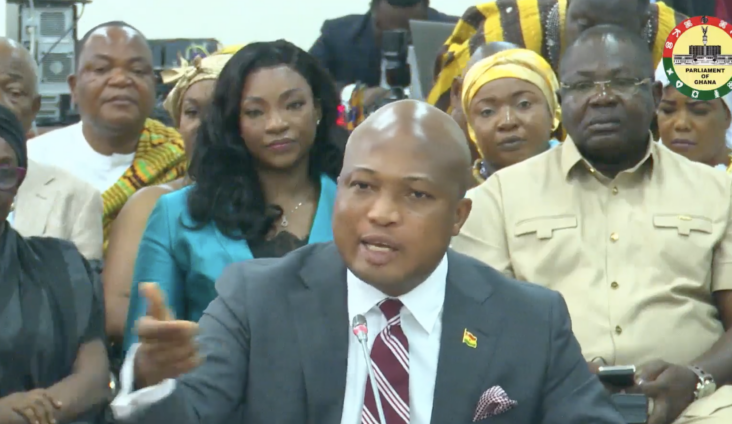
Ghana's Foreign Affairs Minister nominee and Member of Parliament for North Tongu, Samuel Okudzeto Ablakwa, has described social media as a “double-edged sword,” acknowledging both its potential for good and the harm it can cause when misused.
Speaking during his vetting before the Appointment Committee, Mr Ablakwa, who's one of the vociferous Ghanaian politicians on social media, explained that while social media can be a powerful tool for communication, it also has the potential to be weaponised and used for destructive purposes.
Mr Ablakwa pointed out that African leaders must become more aware of the evolving media landscape and the power of social media. "We should encourage more transparency," he said, advocating for greater openness in governance.
He believes that if African governments embrace transparency and accountability, it will become more difficult for misinformation to take hold. "Knowledge is power," he stated, emphasising that when citizens are informed, they are less likely to fall victim to misleading content.
However, Mr Ablakwa also acknowledged the challenges many people across Africa face when trying to access reliable information.
“Unfortunately, in Africa, you struggle to get information unless you’re in a position of power,” he remarked, underlining the difficulties of obtaining accurate data in some parts of the continent.
He called for more effective implementation of the Right to Information (RTI) law, which, despite being passed, has not yet achieved its full potential.
Further addressing the issue of social media misuse, Mr Ablakwa stressed the need for stronger regulatory measures to tackle disinformation. “We must take action against those who misuse social media for spreading fake news and disinformation,” he said, adding that some governments around the world are even funding fake news operations to manipulate public opinion.
In a personal example, Mr Ablakwa shared how, just days before his vetting, fake news spread claiming he was deleting his Facebook posts. “Why would I do that? I’m not a coward,” he responded, expressing frustration at how easily such false claims can be accepted as truth.
“It’s disheartening to see how quickly falsehoods spread without anyone questioning them,” he added.
He reaffirmed that while social media is here to stay, its impact can be better managed through open governance and transparency.
"Let’s encourage more open governance and transparency, and if we do, we should be fine with social media," he concluded, emphasising the importance of harnessing the positive potential of social media while mitigating its negative effects.
Latest Stories
-
Ten climbers missing after avalanche hits Himalayan base camp
36 minutes -
NPP had more permanent fuel relief measures than current GH¢2 diesel cut – Amin Adam
1 hour -
Photos from the 3rd Republic Bank-JoyNews Habitat Fair Clinic
1 hour -
Ethiopia’s army promises restraint amid fears of new civil war
1 hour -
Amin Adam calls for review of fuel taxes as diesel prices remain above GH¢18
2 hours -
World Vision Ghana, Ahafo districts sign MoU for universal WASH coverage
2 hours -
When the gold engine stutters: What Ghana’s Cedi and reserves are telling us about the new economic architecture
3 hours -
Two reportedly die after being trapped in mining pit at Juaboso
3 hours -
Petrosol cleans up Wa Municipal Hospital, to donate medical equipment
3 hours -
‘If NPP was ‘insensitive’ over fuel prices, NDC must accept same description now’ — Amin Adam
3 hours -
KiDi brings the hits to London in sold-out UK headline concert
3 hours -
The last goodbye of Ghanaian shot dead in the US
3 hours -
MCC opens door to Ghana again as MiDA revives development partnership
4 hours -
CSIR moves to turn scientific research into jobs, national growth
4 hours -
More patrons troop in as 3rd Republic Bank-JoyNews Habitat Fair clinic enters final day stretch
4 hours