


Audio By Carbonatix
Mr. Firmin Nkamleu Ngassam, the Managing Director of solar energy designing, developing and installation company, Yingli Namene West Africa, has advised businesses in the country not to allow the upfront cost of solar plant installations to deter them from adding the resource to their energy mix.
He said although many solar installing companies required upfront payments from their clients, Yingli Namene had structured a special financial arrangement that allowed interested companies to pay monthly for the plant and the energy consumed.
After a period of time, he said the plant then becomes the property of the client – making it possible for the client to reduce reliance on the national grid.
This, he said ensured that solar maintained its record as a cheaper energy alternative to the national.
He, therefore, advised businesses interested in adding the resource to their energy mix but deterred by the upfront cost to contact Yingli Namene for expert advice.
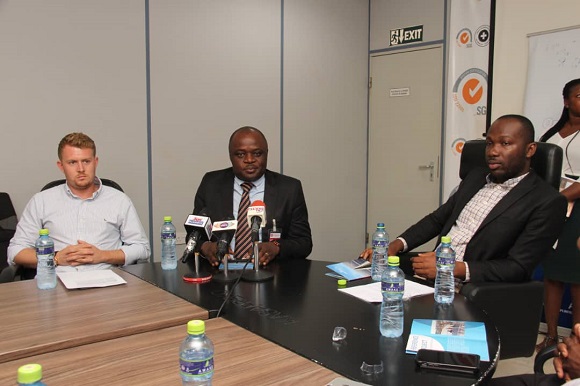 Mr Ngassam was speaking to the media at the tour of a 400.4 kilowatts per hour (kWp) plant that the company installed for an indigenous beverage manufacturer, Kasapreko Company Limited.
The plant, which is the first of its kind, was financed by CrossBoundary Ghana Limited under a special arrangement that allows Kasapreko to pay on a monthly basis.
Using that as an example, Mr Ngassam said Yingli Namene and its partners provided Kasapreko with “an opportunity to have solar without upfront payment.
He said his outfit was impressed that Kasapreko had taken the lead by going solar and expressed the hope that the gesture would motivate other manufacturing companies in the country to add solar to their energy mix.
“We are proud to say that the standard is a European standard and executed by Ghanaians,” he said.
He said the company was formed primarily to make solar available to businesses to help reduce their cost of operation and carbon emissions.
On his part, the Managing Director of Kasapreko, Mr Richard Adjei, said the company was making monthly savings of GH¢10,000 since it started using the solar plant in November last year.
“We pay on a monthly basis, which is cheaper than ECG and so we save every month but after a couple of years, the system becomes ours,” he said.
Asked if the system was reliable, Mr Adjei said “it is very, very reliable.”
He said the plant helped to reduce its reliance on the national grid by 3.8 per cent. It hoped to reduce the reliance to about 16 per cent when a second phase of the project comes board and ultimately to 20 per cent as part of efforts to help reduce cost.
Mr Adjei also advised manufacturing companies to look to solar in their bid to reduce their energy bill.
Mr Ngassam was speaking to the media at the tour of a 400.4 kilowatts per hour (kWp) plant that the company installed for an indigenous beverage manufacturer, Kasapreko Company Limited.
The plant, which is the first of its kind, was financed by CrossBoundary Ghana Limited under a special arrangement that allows Kasapreko to pay on a monthly basis.
Using that as an example, Mr Ngassam said Yingli Namene and its partners provided Kasapreko with “an opportunity to have solar without upfront payment.
He said his outfit was impressed that Kasapreko had taken the lead by going solar and expressed the hope that the gesture would motivate other manufacturing companies in the country to add solar to their energy mix.
“We are proud to say that the standard is a European standard and executed by Ghanaians,” he said.
He said the company was formed primarily to make solar available to businesses to help reduce their cost of operation and carbon emissions.
On his part, the Managing Director of Kasapreko, Mr Richard Adjei, said the company was making monthly savings of GH¢10,000 since it started using the solar plant in November last year.
“We pay on a monthly basis, which is cheaper than ECG and so we save every month but after a couple of years, the system becomes ours,” he said.
Asked if the system was reliable, Mr Adjei said “it is very, very reliable.”
He said the plant helped to reduce its reliance on the national grid by 3.8 per cent. It hoped to reduce the reliance to about 16 per cent when a second phase of the project comes board and ultimately to 20 per cent as part of efforts to help reduce cost.
Mr Adjei also advised manufacturing companies to look to solar in their bid to reduce their energy bill.
Mr Ngassam was speaking to the media at the tour of a 400.4 kilowatts per hour (kWp) plant that the company installed for an indigenous beverage manufacturer, Kasapreko Company Limited.
The plant, which is the first of its kind, was financed by CrossBoundary Ghana Limited under a special arrangement that allows Kasapreko to pay on a monthly basis.
Using that as an example, Mr Ngassam said Yingli Namene and its partners provided Kasapreko with “an opportunity to have solar without upfront payment.
He said his outfit was impressed that Kasapreko had taken the lead by going solar and expressed the hope that the gesture would motivate other manufacturing companies in the country to add solar to their energy mix.
“We are proud to say that the standard is a European standard and executed by Ghanaians,” he said.
He said the company was formed primarily to make solar available to businesses to help reduce their cost of operation and carbon emissions.
On his part, the Managing Director of Kasapreko, Mr Richard Adjei, said the company was making monthly savings of GH¢10,000 since it started using the solar plant in November last year.
“We pay on a monthly basis, which is cheaper than ECG and so we save every month but after a couple of years, the system becomes ours,” he said.
Asked if the system was reliable, Mr Adjei said “it is very, very reliable.”
He said the plant helped to reduce its reliance on the national grid by 3.8 per cent. It hoped to reduce the reliance to about 16 per cent when a second phase of the project comes board and ultimately to 20 per cent as part of efforts to help reduce cost.
Mr Adjei also advised manufacturing companies to look to solar in their bid to reduce their energy bill.DISCLAIMER: The Views, Comments, Opinions, Contributions and Statements made by Readers and Contributors on this platform do not necessarily represent the views or policy of Multimedia Group Limited.
DISCLAIMER: The Views, Comments, Opinions, Contributions and Statements made by Readers and Contributors on this platform do not necessarily represent the views or policy of Multimedia Group Limited.
Latest Stories
-
Ghana’s economy grows by 7.4% in July 2026
5 minutes -
NDC member challenges Dennis Yeboah Twumasi’s eligibility for Bono Regional Secretary elections
15 minutes -
Popular Nigerian gospel singer Toluwanisings dies
25 minutes -
Spio-Garbrah proposes debt swaps to fund reparative justice in Africa and Caribbean
33 minutes -
Alban Bagbin calls for governance reforms and coordinated action to address Africa’s debt crisis
35 minutes -
AAK Academy Ghana trains 22 chocolate and confectionery companies in production techniques
37 minutes -
Adwumawura Programme trains second cohort of young entrepreneurs in Bono East
38 minutes -
Destroying Jimi River for gold could cost us our lives – Asantehene
45 minutes -
Sammy Gyamfi didn’t say BoG has ceded its forex role to us – GoldBod
2 hours -
High Court sets November 4 for ruling on Wontumi’s bail application
2 hours -
Tetteh Kwetey files nomination for NDC Greater Accra Regional Chairmanship
2 hours -
Korle Bu appeals for more doctors, nurses as A&E Centre struggles under pressure
2 hours -
AFCON 2027Q: ‘I’m optimistic Black Stars can turn things around’ – Agyemang-Badu
2 hours -
Digital innovation could widen Africa’s inequalities if people are left out – Sam Jonah
2 hours -
Galamsey is an economic, health and moral problem – Sam Jonah
2 hours