

Audio By Carbonatix
Power outages ('dumsor'), have become a regular part of life for many homes and businesses in Ghana.
Whether it disrupts remote work, entertainment, or simple daily routines, unreliable electricity keeps affecting productivity and comfort. One conversation keeps getting louder: solar power.
Here is a simple breakdown of what solar power really means, the opportunity it creates, and what you should know before making a move.
The Breakdown
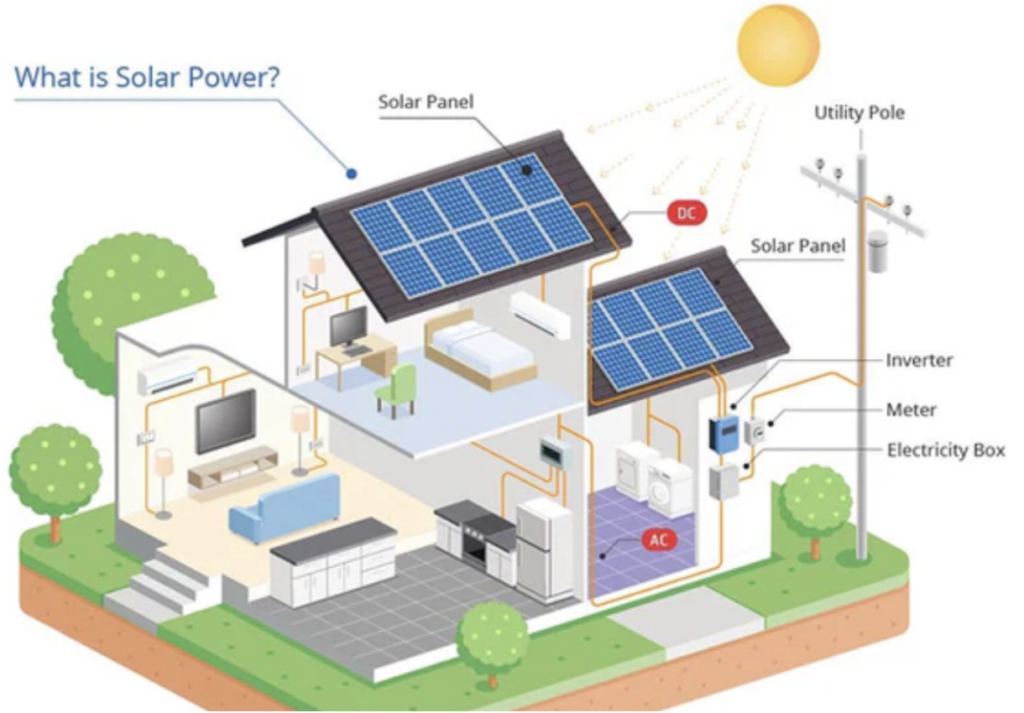
Solar power is electricity generated from sunlight. A standard setup has three main parts: solar panels that capture sunlight, an inverter that converts it into a form your appliances can actually use, and batteries that store power for nighttime or cloudy days.
The inverter is the heart of the system. Your home runs on alternating current (AC), but solar panels produce direct current (DC). Without the inverter, nothing works as it should.
Capacity matters too. Your solar system is sized based on how much electricity you actually use. Your appliances, air conditioners, fridges, TVs, and how long you run them each day all influence the type of system you need and what it will cost.
One important thing many people don't realise: solar systems can work alongside the national grid. If sunlight drops during cloudy weather, your home can switch between solar and regular electricity without any interruption.
What It Means
Solar power is no longer just a luxury conversation. It is becoming a practical option for homes and businesses that want more control over their electricity; both in terms of reliability and cost.
Unlike a generator that needs constant fuel during outages, a well-installed solar system is designed to be your primary power source. Over time, it can significantly reduce your monthly electricity bills while keeping your power on consistently.
That said, solar is not cheap electricity upfront. The initial setup cost is high because it is a long-term investment, not a short-term fix.
And not every home needs the same system. A household running multiple air conditioners requires a much larger setup than one using fans, lights, and a television.
The Opportunity
Ghana has a genuine advantage here: sunlight. Compared to countries with long winters and limited solar hours, Ghana has strong solar potential throughout the year. That is not a small thing.
This creates real opportunities for homes seeking reliable electricity, businesses trying to cut operational costs, remote communities with unstable power access, and institutions that want energy independence.
There is also growing conversation around solar farms and integrating solar into national infrastructure. While Ghana does not yet fully support feeding excess solar power back into the grid, the technology already exists to make that possible down the line.
Perhaps the most underrated opportunity is peace of mind. For anyone working remotely or running a business from home, uninterrupted power is no longer optional — it directly affects income.
The Next Move
If you are seriously considering solar, start with your electricity usage, not with price shopping. Before anything else:
Calculate your average electricity consumption
Identify your most power-hungry appliances
Decide whether you want backup power or full energy independence
Compare long-term savings against your current electricity costs
Think beyond the upfront price. Solar systems are built to last. Many batteries run for over a decade, and solar panels often last even longer. Solar may not solve every electricity challenge overnight, but it is clearly becoming part of Ghana's energy future.
Based on conversation on #JoyGeekSquad. Catch up here - link.
Latest Stories
-
GHIMA sounds alarm over unlicensed practitioners handling health data, warns of threat to patient safety
6 minutes -
Old Edubiase pupils turn to trading, farming as teachers’ strike disrupts schooling
9 minutes -
Energy Minister commends NPA CEO for maintaining petroleum market stability amid global shocks
14 minutes -
Armah-Kofi Buah, Sam George, other MPs among newly qualified lawyers
22 minutes -
Ghana exporting eggs to Burkina Faso amid local surplus – Agric Minister
22 minutes -
Governance failure in Ghanaian football and a presidential reform agenda
29 minutes -
IJM Ghana welcomes country’s upgrade to Tier 1 in 2026 Trafficking in Persons report
30 minutes -
REAC urges stakeholders to comply with Real Estate Act or face sanctions
30 minutes -
‘Nkoko Nketenkete’ boosts local poultry production from 4.6% to 22% in one year – Agric Minister
54 minutes -
ARK Foundation boss warns against stigmatisation of abuse victims
1 hour -
Health investment beginning to improve access to care – Akandoh
1 hour -
“It is meaningless” – Parent laments as teachers’ strike leaves boarding school students idle
1 hour -
Austin Gamey predicts possible end to teachers’ strike, urges better negotiation
1 hour -
Mahama and Trade Minister champion local manufacturing during Ghato Foods visit
1 hour -
Labour Minister, ILO Country Director strengthen partnership on decent work and jobs
1 hour