

Audio By Carbonatix
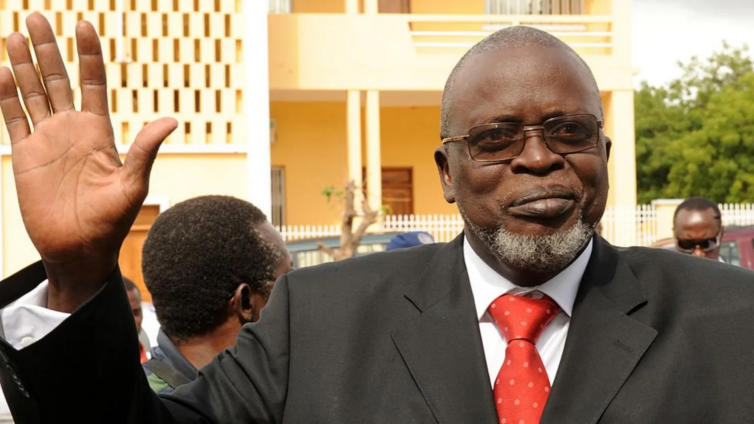
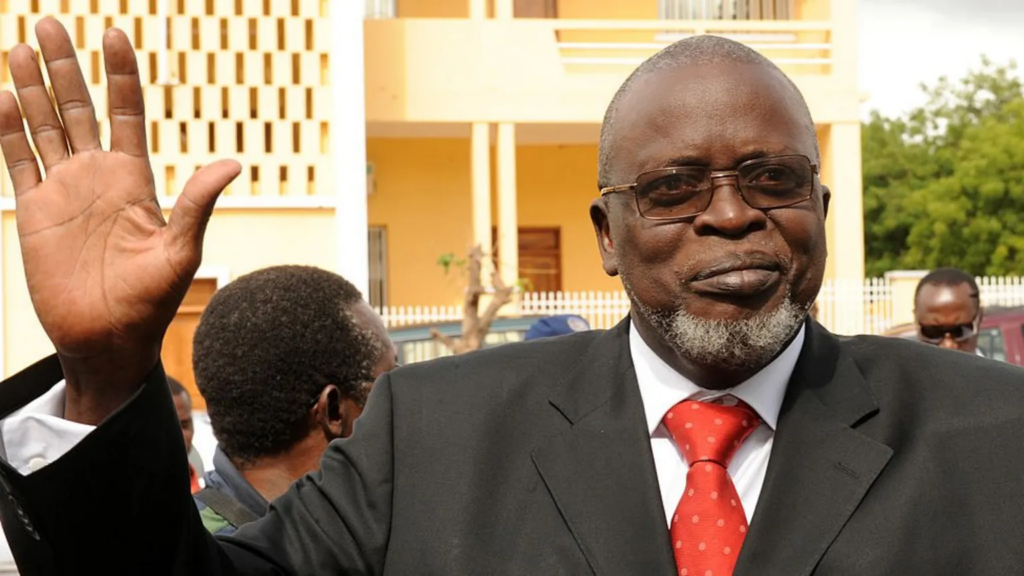
The son of Guinea-Bissau's ex-president has been sentenced to over six years in prison by a US court for leading an international heroin trafficking ring.
Malam Bacai Sanha Jr, 52, planned to use the proceeds to fund his ambitions to become Guinea-Bissau's president through a coup, authorities say.
He is the son of Malam Bacai Sanha, who led the West African country from 2009 until his death in 2012.
Sanha Jr has been linked to a failed coup in February 2022.
He was extradited to the US in August 2022, following his arrest in Tanzania a few weeks earlier.
His trial began soon afterwards and in September last year, he pleaded guilty to conspiring to illegally import drugs.
"Malam Bacai Sanha Jr wasn't any ordinary international drug trafficker," said FBI agent Douglas Williams on Tuesday.
"He is the son of the former president of Guinea-Bissau and was trafficking drugs for a very specific reason - to fund a coup that would eventually lead him to the presidency of his native country where he planned to establish a drug regime."
Sanha Jr is accused of importing heroin from several countries to Portugal, and also from Europe to the United States.
US authorities say he could be deported following his imprisonment as he is not an American citizen.
The 52-year-old, known as "Bacaizinho" in Guinea-Bissau, has held several roles in the government, including as his father's economic adviser.
He reportedly revealed that he was "personally involved" in the foiled 2022 coup attempt to unseat President Umaro Sissoco Embaló, which left 11 people dead, most of them members of the security forces.
Sanha Jr allegedly told undercover agents of the US Drug Enforcement Administration (DEA) that he used drug proceeds to fund the coup plotters, German state-owned broadcaster Deutsche Welle reported last year.
Guinea-Bissau is a notorious drug trafficking hub. It is a key conduit for cocaine from Latin America destined for Europe, which led to the US and the UN designating it a "narco-state" more than a decade ago.
Experts say that drug traffickers and networks are highly influential and well-entrenched in the country's government, often funding election campaigns for politicians they can rely on to protect the illegal trade.
Latest Stories
-
Anthony Joshua declines showdown with Tyson Fury but admits they ‘probably’ clash next
2 minutes -
Tyson Fury dominates Makhmudov, calls out Joshua next
21 minutes -
I have supported highway authority financially to fix roads in my constituency – A Plus
1 hour -
US, Iran fail to reach peace agreement after marathon talks in Pakistan
2 hours -
ECG kicks off Phase Two of transformer upgrades at Lashibi; brief outages expected
2 hours -
Port crises loom as 11,000 drivers threaten four-day strike
3 hours -
A source of excellence across generations – Vice President Opoku-Agyemang lauds Mfantsipim
4 hours -
(Photos) Mfantsipim School launches historic 150th anniversary
4 hours -
Knights and Ladies of Marshall group backs Catholic Bishops’ stance on anti-LGBTQ+
5 hours -
Bright Simons writes: All the Filla in the Ibrahim Mahama/E&P – Gold Fields Saga
6 hours -
Monetise Idiocy In Ghana
6 hours -
The Ghanaian prophet and the mysterious death of his scottish wife Charmain Speirs
7 hours -
Nearly 400 sentenced in Nigeria for links to militant Islamists
7 hours -
Ghana’s recovery supported by gold strength despite global oil price pressures – Standard Bank Research
7 hours -
Methodist Church hails Mfantsipim@150; calls for “fresh consecration” to excellence
8 hours