

Audio By Carbonatix
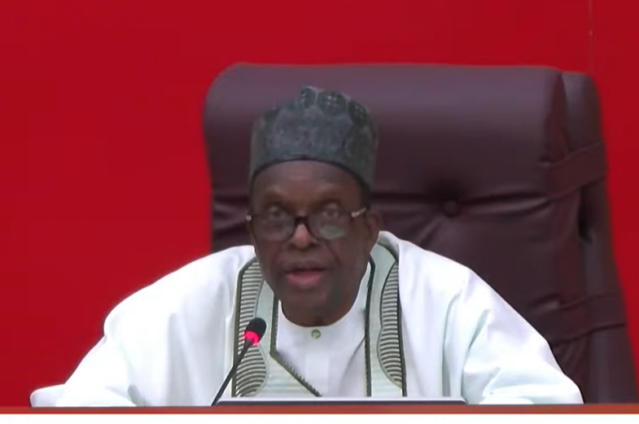
The Speaker of Parliament, Alban Bagbin, has called on Members of Parliament and the public to distinguish between legitimate political criticism and personal insults, stressing that accountability must not be undermined by abusive language.
He said strong disagreement was an essential part of democracy but should be expressed in ways that respected the dignity of others.
“Please, robust disagreement is legitimate. Strong criticism is legitimate. Holding government, the opposition, the Speaker, leadership and every institution of state to account is legitimate,” he said.
“But insult is not argument. Abuse is not scrutiny. And the deliberate use of language calculated to demean persons or institutions adds nothing to the quality of our democracy.”
Speaker Bagbin made the remarks while addressing an emergency sitting of Parliament on Tuesday, September 29, amid growing concerns about the use of insults in public life.
He said political disagreements should not prevent citizens from recognising one another’s humanity and equal rights, adding that Ghana’s democratic stability depended not only on its constitutional institutions but also on discipline, decency and responsible public engagement.
The Speaker said Parliament had a responsibility to promote respectful public discourse, particularly because the conduct and language of lawmakers often influence national conversations.
“The words spoken in the chamber travel far beyond these walls. The proceedings of committees are reported throughout the country and worldwide. Our press conferences, interviews, public meetings and social media engagements help to set the tone of national discourse,” he said.
He noted that MPs were not merely participants in public discussions but also helped shape the standards of communication in the country because of the positions they occupied.
Speaker Bagbin, however, expressed concern that some MPs had used language that fell below the standards expected of elected representatives, both inside and outside the chamber.
“I must say with regret that some of the language employed by members, both within and outside this chamber, has on occasion fallen below the standards that the Parliament is entitled to expect from the elected representatives,” he said.
He called on MPs to lead by example, arguing that Parliament could not demand responsible communication from journalists, broadcasters, bloggers, content creators and other citizens without holding its own members to the same standards.
“Leadership in this matter cannot simply consist of asking citizens to moderate their language. It requires those who occupy positions of public trust to demonstrate by their own conduct that political disagreements can be vigorous without becoming destructive,” he added.
Latest Stories
-
Daily Insight for CEOs: Preparing the organisation for 2027
11 minutes -
‘Don’t just sit silent and expect a referral’ – Speaker urges Human Rights Committee to investigate abuses
14 minutes -
‘Give caucus leaders adequate time to speak before ruling’ – Afenyo-Markin to Bagbin
31 minutes -
Petrosol gives back to society by donating 3,600 books and bags to Sawla DA Primary
38 minutes -
Bagbin dismisses Minority motion on narcotics seizures as inadmissible
42 minutes -
From Oversight to Impact: Why board committees will make or break Africa’s organisations
46 minutes -
‘Strong criticism is legitimate but insult is not argument’ – Speaker urges restraint in public discourse
48 minutes -
‘Don’t reward only bitter tongues’ – Bagbin tells political party leaders
48 minutes -
Nana Akua wins Dubai trip as Joy FM, Adansi Travels mark 10-year partnership
48 minutes -
NPP NEC election: John Boadu, JFK, Titus-Glover and Hawa Koomson in strong lead, according to latest national outlook survey
60 minutes -
Legal tussle as ASG-ARC dispute moves to court
1 hour -
TRAFFITECH-GH full implementation rescheduled to November 1
1 hour -
‘Insults must not replace arguments’ – Bagbin cautions political actors against language that could undermine democracy
1 hour -
Minority demands full data on Ghana narcotics seizures, arrests and prosecutions since 2025
1 hour -
Man City found guilty of all charges of financial rule breaches, Premier League confirms
1 hour