

Audio By Carbonatix
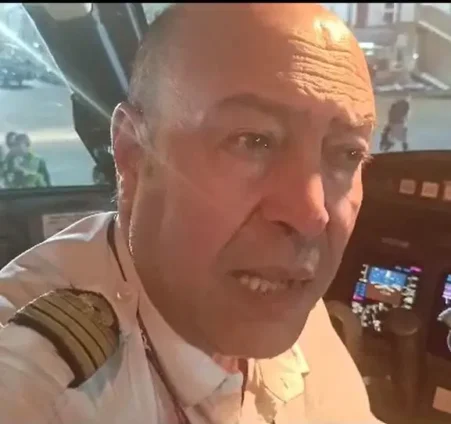
The Tunisian pilot who flew the Nigerian national football team Super Eagles to Libya has provided an account of the events that led to their unexpected diversion to Al-Abraq, a remote airport, instead of their intended destination, Benghazi.
Controversy erupted after the Nigerian delegation, en route to Benghazi for Tuesday’s crucial 2025 Africa Cup of Nations qualifier against Libya, found themselves stranded for over 16 hours on Sunday following the diversion.
The plane was redirected to Al-Abraq, a small airport typically used for Hajj operations, located nearly 300 kilometers east of Benghazi.
In a video interview shared by Sports Journalist Pooja Media on X (formerly Twitter), the pilot clarified that the diversion was not his decision but was mandated by Libyan authorities.
“The flight plan was to land at Benghazi, Benina, and we had approval from the Libyan Civil Aviation Authority,” the pilot explained. “However, as we began our descent, we were instructed to divert to Al-Abraq, which wasn’t even listed as our alternate airport. This decision came from the highest Libyan authorities, not me.”
He expressed concern over the safety risks posed by the sudden change, noting that the fuel on board was calculated for the original destination.
“In aviation, we calculate fuel based on our destination. Diverting unexpectedly can compromise safety. I repeatedly questioned the directive and warned them about fuel limitations, but they insisted that we land at Al-Abraq, citing orders from the highest authority,” he said.
The pilot refuted media claims that the diversion was his decision, stressing that all aviation communications are recorded and could be provided as evidence. “Everything is documented. I asked to land in Benghazi as per my flight plan, but they denied it, instructing me to divert immediately,” he added.
The conditions at Al-Abraq posed further challenges. The pilot described the small airport as poorly equipped, lacking essential navigation systems like an Instrument Landing System (ILS) and VHF Omnidirectional Range (VOR), making a night landing in marginal weather conditions particularly difficult.
“I had to make a visual landing, which is risky, especially in those conditions. It was not easy, but fortunately, we landed safely,” he said, crediting his familiarity with the region from previous work for helping manage the situation.
In light of the ordeal, the Nigeria Football Federation (NFF) has decided to pull the Super Eagles out of the qualifier match against Libya.
Latest Stories
-
GoldBod must be more accountable to Ghanaians – Haruna Iddrisu
10 minutes -
Affi Agbenyo’s EC appointment is constitutionally appropriate, but politically, people have the right to remind us – Haruna Iddrisu
22 minutes -
Education is critical to Ghana’s future and development – Haruna Iddrisu
41 minutes -
Who’s Emelia Affi Agbenyo, the 43-year-old newly sworn-in Deputy EC Chair?
1 hour -
Haruna Iddrisu calls for limits on annual university accommodation fee increases
2 hours -
Today’s front pages: Tuesday, October 13, 2026
3 hours -
Wealth Over Water: How Galamsey Is Threatening Ghana’s Water Security
3 hours -
LA 2028: Black Queens pumped up for second leg of Mauritius tie
3 hours -
LA 2028: Black Queens hold final training session ahead of second leg against Mauritius
4 hours -
Standards are not Seasonal: What the EC appointments teach both sides
4 hours -
King Mohammed VI urges private sector to create youth jobs and spread benefits of growth
4 hours -
KGL U17 Colts 2026: Greater Accra win title after penalties win over Western Region
4 hours -
UK Investment Roadshow opens in London to advance UK-Ghana growth partnership
4 hours -
Assemblies of God requires pastors to resign before entering partisan politics – Rev. Wengam
5 hours -
Ghana targets 20% annual reduction in maternal deaths – Health Minister
5 hours