

Audio By Carbonatix
In psychological terms, PROJECTION is a defense mechanism where an individual unconsciously attributes their own unacceptable thoughts, feelings, or behaviours to others. This occurs when a person, unable to confront or acknowledge their own internal conflicts, assumes that others share or exhibit those same characteristics. As a result, they mistakenly believe that others think, feel, or behave as they do, leading to misunderstandings and distorted perceptions of others' intentions or actions.
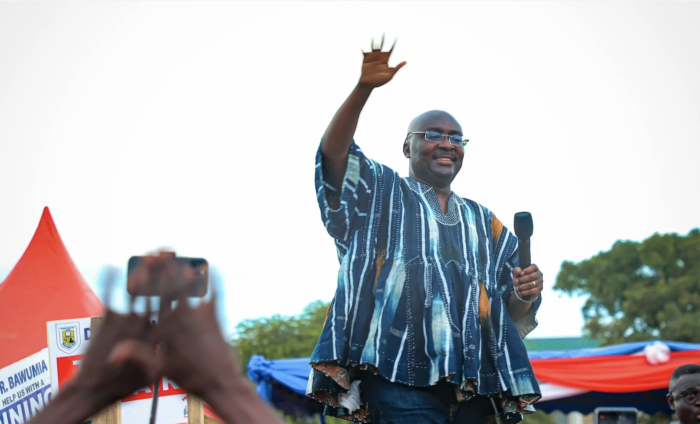
In the current political context of Ghana, particularly concerning the "Bawumia phenomenon," PROJECTION is becoming increasingly evident. Critics of Vice President Dr. Mahamudu Bawumia often assume that his supporters and the broader electorate share the same doubts or criticisms that they hold.
These critics project their own skepticism or discontent onto others, believing that the general populace views Bawumia’s ideas, leadership, or political strategies through the same critical lens. However, this assumption frequently overlooks the diverse perspectives and reasoning that different groups may have in supporting or opposing him.
A significant aspect of this PROJECTION can be observed in the economic realm, where critics, particularly those who suffered financial losses from the Ofori-Atta bonds, assume that their disillusionment is universally shared. For these individuals, the loss of money in the bonds has become a lens through which they view Bawumia's economic ideas. They project their dissatisfaction onto the entire electorate, believing that because they are frustrated and skeptical, the majority of Ghanaians must feel the same way.
Interestingly, many of these bond victims prefer to blame Bawumia, who had nothing to do with the bonds, instead of directing their frustrations at the real perpetrator. This misplaced blame is a classic case of PROJECTION, where the anger and disappointment felt by these individuals are displaced onto Bawumia, even though the bond decisions were not under his purview.
This perspective often leads to a narrative that unfairly frames Bawumia as lacking in economic acumen, particularly in the wake of the financial challenges that many attribute to policies during the Ofori-Atta era.
However, this PROJECTION fails to account for the complexities of Bawumia's role and the broader context in which he operates. Many Ghanaians continue to support him not just for his economic ideas, but for his perceived competence in other areas, such as his role in digitizing the economy and his contributions to stabilizing the financial sector, even when his hands were somewhat tied during the Ofori-Atta era.
Supporters view him as a figure of subdued knowledge and potential, someone who could do more if given greater latitude. They recognize the constraints under which he has had to operate and appreciate the strides he has made in areas such as digital transformation, which have had a tangible impact on everyday life in Ghana.
For most anti-Bawumia elements, the rationale for their opposition is deeply personal, stemming from financial losses and the perception that these losses are emblematic of broader economic mismanagement. However, by projecting this personal discontent onto the entire electorate, they risk misjudging the political landscape. Not all Ghanaians have experienced these losses, and even among those who have, the reasons for supporting or opposing Bawumia are varied and complex.
This phenomenon of PROJECTION in political discourse is not just a psychological curiosity; it has real implications for how political strategies are developed and implemented. When political actors or commentators assume that their own feelings and experiences are universally shared, they may craft messages and strategies that do not resonate with the broader population. This disconnect can lead to political narratives that fall flat, failing to engage with the electorate’s true concerns and priorities.
In conclusion, the Bawumia phenomenon in Ghana serves as a powerful case study of PROJECTION in politics. It highlights the dangers of assuming that one’s own perspective is universally shared and the importance of understanding the diverse reasons why people may support or oppose a political figure. As Ghana approaches future elections, recognizing and addressing this PROJECTION could be key to crafting more effective and resonant political strategies.
Latest Stories
-
Asutifi North Police arrest 7 in crackdown on suspected drug activities
6 minutes -
Who is Attijariwafa Bank, the Moroccan Group set to take over majority stake in SG Ghana?
10 minutes -
University Librarians Ghana honours past leaders for distinguished service
16 minutes -
Seychelles President leads high-level dialogue on Africa’s digital future at FALS Global Conversations in New York
17 minutes -
24-hour economy requires faster justice for commercial cases – Chief of Staff
24 minutes -
Five Agric Colleges receive digital tools to drive climate-smart farming
28 minutes -
GPL 2026/27: Kotoko face Karela test as Hamza Obeng takes temporary charge
48 minutes -
Morocco strike late to overcome 10-man Black Starlets
1 hour -
Nyaho-Tamakloe calls on Kurt Okraku to resign amid Black Stars struggles
1 hour -
Societe Generale Group agrees to sell Ghana subsidiary to Attijariwafa Bank
1 hour -
Accra: Fire breaks out in North Industrial Area at Avenor
1 hour -
Measure food systems progress not only by productivity but also ability to deliver healthy diets – AGRA
2 hours -
Black Stars: Seven years of decline while hashtagging love
2 hours -
Today’s front pages: Thursday, October 1, 2026
2 hours -
Gov’t to suspend GH¢1 D-Levy on diesel for October and November
2 hours