

Audio By Carbonatix
The FIFA World Cup is more than a football tournament. It is a global emotional event. Across countries, cultures, homes, workplaces, restaurants, viewing centres, fan parks, and stadiums, millions of people gather to watch, cheer, argue, celebrate, and sometimes suffer through every pass, tackle, missed chance, and penalty shootout.
While the players are running on the field, the fans are going through their own kind of workout. Hearts race. Voices rise. Hands cover faces. Some people pace up and down. Others sit tensely for the full 90 minutes, barely noticing that they have been holding their breath.
This is why three very simple health habits matter during this World Cup season: breathing well, drinking enough water and healthy snacking.
The timing is especially important because June is Men’s Health Month. Football audiences are still largely male, although women’s interest and participation continue to grow. Recent audience reports suggest that in some markets, men make up close to 70% of men’s World Cup viewers, while older data from previous tournaments showed that about four in ten World Cup viewers were women. In other words, football is loved by both men and women, but it remains a particularly useful entry point for talking to men about health.
When the Match Gets Tense, Many Fans Forget to Breathe
Think of a close match. Your team is leading by one goal. The referee adds several minutes of stoppage time. The opponent wins a corner kick. The ball comes into the box. For a few seconds, the whole room goes silent.
Many fans do not realise what is happening in their bodies at that moment. They may be holding their breath, breathing shallowly, clenching their teeth, tightening their shoulders, or feeling their heart beating faster.
This is the body’s stress response. It is not limited to danger or fear. Excitement, suspense, anger, disappointment, and anxiety can all activate it. During a football match, especially an important one, the body may react as though the fan is directly involved in the game.
The American Heart Association recently used the example of a tense football moment to remind people about mindful breathing. Their message was simple but important: in stressful situations, taking a moment to breathe can help the body settle.
This may sound too simple, but it matters a great deal.
When breathing becomes shallow, feelings of tension may increase. When breathing is slowed down intentionally, the body receives a signal to calm down. This does not mean you will stop caring about the match. It simply means your body does not have to remain in a constant state of alarm.
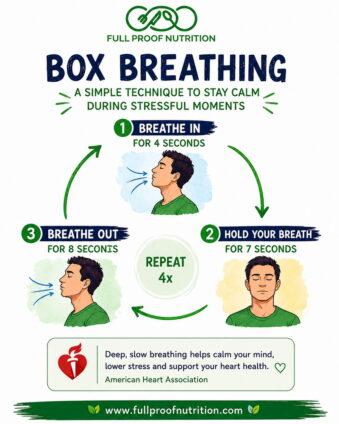
Try the “Stoppage-Time Breathing” Technique
The next time your team is under pressure, try this simple breathing practice:
Breathe in slowly through your nose for four counts.
Hold gently for seven counts.
Breathe out slowly for eight counts.
Pause for four counts.
Repeat this cycle three to five times.
This is often called box breathing. It is simple enough to do while watching a match, sitting in traffic after a game, or calming yourself after a heated argument about football.
The goal is to help your body recover from the intensity of the moment.
For men especially, this is an important health message. Many men are used to pushing through stress without naming it. They may dismiss tension, anger, anxiety, or exhaustion as normal. But the body keeps the score. Learning to pause and breathe is not weakness. It is a practical way to support emotional control, heart health, and overall wellbeing.
Hydration: The Other Habit Fans Often Forget
The second habit is hydration.
During World Cup season, many people spend long hours watching matches. Some watch multiple games in a day. Others gather outdoors, sit in crowded viewing centres, or stay up late depending on the time zone. In hot weather, especially in many parts of Africa, dehydration can become even more likely.
Yet match-day drinks are often not water. Many fans reach for soft drinks, alcoholic beverages, energy drinks, or very sweet juices. These may be part of social gatherings, but they should not completely replace water.
Water is essential for normal body function. It supports circulation, temperature regulation, digestion, concentration, and physical comfort. Even mild dehydration can leave a person feeling tired, headachy, irritable, dizzy, or less focused.
For a fan watching a tense match, dehydration may make the experience feel worse. A headache, dry mouth, tiredness, or irritability can easily add to the stress of the game.
A Simple Match-Day Hydration Plan
You do not need a complicated formula to stay hydrated during the World Cup. Start with a few practical habits.
Drink water before the match begins, especially if you have been outdoors, sweating, travelling, or working all day.
Keep a bottle or glass of water nearby during the game. Do not wait until you are very thirsty.
Use half-time as a water break. As players regroup, you can also reset your body.
If you drink alcohol, alternate with water. Alcohol can increase fluid loss and may also affect judgement, emotions, and sleep.
Limit energy drinks, especially if you already have high blood pressure, palpitations, anxiety, poor sleep, or heart concerns.
Include water-rich fruits when available. Watermelon, oranges, pineapple, pawpaw, cucumber, and other fruits can support hydration while also providing vitamins, minerals, and fibre.
Watch the Snacks Too
The third habit is healthy snacking.
Hydration is not only about what you drink. It is also affected by what you eat.
Many match-day snacks are salty, fried, or highly processed. These foods can make you thirstier and may increase sodium intake, especially when eaten repeatedly throughout the tournament.
This does not mean fans cannot enjoy food while watching football. It simply means balance matters. If you are eating salty snacks, keep it moderate and make water your main drink. Add fruits where possible. Avoid turning every match into an excuse for heavy eating, late-night overeating, and sugary drinks.
Why This Matters for Men’s Health
Men’s Health Month is not only about prostate checks, gym routines, or medical tests, important as those are. It is also about helping men pay attention to the daily habits that shape long-term health.
The World Cup may last for a few weeks, but the habits repeated during those weeks can still affect how you feel long after the final whistle. A few extra snacks here, a few sugary drinks there, several late nights, and hours of sitting can gradually add up. Before you know it, your clothes may feel tighter, your energy levels may be lower, your sleep may be poorer, and your blood pressure may be heading in the wrong direction.
A football match can give us a useful reminder. When the pressure rises, how do you respond? Do you hold your breath? Do you reach for another drink that does not hydrate you? Do you sit for hours without moving? Do you ignore warning signs? The same questions apply beyond football.
This Men’s Health Month, let football remind us that wellness is not always complicated. Sometimes, it begins with three simple things your body needs every day: a good breath, a good drink of water and healthy snacks as needed.
Written by Dr. Laurene Boateng (PhD, RD)
Dr. Laurene Boateng is a Registered Dietitian and Senior Lecturer in the Department of Dietetics, University of Ghana. She is the founder and editor-in-chief of Full Proof Nutrition, a Nutrition Consultancy committed to providing reliable, evidence-based, and practical healthy eating advice through its website www.fullproofnutrition.com. Click here to join Full Proof Nutrition WhatsApp channel to receive more educative content. Send us a mail on fullproofnutrition@gmail.com. Grab a copy of my book on healthy eating – available now on Selar (Buy HEALTHY EATING MADE SIMPLE by Laurene Boateng on Selar) and Amazon (https://amzn.eu/d/6i9OeVb).
Reference
American Heart Association. (2026, June 12). It's a 1-goal match and we're in stoppage time ... [LinkedIn post]. LinkedIn. https://www.linkedin.com/posts/its-a-1-goal-match-and-were-in-stoppage-share-7471214736613924866-odhq/
Latest Stories
-
Bawumia urges NPP Ashanti region stakeholders to use experience to strengthen party ahead of 2028
5 minutes -
Parliament questions proliferation of unapproved containers in East Legon
2 hours -
Promotion arrears alone cannot end teachers’ strike — PRETAG
2 hours -
Ebi Bright alleges assault on driver in dispute with Tema Central MP
2 hours -
GH¢35m Darkuman 24-hour market to be completed in 16 months — MCE
2 hours -
NPP risks losing Karaga seat if Amin Adam doesn’t contest – John Boadu
2 hours -
Ghana Reference Rate falls to 10.04% in October as borrowing costs ease
2 hours -
53% of NPP delegates backed alternatives to John Boadu in chairmanship race – Mussa Dankwah
2 hours -
High taxes, water shortages push up hotel operating costs — Hotels Association
2 hours -
Catholic Bishops demand tougher action on tramadol, marijuana and other drugs
2 hours -
Government positioning Banda District to become major tourism destination hub – Housing Minister
2 hours -
Deputy Education Minister appeals to striking teachers to return to classrooms
2 hours -
Government to involve corporate Ghana in street maintenance – Ayariga
2 hours -
No contractor is untouchable because of political links — Agbodza
2 hours -
Contractors to resume work on Phase Two of Kejetia Market Project
2 hours