

Audio By Carbonatix
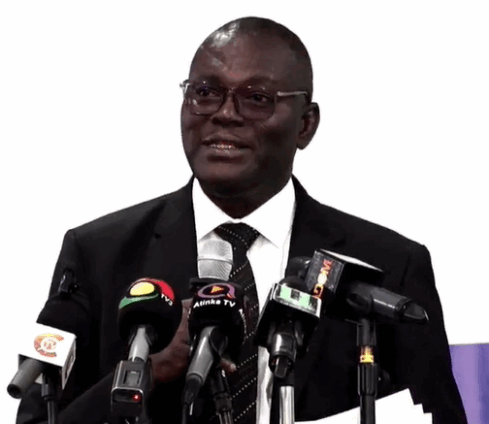
Associate Professor at the University of Ghana School of Law, Prof Abdallah Ali-Nakyea, has called for urgent ethical reforms within Ghana’s private sector, warning that businesses are major enablers of public sector corruption and must be held accountable.
Speaking at a high-level forum on corruption held at the Alisa Hotel on Thursday, June 26, and organised by the Media Foundation for West Africa (MFWA), Prof Ali-Nakyea stressed that integrity in private business is just as essential as accountability in public office.
“The private sector should adopt ethical practices and principles,” he said. “Many companies benefit directly from state contracts yet operate without regard for transparency or integrity.”
He called on the government to adopt a zero-tolerance approach toward unethical corporate behaviour by barring offending companies from future contracts.
“Government should make it in such a way that if you are caught with any unethical practices, you are blacklisted. You should not get any government contract,” he insisted.
“Government is the biggest buyer, biggest supplier, and biggest employer. All the private sector jobs are coming from the government. Why can’t we blacklist unethical businesses so that we can promote the good ones?”
Prof Ali-Nakyea also decried the limited financial oversight and overreliance on external institutions, arguing instead for building robust local systems to fight corruption and illicit financial flows.
“The banking system needs checks and monitoring,” he stated. “And then the international organisations – I keep saying at such fora, we do not need loans, we do not need handouts. Help us strengthen. You see how we could’ve saved 5 billion from corruption, 2 billion from illicit flows from mining. Do we need to borrow?”
On legal reform, he urged amendments to Ghana’s anti-corruption laws to ensure that ill-got wealth is fully recovered and offenders face both legal and reputational penalties.
“Let’s amend anti-corruption laws to close the loopholes identified. We should have provisions for the recovery of funds. I believe in name, recover and punish,” he said.
“If you name, recover and punish, the result is shame. But if you name, punish and don’t recover, then nothing has been done. They will continue, hoping they will not be caught.”
He further called for tougher sanctions and improved whistleblower protection to encourage more citizens to report corruption.
“We need stricter penalties for offenders. We need stronger whistleblower protection, and these are some recommendations,” he concluded.
The MFWA forum, themed “Hidden Riches, Hollow Laws: Dissecting the Loopholes That Fuel Corruption and Illicit Financial Flows”, brought together stakeholders from academia, civil society, and the legal fraternity to discuss sustainable reforms in Ghana’s anti-corruption efforts.
Latest Stories
-
Ghana eyes stronger trade ties as Australia hosts multicultural trade and investment forum
2 minutes -
Margaret-Marie Krakue
5 minutes -
Ayariga announces plans for live broadcast of MMDAs’ meetings on local radio stations
8 minutes -
Mrs Anna Tackie
10 minutes -
Ghana links Afghan heroin and Brazilian cocaine to global drug markets – Global Organised Crime Index
17 minutes -
NHIA launches nationwide inter-school quiz to deepen students’ knowledge of NHIS
24 minutes -
Political protection could be masking Ghana’s cocaine trade – Global Organised Crime Index
29 minutes -
AFCON 2027Q: ‘We have to dissolve the GFA’ – Effia MP after Black Stars lose to Gambia
31 minutes -
NPP announces voting schedule and ID requirements for October 3 national elections
33 minutes -
Lupus can mimic HIV symptoms and damage kidneys if untreated – KNUST expert
36 minutes -
Focus on Sickle Cell Foundation seeks to introduce sickle cell education through comics in Ghanaian schools
42 minutes -
NPP rewrites the campaign playbok as opposition reality shapes National Executive contest
43 minutes -
Road safety education will fail without enforcement – NRSA boss
44 minutes -
Daily Insight for CEOs: Finishing Q3 strong and entering Q4 with purpose
45 minutes -
National Ambulance Service begins ‘Operation Restore Fleet’ to restore grounded ambulances
46 minutes