

Audio By Carbonatix
Former President John Agyekum Kufuor has issued a stinging assessment of Ghana’s post-independence economic model, asserting that the nation’s historical reliance on state-dominated industry effectively "destroyed" the entrepreneurial spirit required for sustainable wealth creation.
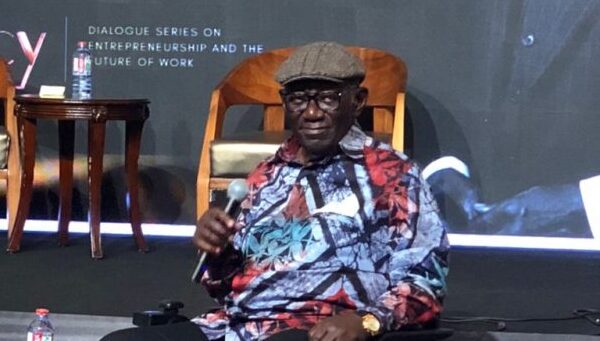
Speaking on Tuesday, 14th April 2026, at the debut of the Legacy Dialogue Series, an initiative of the Design and Technology Institute (DTI), the former statesman argued that the transition from the Gold Coast to modern Ghana was marked by a fundamental misunderstanding of how economies grow.
Mr Kufuor contended that the early Ghanaian state attempted to play a role it was never designed for.
In his view government should not be the primary industrial risk-taker.
By doing so, he argued, the government systematically crowded out the individuals whose initiative could have anchored a resilient business class.
“Gold Coast that became Ghana, insisted on the state taking the risk for growing industry and keeping the private sector. We took that risk taker out of growing our economy,” the former President remarked.
He explained that by replacing the drive of the individual entrepreneur with the rigid machinery of bureaucracy, the nation traded innovation for inefficiency.
Reflecting on the era of massive State-Owned Enterprises (SOEs), Mr Kufuor noted that the proliferation of government-led ventures left little room for the private sector to breathe.
This policy, he suggested, was not merely an oversight but a destructive force that dismantled burgeoning private businesses.
“So it was State Farm, state this, state that, leaving out the private sector,” he noted, adding that these early private ventures “were all destroyed by the state because it seems like the state hadn’t appreciated the necessity for the private sector venture to cooperate with the state to generate wealth.”
The result, according to the former leader, was a country that prioritised state control over the actual generation of national wealth, ultimately leaving the economy fragile and devoid of a robust industrial base.
Drawing on the philosophy of his own administration (2001–2009), Mr Kufuor explained that his pursuit of a "Golden Age of Business" was a deliberate attempt to correct these historical distortions.
He emphasised that his government sought to restore the confidence of the private sector as the true engine of the economy.
“I thought I should emphasise the necessity to bring back business to usher in the golden age of business,” he told the audience of policymakers and entrepreneurs.
His remarks come at a pivotal time in Ghana’s current economic discourse, as the nation grapples with high debt and a renewed focus on private-sector-led recovery under the current administration.
The Legacy Dialogue Series, which aims to bridge the gap between historical experience and future policy, provided a platform for Mr Kufuor to remind the nation that without a "risk-taking" business class, the state’s efforts to generate wealth will remain hampered by the ghosts of its bureaucratic past.
Latest Stories
-
Man City suffer as PSG masterclass sets up Champions League win
1 hour -
Customer Service Africa CEO urges business leaders to observe staff and customer interactions
1 hour -
On night of mayhem for Liverpool, Barcola arrives in style
1 hour -
Muzic Mensah finds healing and renewed love in new single ‘WayƐ Late’
2 hours -
FIFA to offer extra £2.6bn for football development
2 hours -
Government backing is no EPA permit – Authority warns GoldBod, ministries
2 hours -
Real Madrid produce stunning late fightback to down Roma
2 hours -
EPA orders immediate halt to unpermitted reclamation and dredging nationwide
2 hours -
Afenyo-Markin’s lawsuit against Sammy Gyamfi takes focus away from development – Kpebu
2 hours -
FWSC urges media to guard against misinformation in proposed IPEC transition
2 hours -
MoMo Fest 2026: Shatta Wale to Rock Accra Stadium on October 17
2 hours -
GTEC’s letter directing public universities to reopen by October 16 is unprofessional – GAUA
3 hours -
Suspect in viral video assaulting wife jailed for 3 months
3 hours -
GAUA insists strike will end only after Fair Wages addresses market premium issue
3 hours -
Kpemka seeks compensation as he sues BOST over alleged unlawful termination
3 hours