

Audio By Carbonatix
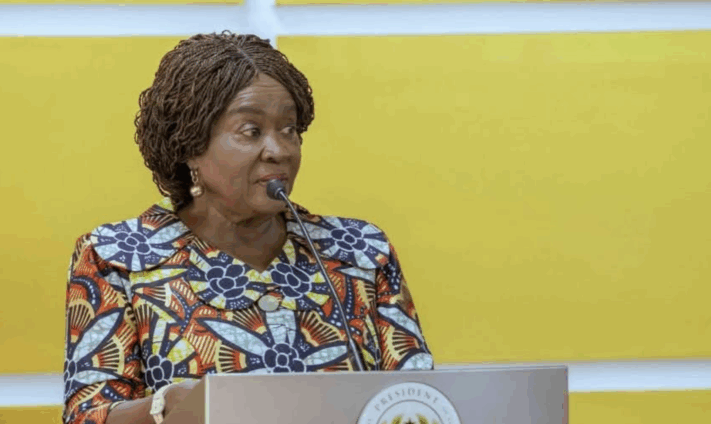
Vice President Professor Jane Naana Opoku-Agyemang has delivered a sobering reality check regarding the nation's financial recovery, warning that recent improvements in macroeconomic indicators must not be mistaken for final victory.
Speaking to an international audience of academics, policymakers, and investors at the 2026 Oxford Africa Conference at the University of Oxford on Saturday, 16 May, the Vice President acknowledged that while structural and institutional reforms are beginning to bear fruit, the nation's broader development goals remain critically incomplete.
Rather than triggering premature celebrations, she argued, these early signs of stability should impose a stricter burden of responsibility on the country's leadership to fortify the economic architecture.
“The foundations will be strengthened, but the work of building an inclusive and future-ready economy is only beginning,” Prof. Opoku-Agyemang cautioned.
Her warning from the United Kingdom aligns closely with a strict domestic policy stance maintained by the Ministry of Finance back in Accra.
Following Ghana's official exit from its three-year International Monetary Fund (IMF) Extended Credit Facility programme, Finance Minister Dr Cassiel Ato Forson has been unyielding in his message to state agencies and market actors: the departure of the Fund does not signal a return to unchecked spending.
Dr Forson emphasised that the conclusion of the structural adjustment programme must not be misinterpreted as a green light for relaxed fiscal management. In his briefing, he pointed out that economic indiscipline remains the single largest risk factor capable of completely reversing the fragile gains recorded over the last 36 months.
Breaking a Historic Cycle
The government's defensive rhetoric is an attempt to break a historical pattern. Dr Forson recalled Ghana’s recurrent economic crises, noting that systemic indiscipline and election-year budget overruns have historically been the primary catalysts driving the West African nation back into the arms of the IMF for emergency bailouts.
By aligning the Vice President's international address with the Finance Minister's domestic caution, the administration appears intent on signalling to global credit rating agencies and bondholders that Ghana is entering its post-bailout era with a commitment to long-term discipline rather than short-term political expediency.
Latest Stories
-
UG Vice-Chancellor urges swift operationalisation of National Research Fund
13 minutes -
Pope Leo to have surgery after lump found in lung
20 minutes -
Joseph Cudjoe writes: Ghana must break free from the dangerous mindset that natural resources are the foundation for wealth
43 minutes -
Children among 109 dead after boat capsizes off Djibouti, UN says
48 minutes -
OmniBSIC Bank’s 11th health walk promotes fitness and business growth
57 minutes -
2026 World Maritime Day: Danish Embassy organises “The Gulf of Guinea Speaks”
1 hour -
New Economy will tackle unemployment and restore hope – Ato Forson
1 hour -
IMMILAC president recounts personal losses as security women lead breast cancer awareness campaign in Wa
2 hours -
University of Ghana postpones October 12 reopening as GAUA strike persists
2 hours -
Bahass Foundation launches vocational skills training to support mental health recovery in Wa
2 hours -
NPP orders parliamentary aspirants and their supporters to suspend campaign activities
3 hours -
Techiman unites against child marriage: Joy Impact Makers Awardee leads charge on International Day of the Girl Child
3 hours -
Ghana Psychological Association calls for greater involvement of people with lived experience in mental health care
4 hours -
Ablakwa says Ghana could evacuate more citizens from South Africa if the situation worsens
5 hours -
Violence against girls must be tackled through individual responsibility – Gender advocate
5 hours