

Audio By Carbonatix
The UN's top court has dismissed Sudan's case against the UAE, accusing the Gulf state of complicity in genocide.
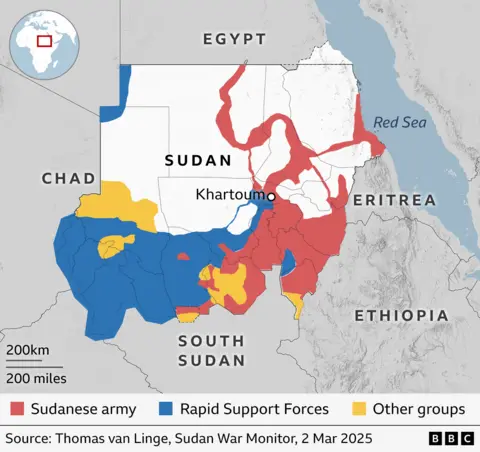
Sudan alleged the UAE supported the paramilitary Rapid Support Forces (RSF) in the Sudanese civil war, in which tens of thousands of people have died, forced millions from their homes and left many facing famine.
The UAE categorically denied the accusations, branding the case "political theatre" and "a cynical publicity stunt".
The International Court of Justice in The Hague ruled that the case could not proceed because the UAE had opted out of Article 9 of the Genocide Convention, which means that it cannot be sued by other states over genocide allegations.
The court said that it lacked jurisdiction and was therefore "precluded by its statute from taking any position on the merits of the claims made by Sudan". The case was thrown out in a 14-2 vote.
Sudan case had claimed that the UAE's alleged military, financial and logistical backing of the RSF - including weapons shipments and mercenary recruitment - enabled systematic attacks against non-Arab communities, particularly the Masalit, in Darfur.
The allegations included mass killings, forced displacement and the use of sexual violence as a weapon.
Reem Ketait, the UAE's deputy assistant minister for political affairs, said the court's decision was "clear and decisive".
"The international community must focus urgently on ending this devastating war and supporting the Sudanese people, and it must demand humanitarian aid reaches all those in need," she said.
Both the Sudanese army and the RSF have been accused of committing atrocities, including ethnically targeted killings, obstruction of humanitarian relief and looting.
Sudan's case at the ICJ was unusual because it targeted an alleged sponsor of atrocities, not the direct perpetrators.
The case was seen as a test of whether states can be held responsible for fuelling atrocities abroad.
While the ICJ's judges found they did not have the power to rule in the case, it nevertheless serves as a powerful illustration of how international courts are becoming diplomatic battlegrounds.
Latest Stories
-
GPL 2026/27: Medeama ease past Basake Holy Stars
7 minutes -
Appiah Adomako writes: Why DVLA must stop treating every expired licence holder as delinquent
11 minutes -
Localization must transfer decision-making power, not just project responsibilities
20 minutes -
Modernising Ghana’s traditional markets through the 24-Hour Economy markets initiative
22 minutes -
New economy will boost local production and create jobs – Finance Minister
28 minutes -
Real-Time VAT on cross-border digital services – not a new tax and does not violate double taxation principle
1 hour -
Digitalisation, AI key to Ghana’s tourism transformation – GHATOF
2 hours -
Stronger GTA-private sector partnership needed to grow tourism – GHATOF
2 hours -
Amazon eyes Ghana for broadband expansion after talks with Mahama
2 hours -
National Investment Quiz 2026: Six schools qualify for quarter-finals
3 hours -
‘Do not let Russia pay for its madness with lives of your people’ – Zelensky to Ghana, 46 other countries
3 hours -
6,079 promotion cases fully processed and paid – CAGD says amid nationwide teachers’ strike
3 hours -
Teacher unions to meet government Monday over nationwide strike
4 hours -
Photo story: Republic Bank-JoyNews Habitat Fair clinic wraps up after three days of housing solutions, expert engagement
4 hours -
National Peace Council urges investment in youth to sustain Ghana’s peace
4 hours