

Audio By Carbonatix
Certain things are difficult to be subjected to an individual’s interpretation especially where they become acceptable norms with common interpretation worldwide.
Traffic light signals which operate in almost every country around the globe are one of them. They are not debatable whether driving is on the left or the right. They bring clarity and order to our roads.
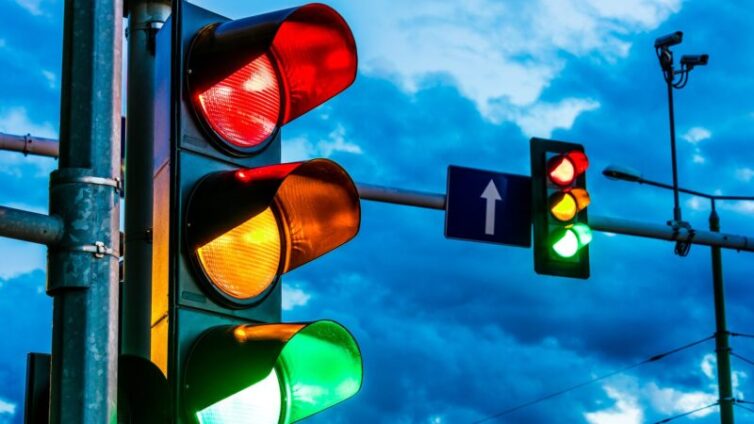
When some of us first went to driving school, as way back as the 1970s, one was taught the basic understanding of what traffic light signals were – red means stop, amber means get ready to stop and green means go.
At the nurseries and primary schools, the signals have become a rhyme. Children also get a good understanding of the colours of the traffic lights and what they stand for.
It is in this vein that a story narrated to me by a friend the other day intrigued me so much. Indeed I was confused as I tried to recall what I learnt about the signals as a learner-driver some four decades ago.
Amber signal
According to my friend, one Friday afternoon, a youthful traffic officer on a motorbike from nowhere, literally chased her to a point after she had crossed an amber signal at a traffic light. When she stopped to see why this officer was signalling her, she was scandalised to hear that she was being arrested for driving through the amber light.
As she told the officer about her understanding of the amber light signal, he pulled out his mobile phone and showed her a picture of traffic lights and what each colour indicated, including the amber which said – “amber means stop”. Really?
Confused more by the law enforcer’s capture shown to my friend, I decided to conduct my investigation to know what had changed from when some of us went to driving school and a practice one had been used to all this while.
I have spent some days over the last week, talking to young and older drivers, private and commercial. I have spoken to men and women who have been behind the steering wheel for decades to know their understanding of the amber colour in the traffic light signal. The unanimous answer I got was “amber means get ready to stop”, a clear contrast to what this officer in question must be walking around with.
To deepen my knowledge, I went to the offices of a couple of driving schools to learn what they were teaching in their classrooms and on the roads with their students. There was no ambiguity in their answers and nothing has changed from what some of us learnt four decades ago – amber or yellow, as some of us learnt it those days, still means get ready to stop. The caveat from both was that if you have already crossed the line, you may proceed to drive on.
Ghana Highway Code
One of the offices I went to even handed me a copy of the Ghana Highway Code booklet and pointed me to page 39 where there is an illustration of the traffic light signals and what each signifies.
What I discovered was that the officer was perhaps up to something, a mischief. What he did, purporting to arrest my friend was to take the first line of the amber light explanation which says “amber means stop” without showing the full explanation given in the code to her.
According to the Ghana Highway Code of the Ministry of Roads and Transport, 1974, Red means: “STOP. Wait behind the stop line on the carriageway”, AMBER means: “STOP at the stop line. You may only go on if the amber appears after you have crossed the stop line or are so close to it that to pull up might cause an accident”. GREEN means: “You may GO on if the way is clear”.
While one appreciates the presence of the police on the roads to check on driver compliance and the safety of road users, dishing out the right information is important, if they insist on stopping people. They are not on the roads to unnecessarily harass road users based on their own interpretations.
Their work as law enforcers is duly appreciated and pointing one in the right direction is the kind of useful education that one will readily accept with much appreciation and gratefulness and not flexing of muscles on baseless issues.
Wrong or incomplete information should not be used to harass because they only end up exposing themselves.
As per the Ghana Highway Code, amber in the traffic light signal admonishes drivers to approach with care and stop at the line, however, you MAY go on if the amber appears after crossing the stop line or are so close to it that pull up might cause an accident. That was my friend’s interpretation as well but the officer was bent on showing his powers, right or wrong.
From my little investigation and as the driver, one needs to read the Ghana Highway Code now and then. Learning should never stop, no matter the age, so, with confidence, one can shame the mischievous when push comes to shove.
*****
The writer can be contacted via email at vickywirekoandoh@yahoo.com
Latest Stories
-
Who’s Emelia Affi Agbenyo, the 43-year-old newly sworn-in Deputy EC Chair?
10 minutes -
Haruna Iddrisu calls for limits on annual university accommodation fee increases
46 minutes -
Today’s front pages: Tuesday, October 13, 2026
2 hours -
Wealth Over Water: How Galamsey Is Threatening Ghana’s Water Security
2 hours -
LA 2028: Black Queens pumped up for second leg of Mauritius tie
2 hours -
LA 2028: Black Queens hold final training session ahead of second leg against Mauritius
3 hours -
Standards are not Seasonal: What the EC appointments teach both sides
3 hours -
King Mohammed VI urges private sector to create youth jobs and spread benefits of growth
3 hours -
KGL U17 Colts 2026: Greater Accra win title after penalties win over Western Region
3 hours -
UK Investment Roadshow opens in London to advance UK-Ghana growth partnership
3 hours -
Assemblies of God requires pastors to resign before entering partisan politics – Rev. Wengam
3 hours -
Ghana targets 20% annual reduction in maternal deaths – Health Minister
4 hours -
Cyber attacks in Africa grow faster than global rate, report finds
4 hours -
Ghana signs UAE deal to create 5,000 overseas jobs
4 hours -
One Million Coders Programme targets 100,000 digital jobs in two years – Sam George
4 hours