

Audio By Carbonatix
As news of the ceasefire spread through Israel's northern communities, sirens blared three times this evening, warning of incoming rockets from Lebanon.
In the sky above the northern city of Nahariya, Israel's air defence interceptors shot up to block them, triggering loud explosions.
Ambulance crews said at least three people were wounded by shrapnel in the hours before the ceasefire took effect, including two seriously.
On the ground here – and across the country – there's scepticism about why Israel's leader has signed up to the truce.
"I feel like the government lied to us," said Gal, a student in Nahariya. "They promised that this time it would end differently, but it seems like we're once again heading toward a ceasefire agreement that solves nothing."
"We gave the Lebanese government a chance, and they failed to uphold the agreement; they didn't disarm Hezbollah," said Maor, a 32-year-old truck driver whose house was hit by a rocket last year.
"If we don't do it, no one will. It's a shame they stopped. It seemed like there were significant achievements this time."
Israel has five army divisions in southern Lebanon, and only yesterday its chief army spokesman said they would continue advancing.
This ceasefire announcement has taken Israel by surprise – reportedly even within the government's own security cabinet.
A widely respected Israeli news outlet tonight described Israeli Prime Minister Benjamin Netanyahu convening a security cabinet meeting with just five minutes notice, shortly before the ceasefire announcement was made.
Leaks from that meeting say ministers were not given a vote on the ceasefire.
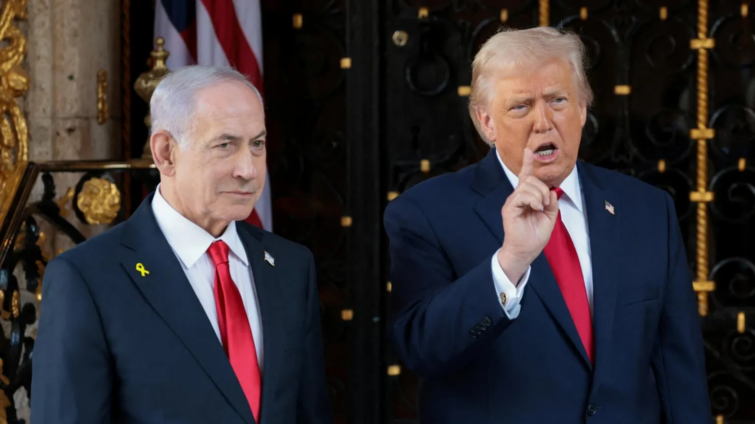
To many, this is another example of Netanyahu bowing to US President Donald Trump's demands to halt fighting, even when the terms or the timing are not what Israel wants.

"A ceasefire must come from a position of strength in order to serve the national interests of Israel," said the former IDF Chief of Staff and Yesh Atid party chief, Gadi Eisenkot.
"A pattern has developed in which ceasefires are imposed upon us – in Gaza, in Iran, and now in Lebanon. Netanyahu does not know how to convert military achievements into diplomatic gains."
Netanyahu – while framing the ceasefire as "an opportunity to make a historic peace agreement with Lebanon" – also made clear that he was making few concessions on the ground.
He said Hezbollah had insisted on two conditions: the withdrawal of Israeli forces from Lebanon, and a principle of "quiet for quiet".
"I agreed to neither the former, nor the latter," he said. "These two conditions are not being met. We are remaining in Lebanon in a thickened security zone […] We are there, and we are not leaving."
Iran has been demanding an end to Israeli operations against its proxy group Hezbollah in Lebanon since agreeing to a two-week ceasefire with the US earlier this month.
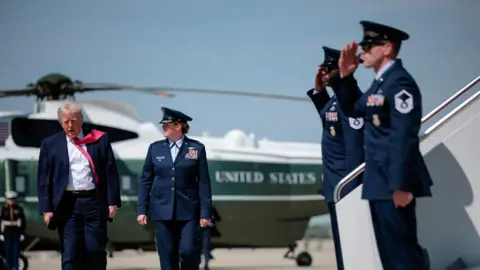
And after initially saying Israel's military campaign against Hezbollah in Lebanon was "a separate skirmish", Trump said this week he was trying to create what he called "a little breathing room between Israel and Lebanon", as US negotiations with Iran falter, and the end of the truce period approaches next week.
Both Netanyahu and Israel's military leaders have been keen to emphasise in recent days that the ceasefire Trump agreed with Tehran did not mean a ceasefire in Lebanon.
A poll by Israel's Channel 12 news network last week found that almost 80% of respondents supported continued strikes on Hezbollah.
And three separate surveys suggested a majority of Israelis also opposed to two-week ceasefire Trump agreed with Iran.
"Agreements may be signed with a tie in Washington, but the price is paid in blood and destroyed homes" in northern Israel, the head of the Mateh Asher Regional council, Moshe Davidovich, told Israeli media.
"Residents of the north are not extras in an international public relations show," he added.
The truce Israel has agreed to in Lebanon states clearly that Israel "preserves its right to take all necessary measures in self-defence, at any time, against planned, imminent or ongoing attacks" – much as it did during the last ceasefire agreed in November 2024, when Israel continued regular strikes against targets it deemed a threat.
Few Israelis see this truce as a way out of the conflict with Hezbollah.
But many see it as further proof that their leader is again under pressure to align with Washington's interests – and that the war goals of their key US ally are not always the same as their own.
Latest Stories
-
Labour Minister wants SOEs to help shape new public pay system
2 hours -
IPEC will ensure Equity and Sustainability in SOEs Compensation
2 hours -
White House bars CNN from travelling with Trump on Air Force One
3 hours -
Fennis wins second consecutive ITF J60 title in Accra
3 hours -
Spain beat England in thriller after Kane penalty miss
3 hours -
GPL 2026/27: Zaidan’s late goal ends Hearts of Oak unbeaten start
3 hours -
CEOs demand clarity on pay harmonisation, board autonomy as FWSC engages SOEs bosses over IPEC transition
3 hours -
2026 Women’s Super Cup: FC Savannah, Epiphany Warriors maintain top spots ahead of final group games
3 hours -
‘Is EOCO responsible for determining lawyers’ fees?’ – Baffour Awuah
3 hours -
David Beckles claims second J60 Accra title
4 hours -
No France cocaine suspect linked to Mahama, Vice President’s security details – NACOC
4 hours -
Anwelle Foundation launched in Jirapa to tackle poverty, youth unemployment
4 hours -
Joy Sports Editor Fentuo Tahiru Fentuo to moderate inaugural Music Meets Football Summit in Zambia
4 hours -
Court premises too volatile for Baffour Awuah’s attempted arrest by EOCO – Inusah Fuseini
4 hours -
Drug bust: Under no circumstances will NACOC leadership be compromised – Twum-Barimah
4 hours