

Audio By Carbonatix
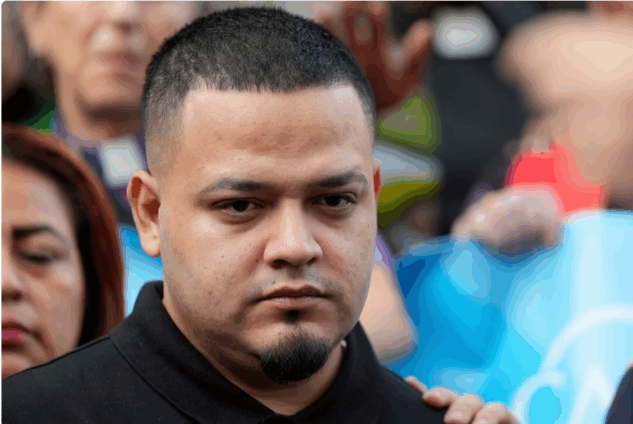
The government of Ghana has confirmed that the United States Department of Homeland Security (DHS) has formally complied with Ghana’s refusal to accept Kilmar Abrego Garcia, a Salvadoran national at the centre of an international deportation controversy.
The Minister of Foreign Affairs, Samuel Okudzeto Ablakwa, who initially denied the existence of such an arrangement, announced on his Facebook page on Friday, October 10, that Ghana’s position had been “duly acknowledged and complied with” by U.S. authorities.
Read Also: Ablakwa counters U.S. reports, says Ghana has no deal to accept Abrego Garcia
“We also note with satisfaction that DHS has today taken the appropriate steps to inform Garcia’s lawyers and amend court submissions to reflect the fact that Ghana cannot be an option for Garcia’s deportation,” Ablakwa stated.
He reaffirmed that Ghana had never agreed to receive Garcia, stressing that the government had consistently maintained its stance throughout discussions with the U.S.
“The Mahama Administration will continue to be transparent and truthful to Ghanaians at all times,” Ablakwa assured, adding that the government’s humanitarian policy of accepting limited numbers of non-criminal West Africans “does not, and will not apply to persons from other regions or those facing criminal allegations.”
The development follows earlier reports that the DHS had considered Ghana as a potential deportation destination for Garcia after failed attempts to return him to El Salvador, where a court order had barred his removal due to credible fears of persecution.
The government has faced some criticism in recent times for accepting some West African nationals deported by the United States into the country.
Background on Kilmar Abrego Garcia
Abrego Garcia was wrongfully deported to El Salvador in March 2025, despite a 2019 U.S. court order that shielded him from removal due to credible threats he would face gang-related persecution if sent back to El Salvador.
His deportation was later acknowledged by U.S. authorities as an “administrative error,” and he was returned to the U.S. in June 2025 following court orders. Upon return, he was indicted in Tennessee on human smuggling charges. He has pleaded not guilty to those charges.
His legal team argues that these charges may be vindictive, given the timing and context of his deportation lawsuit. A U.S. judge has allowed his legal challenge to the deportation to proceed.
His asylum request was rejected by a U.S. court, but he retains the right to appeal.
Latest Stories
-
GAEC must retain nuclear scientists for Ghana’s nuclear ambitions – Minister
20 minutes -
Man reportedly mistaken for game and shot by hunter dead in forest
22 minutes -
19-year-old mason jailed 15 years for defiling seven-year-old pupil
27 minutes -
Ghana’s banking sector assets rise 20.47% to GH¢500.2bn – BoG Governor
31 minutes -
22 injured as Sprinter bus overturns at Sege after tyre burst
32 minutes -
UN housing expert urges Ghana to strengthen Rent Control Department amid housing affordability concerns
41 minutes -
Delta-BCI partnership reaches 166,000 people with breast cancer education
50 minutes -
Power restoration fault suspected in Kumasi Central Market fire
6 hours -
The 7-foot giant of Ngleshie Amanfro: Seven-foot Ghanaian Ephraim Saawa dreams of joining the national basketball team
7 hours -
Government promises support for Kumasi Central Market fire victims
7 hours -
Vibes The Movie: Big Ghun’s Ghanaian film earns five nominations at 2026 REFFA
7 hours -
‘I’m a fulfilled man’—Justice Korbieh on missing out on Supreme Court despite two nominations
7 hours -
MamaCare CEO warns unresolved conflicts among health workers could undermine maternal and neonatal care
8 hours -
Health professionals urged to translate medical knowledge into practice to save mothers
8 hours -
Retired judge Justice Francis Korbieh charges 1,568 new lawyers to uphold integrity
9 hours