

Audio By Carbonatix
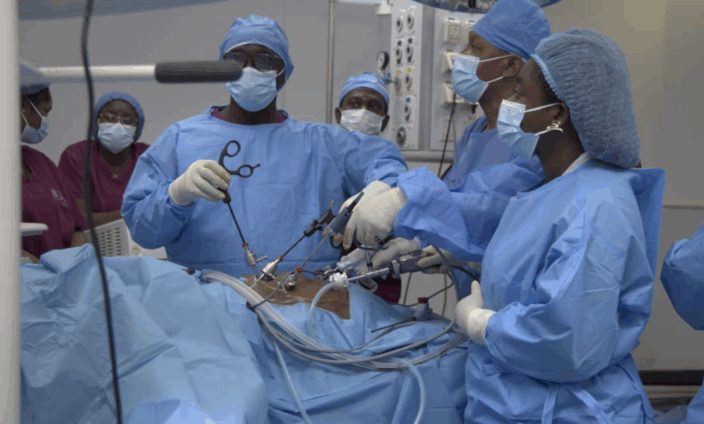
The University of Ghana Medical Centre (UGMC) has successfully conducted Ghana’s first laparoscopic bariatric surgery, a significant breakthrough in the country’s medical landscape and efforts to address rising obesity cases.
The pioneering procedure, also known as a laparoscopic sleeve gastrectomy, involves removing a portion of the stomach to improve weight loss.
The surgery was carried out in collaboration with a multidisciplinary team at UGMC, led by Dr. Kennedy Ondede, a Bariatric Surgeon and Head of Surgery at Kenyatta National Hospital in Nairobi, Kenya with sponsorship from Medtronic and East Cantonment Pharmacy Limited.
Dr. Ondede explained that the surgery, which had gained ground in Kenya and other parts of Africa, involved removing about 60–80 per cent of the stomach using minimally invasive “keyhole” techniques.
This results in patients eating less and losing weight, while still maintaining a balanced nutritional intake.
“This type of weight-loss surgery is not just about aesthetics, it helps reduce or reverse major obesity-related complications such as hypertension, type 2 diabetes, infertility, and joint issues. Some of our patients who couldn’t conceive now have children. Others no longer require daily medication for chronic diseases,” he said.
The procedure is typically recommended for individuals with a Body Mass Index (BMI) above 30, classified as obese by World Health Organization (WHO) standards.
According to Dr Ondede, the surgery could help patients lose up to 80 per cent of their excess weight over a period of one to two years.
Though the procedure is relatively safe, it carried potential risks such as infection, staple line leakage, and malnutrition if not followed up properly, he added.
He, however, indicated that with proper equipment and training, the success rate exceeded 90 per cent, adding that persons who did not wish to undergo such a procedure must control their diet, avoid or reduce sugar intake, and exercise well to maintain a normal weight.
Dr. Dominic Darkwa, a Consultant General Surgeon at UGMC, who co-led the operation, said the team had spent over a year planning to introduce bariatric surgery at the facility.
“We have about 17 to 20 per cent of Ghana’s adult population living with obesity. This puts them at risk for numerous conditions including heart disease, diabetes, arthritis, and respiratory problems,” Dr. Darkwa stated.
“We planned and trained for this moment, and we’re excited to finally bring this service home.”
Dr. Darkwa clarified that the sleeve surgery differed from a gastric bypass, explaining that while the former reduced stomach volume, the latter diverted food away from parts of the digestive tract to limit absorption.
“The surgery is only a tool. Patients must follow up with dietitians, psychologists, and exercise routines to meet their health goals.
This is just the beginning, we hope to scale up and help many more Ghanaians reclaim their health,” he added.
Dr. Baffoe Gyan, Director of Medical Affairs, emphasized that this medical milestone aligned with the hospital’s mission to provide world-class healthcare, given the needed support and necessary equipment.
“The procedure is very effective, it prevents diseases, reduces drug dependency, and can transform lives,” Dr. Gyan said.
“Bariatric surgery is a procedure a lot of Ghanaians go outside to have done and with the expertise now in Ghana, people no longer need to travel outside the country for such,” he added.
Dr Gyan, also a Cardiothoracic Surgeon, noted that many Ghanaians genetically struggle with weight gain and obesity, adding that the bariatric surgery offered a viable solution for those who have tried conventional weight loss methods without success.
A team of over 30 professionals, including surgeons, anesthetists, perioperative nurses, nutritionists, and equipment providers, contributed to the procedure.
Each surgery took two to three hours due to the instructional nature of the session.
Patients who undergo such surgery are expected to begin a liquid diet within 24 hours and are typically
discharged within three days, while ensuring follow-ups with nutritionists and psychologists, as it is essential to long-term success.
The UGMC called on patients in need of such procedures to enroll in its bariatric programme and be offered a comprehensive pre- and post-surgical support system.
Latest Stories
-
President Mahama ends Resetting Ghana tour of Ahafo Region
2 hours -
African negotiators seek delivery of climate commitments at COP31
2 hours -
BoG develops AI rules for financial sector
2 hours -
‘Big Push’: Government assures contractors of prompt payments
2 hours -
Court fines miner for breaking into gold buying shop
2 hours -
Tarkwa court jails labourer for three years over GH¢123,000 theft
3 hours -
GAEC must retain nuclear scientists for Ghana’s nuclear ambitions – Minister
3 hours -
Man reportedly mistaken for game and shot by hunter dead in forest
3 hours -
19-year-old mason jailed 15 years for defiling seven-year-old pupil
3 hours -
Ghana’s banking sector assets rise 20.47% to GH¢500.2bn – BoG Governor
4 hours -
22 injured as Sprinter bus overturns at Sege after tyre burst
4 hours -
UN housing expert urges Ghana to strengthen Rent Control Department amid housing affordability concerns
4 hours -
Delta-BCI partnership reaches 166,000 people with breast cancer education
4 hours -
Power restoration fault suspected in Kumasi Central Market fire
9 hours -
The 7-foot giant of Ngleshie Amanfro: Seven-foot Ghanaian Ephraim Saawa dreams of joining the national basketball team
10 hours