

Audio By Carbonatix
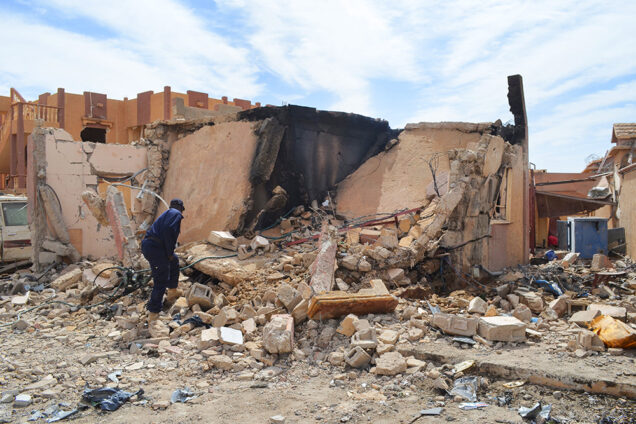
The United Nations has documented a rapid escalation of extremist activity across West Africa and the Sahel, signalling a volatile shift in the region's security landscape. International monitors report that militant factions are expanding their operational footprint with alarming speed, increasingly threatening the stability of coastal nations along the Gulf of Guinea.
Escalating security challenges and technological adaptation
Leonardo Santos Simão, the Special Representative of the UN Secretary-General for West Africa and the Sahel, briefed the Security Council on these developments. He emphasised that the situation in the central Sahel and northern Nigeria remains volatile. The groups involved are evolving their methodology to evade detection and increase their lethality.
"On the security situation, the threat posed by terrorist and other non-state armed groups remains acute, especially in the central Sahel and northern Nigeria, rapidly targeting coastal states in the Gulf of Guinea. These groups are adapting their tactics, increasingly using advanced technology, such as drones, means of communication and cryptocurrencies," Simão stated.
Humanitarian crisis and illicit networks
The intersection of organised crime and extremist activity complicates efforts to restore order. UN officials highlighted that drug trafficking has become deeply linked with regional terrorism. This convergence of illicit revenue streams allows armed groups to sustain operations despite international pressure.
Humanitarian relief efforts face significant obstacles as access to conflict-ridden zones continues to shrink. The civilian population remains the primary victim of this instability. Vulnerable groups, particularly women and children, suffer most from the persistent violence. Additionally, the targeted destruction of schools compromises the educational prospects for a generation of youth, effectively stifling the long-term potential of these communities.
Implications for coastal stability and the Gulf of Guinea
The southward shift of extremist influence poses an urgent challenge for coastal nations, including Ghana, Togo, Benin, and Côte d’Ivoire. Historically considered more stable, these countries now face increased pressure from cross-border displacement and the infiltration of militant networks. Recent data indicates that coastal states are now hosting approximately 220,000 refugees fleeing conflict in the north. To mitigate these risks, regional maritime and land-based task forces are intensifying their efforts to harmonise legal frameworks and improve intelligence sharing. The operationalisation of the Combined Maritime Task Force in June 2026 marks a significant step toward collective security, yet experts maintain that military preparedness must be paired with robust investments in local governance to prevent the exploitation of northern frontier communities.
Regional perspectives and the path to stability
Addressing the root causes of this unrest remains a priority for the international community. UN experts pointed to persistent poverty, fragile governance, and extreme climate vulnerability as key drivers of the conflict. Solving these systemic issues requires a unified approach that prioritises long-term investment over temporary security measures.
Representatives from the affected nations expressed a firm commitment to overcoming these hurdles through collective action. Burkina Faso’s ambassador to the United Nations spoke on behalf of the Alliance of Sahel States to reaffirm their resolve in seeking peace.
"Burkina Faso and the countries of the Alliance of Sahel States have faith in the future. We have already undertaken this struggle, and together with our people, we will continue to demonstrate great resilience. The Confederation and the Alliance are open to all dialogue, and we welcome all of the ongoing efforts, particularly the initiatives undertaken by Togo, the African Union and the United Nations Office for West Africa and the Sahel," the ambassador noted.
A complex path toward regional security
The path forward requires balancing the drive for national sovereignty among Sahelian states with the urgent need for coordinated international support. While the Alliance of Sahel States emphasises local resilience, the scale of current threats demands a sophisticated, multifaceted strategy. The ultimate test for the region will be whether internal governance reforms can synchronise with global humanitarian and security efforts to successfully stem the tide of regional instability. As borders remain porous and extremist tactics modernise, the collective security of the African continent rests upon the ability of these nations to integrate their defence architectures while simultaneously addressing the socio-economic grievances that fuel recruitment.
Latest Stories
-
The Paradox of Plenty — When every smartphone becomes a newsroom
27 minutes -
GTA sensitises taxi drivers in ‘Know Ghana’ tourism campaign
2 hours -
Archbishop Agyinasare calls for responsible speech amid growing social media abuse
2 hours -
‘It will be inexcusable for gov’t not to honour payment of teachers’ arrears by 30th October’ – Haruna Iddrisu
2 hours -
Forbes’ World’s Best Employers 2026: No Ghanaian firm ranked among 900 companies
2 hours -
Electronic processing of teachers’ data: ‘The decision is the Controller’s’ – GES boss
2 hours -
Teachers’ Strike: Haruna Iddrisu questions paper-based processing of promoted teachers’ data
2 hours -
Savannah Region: Kunfusi bridge collapses again, leaving nearly 4,000 residents cut off
2 hours -
Teachers’ strike: GES targets Monday deadline to submit promotion data to Controller
2 hours -
Inflation to average 11.3% in 2027 – Fitch Solutions
3 hours -
‘I didn’t campaign for NDC to come and do this nonsense’ – Kpebu on EOCO’s conduct
3 hours -
Fitch Solutions maintains policy rate forecast of 14% by December 2026
3 hours -
Diaspora Nasara Caucus congratulates Mohammed Ali Suraj, new NPP executives
5 hours -
Dr Antwi-Boasiako’s cybersecurity book showcased at UN crime prevention congress
5 hours -
We will empower the grassroots and protect every vote – NPP’s 1st Vice Chair Kojo Bamba
5 hours