

Audio By Carbonatix
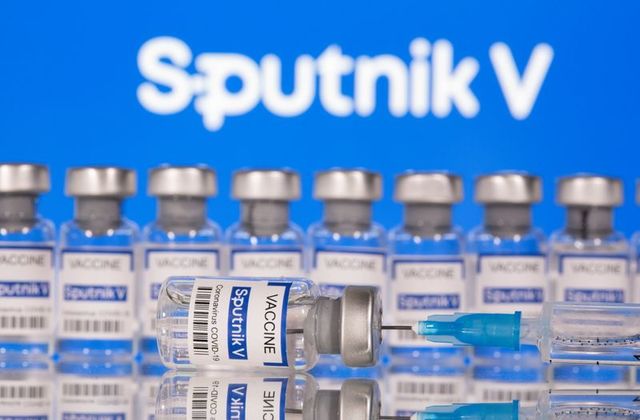
Pharmacist and Fellow of the Ghana Centre for Democratic Development (CDD-Ghana), Kwame Sarpong Asiedu says the issue with Ghana’s use of intermediaries to procure Covid-19 vaccines is not about the quality of vaccines but the legality of the procurement process.
"The issue is not about quality; it is about legality, " Dr Asiedu said.
Explaining his point on Joy News' Newsfile Saturday, he said, “The issue with the middle man, not about the FDA not doing their job, it is about that middleman not having a contract with the local holder of the Emergency Use Authorization, that’s where the issue is.
“So if I register a product in Ghana and it’s within patent, if you want to bring it into Ghana, I either bring it myself, or I can franchise someone to bring it, or the manufacturer, in this case, it is Sputnik, the Russian development fund can bring it on behalf of somebody.
Speaking on quality, he said the Food and Drugs Authority (FDA) has, over the years, proven to be a robust institution ensuring the quality of products on the Ghanaian market; thus, there should not be any cause for alarm concerning the quality of the vaccines.
"Ghana has one of the most robust regulatory authorities when it comes to medicines in Africa," he said.
However, he was concerned about how go-betweens were being employed to bring the vaccines into the country, a situation he says could create some legal bottlenecks for the country in the future.
“If a 3rd person is bringing it because the regulation doesn’t allow you to register the product, twice in the same country, then there are regulatory issues and legality issues there.”
He stated that without a legal contract between the Emergency Use Authorisation holder and the middleman, any adverse event post-immunization, would have to be borne solely by the Ministry of Health.
He further advised the FDA to collate the adverse events post immunisation.
“What I will say is that yes, the FDA will do all that, but another thing that the FDA would have to ensure is the collation of the adverse events, post-immunisation, which is the responsibility of the person who holds the emergency use authorization that is where the real issue will be.
“When the middleman brings it and issues that disclaimer, albeit, the disclaimer is issued by all manufacturers; however, when it comes to the adverse effects post-immunisation, it is the responsibility of the local procurer of the emergency use authorisation.
“The question I ask consistently is if we use a middleman, will the Ministry of Health take over that responsibility and any liability that comes with it? We don’t have answers, and that is where the problem is, so I don’t have an issue at all with the FDA’s robustness,” he said.
Latest Stories
-
NDC threatens sanctions over oversized campaign posters, gives aspirants 5 days to comply
19 minutes -
Star Oil paid GH¢2.7bn in taxes, levies in nine months of 2026
33 minutes -
Samson’s Take: The rule of law is cheaper before the bulldozer
34 minutes -
GRA blames system failure for delay in issuing receipt over passenger’s customs duty
55 minutes -
Livestream: Newsfile discusses World Cup visa scandal, beach demolitions, education strikes, BRICS bid
59 minutes -
NC-PTAs welcomes end of teachers’ strike, urges parents to prepare children for Monday
1 hour -
Government procures over 2,000 transformers as Ghana’s electricity access hits 89.13% – Energy Minister
2 hours -
UTAG-UG threatens strike on October 19 over unpaid allowance
2 hours -
Let The Constitution direct Chieftaincy to deliver “All Development Is Local”
3 hours -
John Jinapor outlines renewable energy, nuclear power priorities for 2027
3 hours -
Ghana explores centre of excellence for hearing, communication and cochlear implant care
4 hours -
Schizophrenia-related disorders lead mental health cases recorded in Ghana
5 hours -
Dutch authorities enlist Ghana in hunt for fugitive drug lord Bolle Jos
5 hours -
Ghana housing finance conference adopts communiqué to improve affordable housing access
9 hours -
Special Initiatives Minister urges Wa Technical Institute to enrol more girls as EU-backed solar training lab opens
10 hours