

Audio By Carbonatix
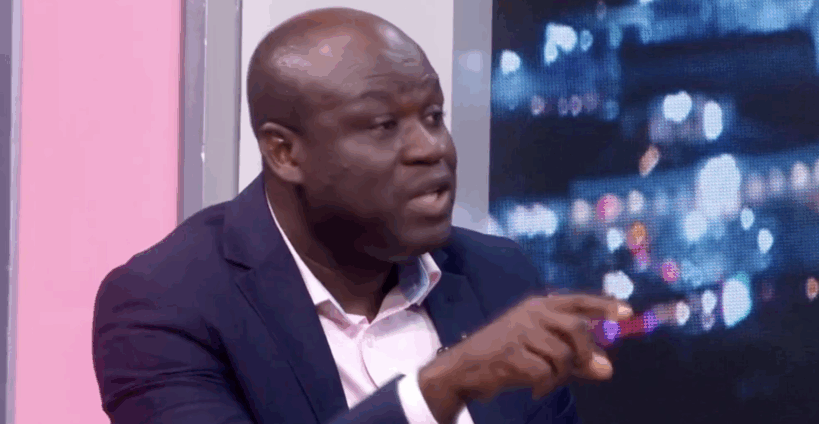
The Ghana National Chamber of Commerce and Industry (GNCCI) says government’s overhaul of the Value Added Tax system marks the end of years of frustration for local businesses.
Chief Executive Mark Badu Aboagye says the business community has pushed for this reform for almost four years and is now relieved to see it finally delivered.
“Largely, this is one of our major concerns for the past three to four years, and in all the budgets, one of our major input is for the VAT to be reformed,” he said.
He recalled that businesses were excited when government first hinted at a reform last year.
“We were happy when it was announced last year that we’re going to see a reformation and possibly a reduction in the effective batch rate,” he explained.
But that optimism faded when nothing changed for almost a year. For him, the latest budget brings closure.
“Unfortunately, it took almost a year, and then just this budget you’ve seen that it’s actually been reformed. So we are happy about it. I think one of our major issues, our major problems, has been resolved for us.”
He says the impact on businesses will be immediate because the old system was too difficult for many to work with.
“So for our members, our complaint largely was that it was so complex,” he said. The structure itself was a stumbling block.
“I mean, it’s a VAT that you see the Standard VAT being combined with straight line levies. In fact, the competition itself was a challenge for most of our members, so some of them are not saying that they don’t want to pay, but how to even compute it was also, was a challenge.”
Mr Badu Aboagye said businesses also struggled because key levies became a direct cost.
“Now we have said that the straight line level was translating into a direct cost to the businesses. So you see a direct cost of the one we pay for the NHIL, the one we pay for the get fund and also the almighty COVID level. These are levees that you cannot claim an input vacuum. So it became a direct cost to businesses,” he said.
He believes the consolidation changes everything.
“Now that we have consolidated and it is part of the Standard VAT, now becomes a VAT that a business person can also claim an input VAT, so it doesn’t become a direct cost to businesses again,” he added.
He said price effects will come later, but the system is now clearer.
“So there we are going to have there and how it affects prices. We’re going to discuss secondly. Now is simplified.
"So when you pay your 20% you know how to calculate your output, VAT, your input VAT, and how to do your deduction and the ones that you have to pay to government, obviously, you have to also pay to government.”
Latest Stories
-
Hubtel CEO calls for national data-sharing framework to boost AI development
2 minutes -
Twelve Golden Rules of real estate development in Ghana, Africa
6 minutes -
Five new telephony cell sites in Ashanti Region to be activated in October 2026 – Sam George
7 minutes -
Mahama cuts sod for Afienya Industrial Park, targets 120 enterprises
12 minutes -
Rush for fuel from accident tankers is stealing, punishable by law – NPA boss, Edudzi Tamakloe
17 minutes -
GhIG pushes for legislation to regulate geoscientists’ activities
23 minutes -
Mfantsipim @150: Ace Anan Ankomah leads project to preserve school’s musical heritage
27 minutes -
Gov’t launches rCOMSDEP in Ahanta West, Mpohor Fiase to promote responsible community mining
29 minutes -
AI is forcing professionals to rethink how they deliver value – Hubtel CEO
32 minutes -
Daily Insight for CEOs: Strengthening the CEO’s Leadership Legacy
33 minutes -
Jimmy Aglah’s ‘When the River Testified’ approved by NaCCA as Supplementary Reader
41 minutes -
Hubtel willing to contribute to Ghana’s proposed AI fund – CEO
46 minutes -
Nkrumah family pays tribute to Gamal, says he died after prolonged illness
55 minutes -
Police arrest eight suspects in anti-narcotics operation at Okaishie Drug Lane
1 hour -
Former Krowor chairman pledges grassroots empowerment in NDC regional chairmanship bid
1 hour