

Audio By Carbonatix
Government is set to roll out a nationwide, home-based health screening programme as part of a broader push to strengthen primary healthcare and tackle the growing burden of non-communicable diseases (NCDs).
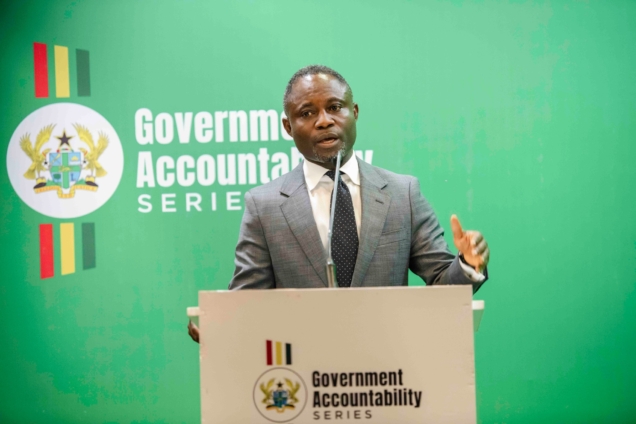
Speaking on PM Express on Joy News, Health Minister Kwabena Mintah-Akandoh announced that the initiative will take healthcare directly to households across the country.
The move forms part of government’s renewed focus on preventive care, following concerns over rising deaths linked to chronic conditions such as hypertension, diabetes, and stroke.
The Minister said access to the programme will be simple and inclusive.
“You can do the driver’s license, Ghana card, passport, and national health insurance card. Any of these that will identify you as a Ghanaian will give you access to the primary health care.”
He stressed that while services will be free at the point of delivery, the real transformation lies in the outreach model.
“So, apart from the fact that it is going to be free at that point, what for me is going to be the game changer is the fact that we are going to move into the homes of Ghanaians to do simple screening.”
Health authorities have long warned about the silent rise of NCDs in Ghana, which often go undetected until complications set in. The Minister underscored the urgency of the situation.
“The NCDs are rising at an alarming rate in this country. About 42 to 45% of our mortalities are attributable to non-communicable diseases.”
He said the strategy is to shift from reactive to preventive care by identifying cases early.
“But we must begin to trace the source. We must begin to be able to detect these conditions on time to prevent them from getting to the complications.”
The initiative will be backed by broader reforms under government’s healthcare agenda, including the introduction of complementary support systems for advanced cases. “Now we have Mahama Cares, so these reforms must be comprehensive. It must be complete.”
He explained that the approach creates a continuum of care, from early detection to treatment.
“So we go back to free primary health care. They will help us to detect the disease on time, to prevent it if possible, but if unfortunately, we are unable to prevent it or to detect it on time, and it gets to a complicated stage, there’s another policy called Mahama Cares to be able to save you.”
Latest Stories
-
AMA completes road repairs on Kwame Nkrumah Avenue
6 minutes -
Law Students’ Network warns executive dominance could undermine constitutional review
9 minutes -
Mahama to meet relevant stakeholders over concerns about the new Customs Act
16 minutes -
CHASS demands a 20% increase in SHS funding and payment of outstanding debts
18 minutes -
Investigation launched after male body found in County Cork
20 minutes -
We have been scammed by NDC, government is only doing PR – Abanga Fuseini
20 minutes -
Tamale Teaching Hospital records 44 new breast cancer cases in six months
22 minutes -
GES declares October 30 CPD day for private school teachers; learners to observe holiday
23 minutes -
South Korea to support Ghana’s forts and castles restoration with $4.5m over five years
24 minutes -
School headscarf ban sparks rare protests in Azerbaijan and row with Turkey
32 minutes -
Ghana explores underwater sightseeing and shipwreck tourism
33 minutes -
Association of Women Lawyers calls for national sexual offenders register to protect school children
34 minutes -
Soaring commodity prices influenced our 2026 revised growth forecast of 5.7 % for Ghana – IMF
37 minutes -
Government urged to recruit more speech therapists to support children with language disorders
39 minutes -
Chef Abbys: Feeding 50,000 people, putting food security on Ghana’s agenda
1 hour