

Audio By Carbonatix
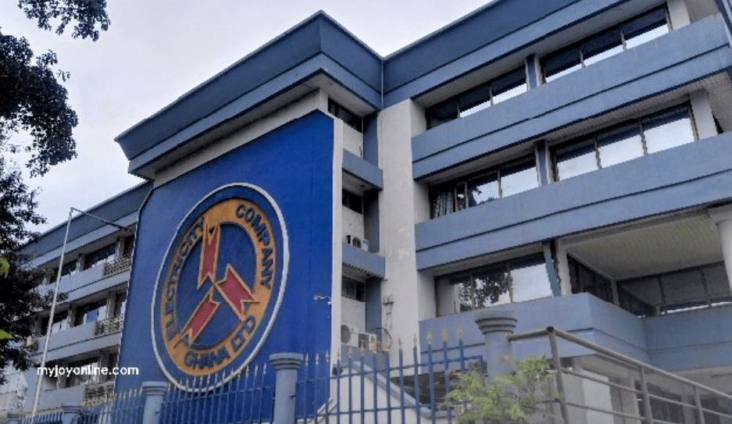
The Energy Minister has rejected claims that government is selling the Electricity Company of Ghana (ECG), saying Cabinet has instead chosen a concession model to bring in private sector efficiency without giving up state ownership.
“We are not selling ECG, and let me put this on record,” John Abdulai Jinapor said on PM Express on Joy News on Wednesday, April 30.
“So that decision has now been made. We are not selling ECG, far from that. So ignore the misinformation.”
He explained that Cabinet has settled on a model that introduces private sector participation without handing over the company itself.
“Cabinet has taken a definitive position that will require some level of private sector participation, but not to sell the company outright,” he stressed.
Under the new structure, ECG will act as a holding company and divide its operations geographically.
“ECG will divide its operational areas into four, maybe three,” the Minister said. “Roland company, for instance, will take one; yours is to manage that sector or that geographical area.”
John Jinapor broke it down further. “At the end of the month, we check how much power came to you, just hypothetically, maybe 20 megawatts,” he explained.
“We check the gigawatt hours that you consumed, and we say that this is the price—pay ECG. How you collect the money is your cup of tea.”
When asked whether these companies will pay ECG upfront, the Minister clarified, “No, you put a deposit or a guarantee. Before you can qualify, we’re gonna have what you call RFQ—request for qualification—so that we sieve off some companies and have top-notch companies through a competitive process.”
He laid out the steps involved. “Then go to what we call an RFP—request for proposal. Based on those proposals and based on the criteria, we eventually select the concessionaires.”
John Jinapor insisted that the process would be transparent and competitive.
“That company must have capacity, which includes financial capacity, technical capacity, and all the issues we are talking about,” he said.
“It’s not like go and get some friends to come and take a contract. We’re taking a transaction advisor, competitive bidding, competitive process, so they will get a very good company.”
He said the new model protects ECG’s interests while pushing private players to be more efficient.
“Simply put, what you are going to do is to buy bulk power from ECG and sell,” Jinapor said.
“So, ECG is guaranteed their money. It is the private player’s job to go and sell what you pick. ECG needn’t bother about how you collect the money.”
According to the Minister, the Public Utilities Regulatory Commission (PURC) will still regulate prices.
“PURC’s is that this is the price we’ve guaranteed for you. You can’t charge above that,” he said.
“Your duty is to sell that power, collect the money and put it in a dedicated account. ECG takes its share, and whatever is left is yours. If you can’t do that, then don’t apply.”
John Jinapor said the government is focused on efficiency, not privatisation.
“ECG will remain the holding company,” he repeated. “We’re not selling it. We’re making it better.”
Latest Stories
-
Mahama swears in Emelia Afi Agbenyo, Joseph Kwaku Asamoah as EC Deputy Commissioners
8 minutes -
Wetland communities in Northern Ghana face a hotter, flood-prone future as climate risks intensif
10 minutes -
Sam George tasks KNUST to develop Twi AI model as Ghana plans local-language artificial intelligence
13 minutes -
Poor roads choking eco-tourism potential – Avatime Paramount Chief cries out
18 minutes -
DVLA records GH¢25 million surplus in 2025 as contributions to state funds reach GH¢98.1 million
23 minutes -
Over 10 suspected scam centre kingpins arrested and remanded – CSA
27 minutes -
Ministers, CEOs, policymakers to grace 7th Africa Public Sector Conference in Accra
30 minutes -
NDC sets filing fees for national executive elections, with chairman aspirants paying GH¢100,000
31 minutes -
Muntaka urges Ghanaian cannabis growers to form cooperatives under licensed cultivation framework
40 minutes -
84 suspected drug offenders in custody as NACOC freezes nearly 73 assets – Muntaka
51 minutes -
Immediate reconciliation key to building united NPP — COKA
53 minutes -
MPs, CSOs push for dedicated budget line for malaria
54 minutes -
Jeffrey Nortey’s viral Kanayo O. Kanayo bar gets the legend’s attention, leads to a meet-up
55 minutes -
Bagre Dam’s Annual Floods: Scientists seek a lasting solution as Northern Ghana’s farmers count the cost
56 minutes -
Why Corporate Communications Professionals Must Be Marketing-Oriented: The strategic advantage and the professional mileage
1 hour