

Audio By Carbonatix
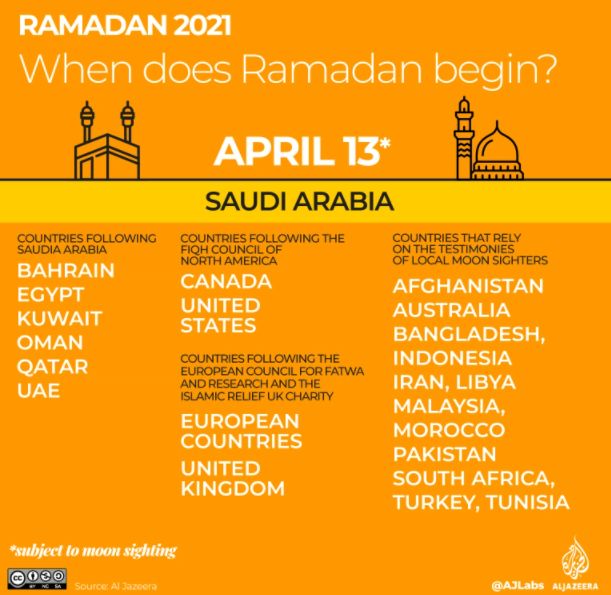
The first day of fasting for the holy month of Ramadan, which is determined by the sighting of the new moon, is likely to be Tuesday, April 13.
To declare the beginning of Ramadan, Saudi Arabia and other Muslim-majority countries depend on the testimonies of local moon sighters.
Bahrain, Egypt, Kuwait, Oman, Qatar and the United Arab Emirates are all expected to follow Saudi Arabia’s sighting of the new moon.
Other countries have independent sightings, but Indonesia, Lebanon, Morocco and Syria are also likely to begin fasting starting Tuesday while countries further east and west will commence as the moon is sighted.
When can we see the new moon?
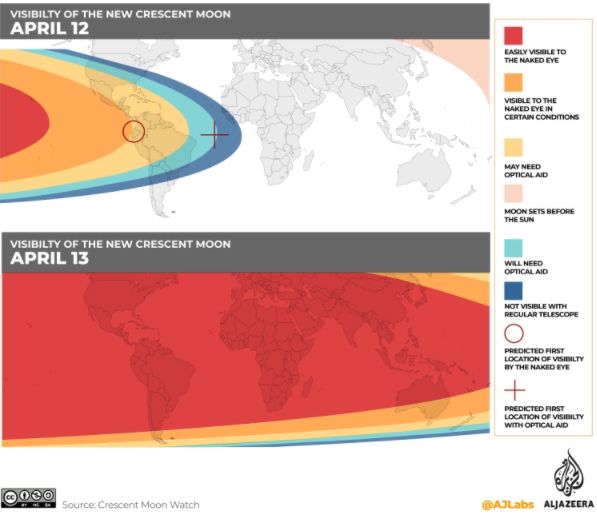
The Qatar Calendar House (QCH) has announced that Ramadan’s new moon will be born on April 12 at 02:31 GMT, according to astronomers. On that day, the moon might be visible in parts of North, Central and South America. On April 13, the moon will be easily visible in most parts of the world.
The actual visibility of the crescent will depend on factors such as atmospheric conditions, cloudiness and the distance between the sun and the moon on the horizon.
The moon phases of Ramadan
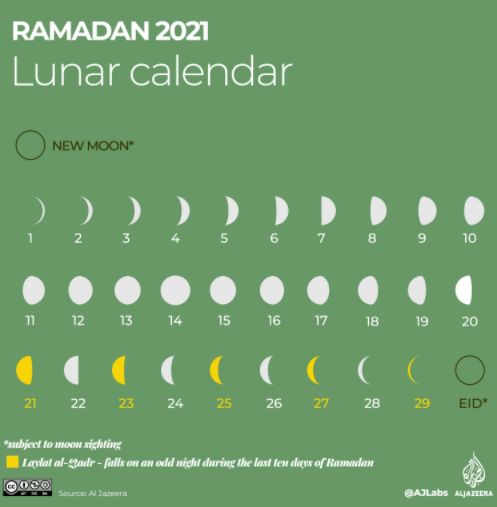
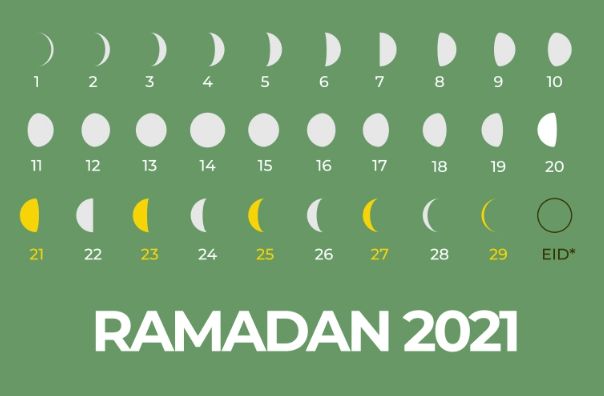
Lunar months last between 29 and 30 days, depending on the sighting of the new moon on the 29th night of each month. If the new moon is not visible, the month lasts 30 days.
Why is Ramadan holy?
For Muslims, Ramadan is the month in which the first verses of the Quran, Islam’s holy book, were revealed to Prophet Muhammad more than 1,400 years ago.
Throughout the month, observing Muslims fast from just before the sunrise, or Fajr, prayer to the sunset prayer, Maghrib.
The fast entails abstinence from eating, drinking, smoking and sexual relations to achieve greater “taqwa”, or consciousness of God.
Fasting is one of the five pillars of Islam, along with the Muslim declaration of faith, daily prayers, charity, and performing the Hajj pilgrimage to Mecca if physically and financially capable.
In many Muslim-majority countries, working hours are reduced, and many restaurants are closed during fasting hours.
“Ramadan Mubarak” and “Ramadan Kareem” are common greetings exchanged in this period, wishing the recipient a blessed and generous month respectively.
Last year, fasting hours across the world ranged from 10 to 20 hours a day.
At the end of Ramadan, Muslims celebrate Eid al-Fitr. In Arabic, it means “festival of breaking the fast”.
Depending on the actual start date of Ramadan and the new moon sighting on the 29th night of Ramadan, Eid al-Fitr this year is likely to fall on May 12.
Latest Stories
-
GTA sensitises taxi drivers in ‘Know Ghana’ tourism campaign
1 hour -
Archbishop Agyinasare calls for responsible speech amid growing social media abuse
1 hour -
‘It will be inexcusable for gov’t not to honour payment of teachers’ arrears by 30th October’ – Haruna Iddrisu
1 hour -
Forbes’ World’s Best Employers 2026: No Ghanaian firm ranked among 900 companies
1 hour -
Electronic processing of teachers’ data: ‘The decision is the Controller’s’ – GES boss
1 hour -
Teachers’ Strike: Haruna Iddrisu questions paper-based processing of promoted teachers’ data
2 hours -
Savannah Region: Kunfusi bridge collapses again, leaving nearly 4,000 residents cut off
2 hours -
Teachers’ strike: GES targets Monday deadline to submit promotion data to Controller
2 hours -
Inflation to average 11.3% in 2027 – Fitch Solutions
2 hours -
‘I didn’t campaign for NDC to come and do this nonsense’ – Kpebu on EOCO’s conduct
2 hours -
Fitch Solutions maintains policy rate forecast of 14% by December 2026
2 hours -
Diaspora Nasara Caucus congratulates Mohammed Ali Suraj, new NPP executives
4 hours -
Dr Antwi-Boasiako’s cybersecurity book showcased at UN crime prevention congress
4 hours -
We will empower the grassroots and protect every vote – NPP’s 1st Vice Chair Kojo Bamba
4 hours -
I do not see myself as better than anyone – NPP’s 1st Vice Chair Kojo Bamba
5 hours